Aira Astralis
Space and astronomy — deep-space phenomena, the history of the sky, the solar system, Earth's dynamic systems, and the physics beneath it all. By Aira Astralis.
Ko-fi — every volume with its own product link
DeepSpace — 187 volumes
 Cosmic Explorers: AI in Space Exploration · Vol. 1
Machine Intelligence Beyond Earth
Table of contents
- Introduction
- Chapter 01: The Discovery of AI in Space Exploration
- Chapter 02: Understanding AI in Space Exploration
- Chapter 03: Key Characteristics of AI in Space Exploration
- Chapter 04: The Science Behind AI in Space Exploration
- Chapter 05: Observation and Measurement of AI in Space Exploration
- Chapter 06: Important Features of AI in Space Exploration
- Chapter 07: AI in Space Exploration in Context
- Chapter 08: Modern Understanding of AI in Space Exploration
- Chapter 09: Research and Exploration of AI in Space Exploration
- Chapter 10: Significant Discoveries About AI in Space Exploration
- Chapter 11: Challenges and Mysteries of AI in Space Exploration
- Chapter 12: Future Directions in AI in Space Exploration Research
- Chapter 13: Fun Facts and Trivia About AI in Space Exploration
- Chapter 14: Conclusion: The Significance of AI in Space Exploration
- Conclusion
 Cosmos Unveiled: The Cosmic Neutrino Background · Vol. 1
Echoes of the Big Bang
Table of contents
- Introduction
- Chapter 01: The Ghost in the Equations: Predicting the Background
- Chapter 02: The Particle That Almost Isn't: A Neutrino Biography
- Chapter 03: The First Second: Making and Freeing the Sea
- Chapter 04: The Sea Today: A Portrait of the Background
- Chapter 05: Fingerprints: The Background Caught Indirectly
- Chapter 06: The Mass Bound: Neutrinos and the Architecture of the Cosmos
- Chapter 07: The Almost-Dark Matter: Neutrinos and the Missing Mass
- Chapter 08: The Hunt: Catching the Coldest Particles in the Universe
- Chapter 09: The Sterile Frontier: Heavier Neutrinos and the keV Question
- Chapter 10: What the Sea Would Tell Us: The Physics Waiting in the Background
- Chapter 11: Open Questions: The Background's Unfinished Business
- Chapter 12: The Family of Ghosts: The Background in the Wider Neutrino Sky
- Chapter 13: Fun Facts and Trivia About the Cosmic Neutrino Background
- Chapter 14: The Oldest Light Awaiting Its Portrait
- Conclusion
 Worlds Beyond Earth: Auroras of Other Worlds · Vol. 1
Light Shows on Distant Planets
Table of contents
- Introduction
- Chapter 01: The Discovery of Auroras of Other Worlds
- Chapter 02: Understanding Auroras of Other Worlds
- Chapter 03: Key Characteristics of Auroras of Other Worlds
- Chapter 04: The Science Behind Auroras of Other Worlds
- Chapter 05: Observation and Measurement of Auroras of Other Worlds
- Chapter 06: Important Features of Auroras of Other Worlds
- Chapter 07: Auroras of Other Worlds in Context
- Chapter 08: Modern Understanding of Auroras of Other Worlds
- Chapter 09: Research and Exploration of Auroras of Other Worlds
- Chapter 10: Significant Discoveries About Auroras of Other Worlds
- Chapter 11: Challenges and Mysteries of Auroras of Other Worlds
- Chapter 12: Future Directions in Auroras of Other Worlds Research
- Chapter 13: Fun Facts and Trivia About Auroras of Other Worlds
- Chapter 14: Conclusion: The Significance of Auroras of Other Worlds
- Conclusion
 Cosmic Explorers: Artificial Gravity · Vol. 2
Simulating Earth in Space
Table of contents
- Introduction
- Chapter 01: The Problem: What Weightlessness Does to the Body
- Chapter 02: The Physics: How Spin Makes Weight
- Chapter 03: The History: From Tsiolkovsky's Paper to the Film Studios' Wheels
- Chapter 04: The Arithmetic of Comfort: Radius, Spin Rate, and the Inner Ear
- Chapter 06: The Evidence: The Centrifuge Experiments and the One Flight
- Chapter 07: The Medicine's Gap: What Spin Would Settle
- Chapter 08: The Engineering: Building the Wheel
- Chapter 09: Partial Gravity: The Moon's Sixth and the Mars Third
- Chapter 10: The Countermeasure Era: Living Without the Wheel
- Chapter 11: The Fiction's Wheel: Artificial Gravity in the Stories
- Chapter 12: The Programs: Centrifuges Flown and Studies Funded
- Chapter 13: The Designs: From the Tethered Mars Transit to the Commercial Ring
- Chapter 14: The Verdict: What Should Fly First
- Conclusion
 Cosmos Unveiled: Active Galactic Nuclei · Vol. 2
The Engines Inside Quasars
Table of contents
- Introduction
- Chapter 01: A Light That Should Not Exist
- Chapter 02: The Engine at the Center
- Chapter 03: The Whirlpool Before the Fall
- Chapter 04: Jets of Fire Across a Million Years
- Chapter 05: The Zoo and Its Single Animal
- Chapter 06: Reading the Light
- Chapter 07: Weighing What Cannot Be Seen
- Chapter 08: Hosts and Partners
- Chapter 09: The Blinking Beacon
- Chapter 10: Monsters Through Cosmic Time
- Chapter 11: The Thermostat of the Galaxies
- Chapter 12: Watching the Watchers
- Chapter 13: The Unsolved Core
- Chapter 14: Why the Beacons Matter
- Conclusion
 Worlds Beyond Earth: Beyond Neptune · Vol. 2
The Kuiper Belt, the Oort Cloud, and the Edge of the Solar System
Table of contents
- Introduction
- Chapter 01: The Door at Thirty
- Chapter 02: Found by Arithmetic
- Chapter 03: The Hunt That Mistook Its Catch
- Chapter 04: The Crossing of 1989
- Chapter 05: The Census Nobody Had Counted
- Chapter 06: The Frozen Environment of the Deep
- Chapter 07: The Farthest Flyby
- Chapter 08: The Comet Reservoirs
- Chapter 09: The Boundary Crossed
- Chapter 10: The Detached Scouts
- Chapter 11: The Hidden Planet
- Chapter 12: The Robots' Itinerary
- Chapter 13: The Future Leg of the Log
- Chapter 14: The Gradient, Not the Wall
- Conclusion
 Cosmic Explorers: Asteroid Mining · Vol. 3
Extracting Resources from Space Rocks
Table of contents
- Introduction
- Chapter 01: The Case for the Rocks: Why Asteroids
- Chapter 02: What the Rocks Are Made Of: A Field Guide to Ores in the Sky
- Chapter 03: The Treasure Map: Prospecting the Near-Earth Population
- Chapter 04: Water First: The Propellant That Begins the Economy
- Chapter 05: The Metals: Platinum Dreams and Structural Steel
- Chapter 07: Digging Without Gravity: The Extraction Techniques
- Chapter 08: Processing in Vacuum: From Raw Rock to Product
- Chapter 09: The Machines: Autonomy, Latency, and the Workforce Problem
- Chapter 10: Who Owns the Rocks: The Law of the High Ground
- Chapter 11: The Business: Markets, Money, and the Companies That Tried
- Chapter 12: The Neighbors: The Moon, the Martian Moons, and the Competition
- Chapter 13: Ethics and the Long Game: The Stewardship of a Thousand Worlds
- Chapter 14: Fun Facts and Trivia About Asteroid Mining
- Conclusion
 Cosmos Unveiled: Axions · Vol. 3
The Ghost Particle Candidate
Table of contents
- Introduction
- Chapter 01: A Problem the Universe Declined to Have
- Chapter 02: The Repair That Cost a Particle
- Chapter 03: A Condensate Wearing the Shape of a Halo
- Chapter 04: The Window: Where the Axion Is Allowed to Live
- Chapter 05: Stars as Axion Factories and Witnesses
- Chapter 06: The Misalignment Harvest: Axions as Cold Dark Matter
- Chapter 07: The Local Wind: Axions in the Milky Way
- Chapter 08: The Radio in the Mountain: Haloscopes
- Chapter 09: Pointing at the Sun: Helioscopes
- Chapter 10: The Rest of the Net: Colliders, Kernels, and Light
- Chapter 11: The Hints and the Tensions
- Chapter 12: The Axion's Other Jobs: Strings, Walls, and the Wider Landscape
- Chapter 13: What Would Count as Found: The Verdicts Ahead
- Chapter 14: Why It Matters: The Axion and the Shape of Physics
- Conclusion
 Worlds Beyond Earth: Callisto · Vol. 3
The Cratered Moon
Table of contents
- Introduction
- Chapter 01: The Discovery: Galileo's Fourth Moon
- Chapter 02: The Character: Size, Heft, and No Magnet of Its Own
- Chapter 03: The Interior: The Ocean Under the Oldest Face
- Chapter 04: The View: A World of Craters on Craters
- Chapter 05: The Crater Record: Reading the Solar System's Youth
- Chapter 06: The Family: Callisto Among the Galileans
- Chapter 07: The Exploration: From Voyager Snapshots to Three Dozen Passes
- Chapter 08: The Radiation Shelter: Why Humans Would Live at the Far Orbit
- Chapter 09: The Resources: Ice, Rock, and the Building of a Base
- Chapter 10: The Ocean Question: Habitable, Habitated, or Untouched
- Chapter 11: The Fiction and the Future: Callisto in the Imagination
- Chapter 12: The Conjunctions: The Moon That Eclipses and Is Eclipsed
- Chapter 13: The Comparisons: Callisto Among the Ocean Worlds
- Chapter 14: The Verdict: What Callisto Teaches
- Conclusion
 Cosmic Explorers: Astronaut Training · Vol. 4
From Selection to Spaceflight
Table of contents
- Introduction
- Chapter 01: Selection: The First Cut
- Chapter 02: Basic Training: The Long Apprenticeship
- Chapter 03: The Body in Space: What Training Fights
- Chapter 04: The Sick Days: Space Motion Sickness
- Chapter 05: The Great Machines: Centrifuge, Parabolas, and Pressure
- Chapter 06: Underwater Hours: The Pool and the Spacewalk
- Chapter 07: Survival School: When the Machine Fails
- Chapter 08: Simulators, Robotics, and Virtual Worlds
- Chapter 09: Mission Training: Rehearsing a Particular Flight
- Chapter 10: The Mind in the Can: Psychology and the Crew as a Team
- Chapter 11: Analogs: Rehearsing on Earth
- Chapter 12: Onboard: Training That Follows You to Orbit
- Chapter 13: New Worlds: Training for Moon and Mars
- Chapter 14: Fun Facts and Trivia About Astronaut Training
- Conclusion
 Cosmos Unveiled: Baryogenesis · Vol. 4
Why Matter Won
Table of contents
- Introduction
- Chapter 01: The Perfect Mirror
- Chapter 02: The Missing Half
- Chapter 03: The Arithmetic of Survival
- Chapter 04: Sakharov's Three Conditions
- Chapter 05: The Broken Symmetry
- Chapter 06: The Grand Designs
- Chapter 07: The Electroweak Window
- Chapter 08: The Neutrino Road
- Chapter 09: The Relic Ledger
- Chapter 10: The Antimatter Hunters
- Chapter 11: The Laboratory Mirror
- Chapter 12: The Frontier Names
- Chapter 13: The Meaning of Existence
- Chapter 14: The Standing Questions
- Conclusion
 Worlds Beyond Earth: Ceres · Vol. 4
The Dwarf Planet in the Asteroid Belt
Table of contents
- Introduction
- Chapter 01: The Science Behind Ceres
- Chapter 02: Observation and Measurement of Ceres
- Chapter 03: Important Features of Ceres
- Chapter 04: Ceres in Context
- Chapter 05: Modern Understanding of Ceres
- Chapter 06: Research and Exploration of Ceres
- Chapter 07: Significant Discoveries About Ceres
- Chapter 08: Challenges and Mysteries of Ceres
- Chapter 09: Future Directions in Ceres Research
- Chapter 10: Fun Facts and Trivia About Ceres
- Chapter 11: Conclusion: The Significance of Ceres
- Conclusion
 Cosmic Explorers: Astronauts · Vol. 5
Life in Zero Gravity
Table of contents
- Introduction
- Chapter 01: The Making of a Profession
- Chapter 02: Selection
- Chapter 03: Training
- Chapter 04: The First Generation
- Chapter 05: The Moon Landings
- Chapter 06: The Station Era Begins
- Chapter 07: The Shuttle Years
- Chapter 08: The International Station
- Chapter 09: The Body in Space
- Chapter 10: The Mind in Space
- Chapter 11: The Spacewalk
- Chapter 12: New Programs and Private Crews
- Chapter 13: What Astronauts Actually Do
- Chapter 14: The Road Back Out
- Conclusion
 Cosmos Unveiled: Big Bang Nucleosynthesis · Vol. 5
The First Elements
Table of contents
- Introduction
- Chapter 01: The Physics of the Early Universe
- Chapter 02: The Formation of Deuterium
- Chapter 03: The Production of Helium-4
- Chapter 04: The Production of Lithium-7
- Chapter 05: The Baryon Density and the Number of Neutrino Species
- Chapter 06: Observational Tests of Big Bang Nucleosynthesis
- Chapter 07: Big Bang Nucleosynthesis and the Cosmic Microwave Background
- Chapter 08: Big Bang Nucleosynthesis and Particle Physics
- Chapter 09: The History of Big Bang Nucleosynthesis Theory
- Chapter 10: Alternatives to Standard Big Bang Nucleosynthesis
- Chapter 11: Big Bang Nucleosynthesis in Other Cosmological Models
- Chapter 12: Fun Facts and Trivia About Big Bang Nucleosynthesis
- Chapter 13: The Future of Big Bang Nucleosynthesis Research
- Chapter 14: Conclusion: The Significance of Big Bang Nucleosynthesis
- Conclusion
 Worlds Beyond Earth: Comets · Vol. 5
The Icy Wanderers from the Outer Solar System
Table of contents
- Introduction
- Chapter 01: The Hairy Stars
- Chapter 02: The Dirty Snowball
- Chapter 03: The Tails
- Chapter 04: The Reservoirs
- Chapter 05: The Great Encounters
- Chapter 06: The Orbiter and the Lander
- Chapter 07: The Water Question
- Chapter 08: The Deep Archive
- Chapter 09: The Impacts and the Ledger
- Chapter 10: The Observers' Craft
- Chapter 11: The Appointments Ahead
- Chapter 12: The Open File
- Conclusion
 Cosmic Explorers: Commercial Space · Vol. 6
The New Space Race
Table of contents
- Introduction
- Chapter 01: From Government Program to Industry
- Chapter 02: The Launch Market
- Chapter 03: The Reusable Revolution
- Chapter 04: The NewSpace Generation
- Chapter 05: Mega-Constellations
- Chapter 06: Earth Observation as a Business
- Chapter 07: Selling the View
- Chapter 08: Private Stations and Commercial Low Orbit
- Chapter 09: The Moon for Hire
- Chapter 10: Resources, Refueling, and Repair
- Chapter 11: The Money
- Chapter 12: Rules of the Road
- Chapter 13: Risks, Failures, and Skeptics
- Chapter 14: The Space Economy Ahead
- Conclusion
 Cosmos Unveiled: Binary Stars · Vol. 6
When Stars Dance in Pairs
Table of contents
- Introduction
- Chapter 01: Two Stars, One Dance
- Chapter 02: From Suspicion to Certainty: A History of Discovery
- Chapter 03: The Physics of a Two-Body Orbit
- Chapter 04: Finding the Invisible: How Astronomers Detect Binaries
- Chapter 05: Weighing the Stars: Masses from Orbits
- Chapter 06: A Zoo of Pairs: The Classification of Binary Systems
- Chapter 07: Famous Binaries of the Night Sky
- Chapter 08: Close Encounters: Roche Lobes, Tides, and Mass Transfer
- Chapter 09: Accretion Power: Novae, Cataclysmic Variables, and X-ray Binaries
- Chapter 10: Living Together: How Companions Reshape Stellar Evolution
- Chapter 11: Merging Stars and Ripples in Spacetime
- Chapter 12: Beyond Pairs: Triple and Hierarchical Systems
- Chapter 13: Worlds with Two Suns: Planets in Binary Systems
- Chapter 14: The Frontier: Open Questions and Future Missions
- Conclusion
 Worlds Beyond Earth: Dwarf Planets · Vol. 6
Ceres, Eris, Haumea, and Makemake
Table of contents
- Introduction
- Chapter 01: Drawing the Line: The Definition and Its Three Clauses
- Chapter 02: The Ninth Planet's Long Retirement: Pluto's Story
- Chapter 03: The Census: The Nine, the Borderline, and the Count
- Chapter 04: Ceres: The Queen of the Belt
- Chapter 05: Pluto: The Heart of the Deep Cold
- Chapter 06: Eris: The World That Broke the List
- Chapter 07: Haumea and Makemake: The Egg and the Frost
- Chapter 08: The Far Candidates: Gonggong, Quaoar, Orcus, and the Sednoids
- Chapter 09: Moons, Rings, and Weighing the Unweighable
- Chapter 10: The Geology of Small Cold Worlds
- Chapter 11: Where the Dwarfs Came From: Formation and the Outer Reservoir
- Chapter 12: The Naming Wars: What a Planet Means
- Chapter 13: The Frontier: Finding, Confirming, and Visiting the Rest
- Chapter 14: Fun Facts and Trivia About Dwarf Planets
- Conclusion
 Cosmic Explorers: Communication in Space · Vol. 7
How Spacecraft Talk to Earth
Table of contents
- Introduction
- Chapter 01: The Discovery of Communication in Space
- Chapter 02: Understanding Communication in Space
- Chapter 03: Key Characteristics of Communication in Space
- Chapter 04: The Science Behind Communication in Space
- Chapter 05: Observation and Measurement of Communication in Space
- Chapter 06: Important Features of Communication in Space
- Chapter 07: Communication in Space in Context
- Chapter 08: Modern Understanding of Communication in Space
- Chapter 09: Challenges and Mysteries of Communication in Space
- Chapter 10: Future Directions in Communication in Space Research
- Chapter 11: Fun Facts and Trivia About Communication in Space
- Chapter 12: Conclusion: The Significance of Communication in Space
- Conclusion
 Cosmos Unveiled: Black Holes · Vol. 7
The Darkest Objects in the Universe
Table of contents
- Introduction
- Chapter 01: The Idea of a Hole in the Sky
- Chapter 02: The Event Horizon: Where Escape Becomes Impossible
- Chapter 03: The Making of a Black Hole: Collapse of a Massive Star
- Chapter 04: Finding and Weighing the Invisible: The Observational Case
- Chapter 05: Journey to the Horizon: What a Traveler Would Experience
- Chapter 06: Inside the Horizon: The Center and the Singularity
- Chapter 07: Hawking Radiation: Black Holes Are Not Black
- Chapter 08: Supermassive Black Holes: The Giants at the Centers of Galaxies
- Chapter 09: Photographing the Unphotographable: The Event Horizon Telescope
- Chapter 10: Listening to Collisions: Black Holes and Gravitational Waves
- Chapter 11: The Demographics: A Census of the Universe's Black Holes
- Chapter 12: Feeding the Monster: Accretion and the Engines of Power
- Chapter 13: Black Holes and the Milky Way: Our Own Dark Neighbors
- Chapter 14: Frontiers: The Unresolved Physics of the Darkest Objects
- Conclusion
 Worlds Beyond Earth: Earth · Vol. 7
The Living Planet
Table of contents
- Introduction
- Chapter 01: The Address
- Chapter 02: The Twins' Fork
- Chapter 03: The Ocean
- Chapter 04: The Moving Floor
- Chapter 05: The Shield
- Chapter 06: The Moon
- Chapter 07: The Air
- Chapter 08: The Long Winter Files
- Chapter 09: The Arrival
- Chapter 10: The Garden
- Chapter 11: The Watchers
- Chapter 12: The Census Question
- Chapter 13: The Home File
- Chapter 14: Amazing Facts
- Chapter 15: Final Journey
- Conclusion
 Cosmic Explorers: CubeSats and Small Satellites · Vol. 8
The Small Satellite Revolution
Table of contents
- Introduction
- Chapter 01: A Standard Made of a Cube: The Ten-Centimeter Revolution
- Chapter 02: The Anatomy: Buses, Boards, and Budgets
- Chapter 03: The Physics of Small: Why Ten Centimeters Works
- Chapter 04: Getting to Orbit: Rideshares and the New Launch Economy
- Chapter 05: The Radio Link: Talking to a Shoebox Across the Sky
- Chapter 06: Power and Thermal: Watts, Cycles, and Degree-Hours
- Chapter 07: Attitude Control: The Cube's Gymnastics
- Chapter 08: The Missions: Science from a Liter-Sized Spacecraft
- Chapter 09: Earth Observation: The Sky-Filled Camera Constellation
- Chapter 10: Deep Space CubeSats: Beyond Earth Orbit
- Chapter 11: Constellations and Swarms: The Network Revolution
- Chapter 12: Failure and Debris: The Discipline's Honest Ledger
- Chapter 13: The Regulatory Sky: Licensing a Thousand Satellites
- Chapter 14: The Future: Markets, Moon Shots, and the Next Decade
- Conclusion
 Cosmos Unveiled: Brown Dwarfs · Vol. 8
Failed Stars
Table of contents
- Introduction
- Chapter 01: The Discovery of Brown Dwarfs
- Chapter 02: Understanding Brown Dwarfs
- Chapter 03: Key Characteristics of Brown Dwarfs
- Chapter 04: The Science Behind Brown Dwarfs
- Chapter 05: Observation and Measurement of Brown Dwarfs
- Chapter 06: Important Features of Brown Dwarfs
- Chapter 07: Brown Dwarfs in Context
- Chapter 08: Research and Exploration of Brown Dwarfs
- Chapter 09: Significant Discoveries About Brown Dwarfs
- Chapter 10: Challenges and Mysteries of Brown Dwarfs
- Chapter 11: Future Directions in Brown Dwarfs Research
- Chapter 12: Fun Facts and Trivia About Brown Dwarfs
- Chapter 13: Conclusion: The Significance of Brown Dwarfs
- Chapter 14: Conclusion: The Significance of Brown Dwarfs
- Conclusion
 Worlds Beyond Earth: Earth's Atmosphere · Vol. 8
Layers, Weather, and the Air We Breathe
Table of contents
- Introduction
- Chapter 01: The Discovery of the Ocean of Air
- Chapter 02: The Layered Envelope
- Chapter 03: The Pressure Story
- Chapter 04: The Greenhouse
- Chapter 05: The Weather Engine
- Chapter 06: The Ozone Shield
- Chapter 07: The Breath Account
- Chapter 08: The Climate Archive
- Chapter 09: The Storm Census
- Chapter 10: The High Frontiers
- Chapter 11: The Handoff to Space
- Chapter 12: The Watchers
- Chapter 13: The Changing File
- Conclusion
 Cosmic Explorers: In-Situ Resource Utilization · Vol. 9
Living Off the Land in Space
Table of contents
- Introduction
- Chapter 01: The Discovery of In-Situ Resource Utilization
- Chapter 02: Understanding In-Situ Resource Utilization
- Chapter 03: Key Characteristics of In-Situ Resource Utilization
- Chapter 04: The Science Behind In-Situ Resource Utilization
- Chapter 05: Observation and Measurement of In-Situ Resource Utilization
- Chapter 06: Important Features of In-Situ Resource Utilization
- Chapter 07: In-Situ Resource Utilization in Context
- Chapter 08: Modern Understanding of In-Situ Resource Utilization
- Chapter 09: Research and Exploration of In-Situ Resource Utilization
- Chapter 10: Significant Discoveries About In-Situ Resource Utilization
- Chapter 11: Challenges and Mysteries of In-Situ Resource Utilization
- Chapter 12: Future Directions in In-Situ Resource Utilization Research
- Chapter 13: Fun Facts and Trivia About In-Situ Resource Utilization
- Chapter 14: The Significance of In-Situ Resource Utilization
- Conclusion
 Cosmos Unveiled: Cosmic Inflation · Vol. 9
The Exponential Expansion of Everything
Table of contents
- Introduction
- Chapter 01: The Universe's First Heartbeat
- Chapter 02: Three Clues That Bothered Cosmologists
- Chapter 03: A Happy Accident: How Inflation Was Invented
- Chapter 04: The Inflaton: The Engine Nobody Has Seen
- Chapter 05: Doubling on Doubles: The Arithmetic of e-Folds
- Chapter 06: The Graceful Exit: How Inflation Ends
- Chapter 07: Quantum Seeds: How Nothing Became Everything
- Chapter 08: Reading the Wrinkles: Inflation's Predictions and the Oldest Light
- Chapter 09: A Bestiary of Inflations: The Models and What They Say
- Chapter 10: Eternal Inflation and the Multiverse Question
- Chapter 11: What Came Before?
- Chapter 12: The Skeptics' Corner: Critiques and Alternatives
- Chapter 13: Fun Facts and Trivia About Cosmic Inflation
- Chapter 14: The Frontier: Gravitational Waves and the Next Sky Maps
- Conclusion
 Worlds Beyond Earth: Earth's Climate History · Vol. 9
Ice Ages, Greenhouse Earth, and Everything in Between
Table of contents
- Introduction
- Chapter 01: The Archive: How the Ledger Is Read
- Chapter 02: The Two Long States
- Chapter 03: The Snowball File
- Chapter 04: The Long Greenhouse
- Chapter 05: The Big Carbon Swings
- Chapter 06: The Ice Returns
- Chapter 07: The Rhythm Chapter: The Orbital Arithmetic
- Chapter 08: The Ice Cores
- Chapter 09: The Dials: The Feedback Files
- Chapter 10: The Sudden Files
- Chapter 11: The Last Millennium
- Chapter 12: The Human Dial
- Chapter 13: The Docket: The Open Files
- Chapter 14: The Receipt Shelf
- Conclusion
 Cosmic Explorers: Interstellar Travel · Vol. 10
Concepts for Reaching the Stars
Table of contents
- Introduction
- Chapter 01: The Discovery of Interstellar Travel
- Chapter 02: Understanding Interstellar Travel
- Chapter 03: Key Characteristics of Interstellar Travel
- Chapter 04: The Science Behind Interstellar Travel
- Chapter 05: Observation and Measurement of Interstellar Travel
- Chapter 06: Important Features of Interstellar Travel
- Chapter 07: Interstellar Travel in Context
- Chapter 08: Modern Understanding of Interstellar Travel
- Chapter 09: Research and Exploration of Interstellar Travel
- Chapter 10: Significant Discoveries About Interstellar Travel
- Chapter 11: Challenges and Mysteries of Interstellar Travel
- Chapter 12: Future Directions in Interstellar-Travel Research
- Chapter 13: Fun Facts and Trivia About Interstellar Travel
- Chapter 14: Conclusion: The Significance of Interstellar Travel
- Conclusion
 Cosmos Unveiled: Cosmic Rays · Vol. 10
The Most Energetic Particles in the Universe
Table of contents
- Introduction
- Chapter 01: The Discovery of Cosmic Rays
- Chapter 02: The Composition of Cosmic Rays
- Chapter 03: The Origin of Cosmic Rays
- Chapter 04: Cosmic Ray Acceleration
- Chapter 05: Cosmic Ray Detection
- Chapter 06: The Cosmic Ray Spectrum
- Chapter 07: Cosmic Rays and the Galaxy
- Chapter 08: Cosmic Rays and Dark Matter
- Chapter 09: Cosmic Rays and Life
- Chapter 10: The Pierre Auger Observatory
- Chapter 11: IceCube and Neutrino Astronomy
- Chapter 12: Fun Facts and Trivia About Cosmic Rays
- Chapter 13: The Future of Cosmic Ray Research
- Chapter 14: Conclusion: The Significance of Cosmic Rays
- Conclusion
 Worlds Beyond Earth: Earth's Interior · Vol. 10
The Hidden Layers of Our World
Table of contents
- Introduction
- Chapter 01: The Discovery of Earth's Interior
- Chapter 02: The Layered Planet
- Chapter 03: The Crust
- Chapter 04: The Mantle
- Chapter 05: The Core-Mantle Boundary
- Chapter 06: The Outer Core
- Chapter 07: The Inner Core
- Chapter 08: Weighing the Interior
- Chapter 09: Seismology, the Listening Science
- Chapter 10: The Heat Engine
- Chapter 11: The Magnetic Field and Its Reversals
- Chapter 12: Sampling the Deep Without a Shaft
- Chapter 13: What the Interior Still Keeps Secret
- Chapter 14: Future Directions: Hearing, Weighing, and Simulating the Centre
- Conclusion
 Cosmic Explorers: Launch Sites of the World · Vol. 11
Where Rockets Begin Their Journey
Table of contents
- Introduction
- Chapter 01: The Discovery of Launch Sites of the World
- Chapter 02: Key Characteristics of Launch Sites of the World
- Chapter 03: The Science Behind Launch Sites of the World
- Chapter 04: Observation and Measurement of Launch Sites of the World
- Chapter 05: Important Features of Launch Sites of the World
- Chapter 06: Launch Sites of the World in Context
- Chapter 07: Challenges and Mysteries of Launch Sites of the World
- Chapter 08: Future Directions in Launch Sites of the World Research
- Chapter 09: Fun Facts and Trivia About Launch Sites of the World
- Chapter 10: Conclusion: The Significance of Launch Sites of the World
- Conclusion
 Cosmos Unveiled: Cosmic Strings · Vol. 11
Cracks in the Fabric of Space
Table of contents
- Introduction
- Chapter 01: The Object: A Crack in Space
- Chapter 02: How the Universe Cracked: Symmetry Breaking and Phase Transitions
- Chapter 03: The Network: How Strings Behave in a Universe
- Chapter 04: The Bend: Strings, Space, and Double Images
- Chapter 05: The Waves: Loops, Cusps, and the Gravitational-Wave Hum
- Chapter 06: The Promise: Strings as the Seeds of Structure
- Chapter 07: The Verdict: The Microwave Sky Retires the Seeds
- Chapter 08: The Revival: Cosmic Superstrings
- Chapter 09: The Searches: Lensing, Bursts, and the Pulsar Metronomes
- Chapter 10: The Family: Walls, Monopoles, and Textures
- Chapter 11: The Limits: What the Searches Now Say
- Chapter 12: The Prize: What a Detection Would Mean
- Chapter 13: The People: A Small Science's Biography
- Chapter 14: The Legacy: What the Idea Left Behind
- Conclusion
 Worlds Beyond Earth: Earth's Magnetosphere · Vol. 11
The Invisible Shield That Protects Our Planet
Table of contents
- Introduction
- Chapter 01: What Is the Magnetosphere?
- Chapter 02: The Van Allen Belts
- Chapter 03: When the Solar Wind Strikes
- Chapter 04: Auroras: The Magnetosphere's Light Show
- Chapter 05: Earth's Magnetic Poles Are Moving
- Chapter 06: Magnetic Fields on Other Planets
- Chapter 07: The Magnetopause and Bow Shock
- Chapter 08: Space Weather and Satellites
- Chapter 09: The Magnetosphere and Life
- Chapter 10: Studying the Magnetosphere from Space
- Chapter 11: Magnetic Reconnection
- Chapter 12: The Magnetosphere's Long History
- Chapter 13: The Shield That Protects Us All
- Conclusion
 Cosmic Explorers: Living on Mars · Vol. 12
Building a Home on the Red Planet
Table of contents
- Introduction
- Chapter 01: The Discovery of Living on Mars
- Chapter 02: Understanding Living on Mars
- Chapter 03: Key Characteristics of Living on Mars
- Chapter 04: The Science Behind Living on Mars
- Chapter 05: Observation and Measurement of Living on Mars
- Chapter 06: Important Features of Living on Mars
- Chapter 07: Living on Mars in Context
- Chapter 08: Modern Understanding of Living on Mars
- Chapter 09: Research and Exploration of Living on Mars
- Chapter 10: Significant Discoveries About Living on Mars
- Chapter 11: Challenges and Mysteries of Living on Mars
- Chapter 12: Future Directions in Living on Mars Research
- Chapter 13: Fun Facts and Trivia About Living on Mars
- Chapter 14: Conclusion: The Significance of Living on Mars
- Conclusion
 Cosmos Unveiled: Cosmic Voids · Vol. 12
The Empty Places in Space
Table of contents
- Introduction
- Chapter 01: How Astronomy Found Nothing
- Chapter 02: The Shape of Nothing
- Chapter 03: Mapping the Absence
- Chapter 04: The Anatomy of Emptiness
- Chapter 05: Life at the Bottom of the Universe
- Chapter 06: The Making of a Void
- Chapter 07: Emptiness as a Cast of the Earliest Universe
- Chapter 08: The Bootes Void and Other Famous Emptinesses
- Chapter 09: Empty Space in Motion
- Chapter 10: Voids as Measuring Instruments
- Chapter 11: Testing Gravity in the Emptiest Places
- Chapter 12: The Darkest Laboratory of Dark Energy
- Chapter 13: Strange Sights and Curious Facts About Emptiness
- Chapter 14: The Frontier: What Comes Next for the Empty Universe
- Conclusion
 Worlds Beyond Earth: Earth's Moon Formation · Vol. 12
The Giant Impact and the Birth of the Moon
Table of contents
- Introduction
- Chapter 01: The Discovery of Earth's Moon Formation
- Chapter 02: Understanding Earth's Moon Formation
- Chapter 03: Key Characteristics of Earth's Moon Formation
- Chapter 04: The Science Behind Earth's Moon Formation
- Chapter 05: Observation and Measurement of Earth's Moon Formation
- Chapter 06: Important Features of Earth's Moon Formation
- Chapter 07: Earth's Moon Formation in Context
- Chapter 08: Modern Understanding of Earth's Moon Formation
- Chapter 09: Research and Exploration of Earth's Moon Formation
- Chapter 10: Significant Discoveries About Earth's Moon Formation
- Chapter 11: Challenges and Mysteries of Earth's Moon Formation
- Chapter 12: Future Directions in Earth's Moon Formation Research
- Chapter 13: Fun Facts and Trivia About Earth's Moon Formation
- Chapter 14: Conclusion: The Significance of Earth's Moon Formation
- Conclusion
 Cosmic Explorers: Lunar Bases · Vol. 13
Building Humanity's First Off-World Home
Table of contents
- Introduction
- Chapter 01: The Case for the Moon
- Chapter 02: A Short History of Lunar Ambition
- Chapter 03: Choosing the Ground: The South Pole
- Chapter 04: The First Outpost
- Chapter 05: Building with Regolith
- Chapter 06: Powering Through the Night
- Chapter 07: Water Ice and What the Moon Provides
- Chapter 08: Radiation, Dust, and the Human Body
- Chapter 09: Habitats and Life Support
- Chapter 10: Moving on the Surface
- Chapter 11: Operating a Base: Communications and the Ground Team
- Chapter 12: The Science a Base Unlocks
- Chapter 13: The Lunar Economy: Mining, Export, and Markets
- Chapter 14: Governance and the Coalition of Returners
- Chapter 15: The Road to Permanence: Village and Town
- Conclusion
 Cosmos Unveiled: Dark Energy · Vol. 13
The Force Driving the Universe Apart
Table of contents
- Introduction
- Chapter 01: The Deceleration That Wasn't
- Chapter 02: The Name for the Effect
- Chapter 03: Einstein's Lambda
- Chapter 04: The Worst Prediction in Physics
- Chapter 05: How Repulsive Gravity Works
- Chapter 06: Weighing the Universe's Contents
- Chapter 07: The Measuring Toolkit
- Chapter 08: Quintessence and the Alternatives
- Chapter 09: The Modified-Gravity Escape
- Chapter 10: The Coincidence Problem
- Chapter 11: Dark Energy and Dark Matter, the Confusion Ledger
- Chapter 12: Structure's Late Brake
- Chapter 13: The Hints of Change
- Chapter 14: The Road Ahead
- Conclusion
 Worlds Beyond Earth: Earth's Oceans · Vol. 13
The Water Worlds Within Our World
Table of contents
- Introduction
- Chapter 1: Understanding Earth's Oceans
- Chapter 2: The Origin of the Water World
- Chapter 3: The Basins: The Ocean's Architecture
- Chapter 4: The Water's Chemistry
- Chapter 5: The Great Circulation: The Ocean's Currents
- Chapter 6: Waves and Tides: The Ocean's Clockwork
- Chapter 7: The Ocean and the Atmosphere: A Partnership
- Chapter 8: The Ocean and the Climate Machine
- Chapter 9: The Life of the Sea
- Chapter 10: The Exploration: Sounding the Depths
- Chapter 11: The Ocean's Unsolved Problems
- Chapter 12: The Changing Ocean: The Modern Ledger
- Chapter 13: The Ocean's Future: Science, Stewardship, and the Next Decades
- Chapter 14: Conclusion: The Water Planet's Own Story
- Conclusion
 Cosmic Explorers: Mars Missions · Vol. 14
The Quest for the Red Planet
Table of contents
- Introduction
- Chapter 01: The Fixation: Why Mars
- Chapter 02: First Contact: The Flyby Era
- Chapter 03: The Vikings: The First Serious Search
- Chapter 04: The Lost Decade: How Mars Broke the Program
- Chapter 05: The Rebound: Robots on the Ground
- Chapter 06: The Modern Fleet: The Armada in Orbit
- Chapter 07: The Landing Machines: Sky Cranes and Nuclear Laboratories
- Chapter 08: The Instruments: How the Fleet Sees
- Chapter 09: What the Missions Found: The Water Story and the Rest
- Chapter 10: The International Era: The Planet's New Partners
- Chapter 11: The Helicopter: Flight on Another World
- Chapter 12: The Sample Return: The Cargo Addressed to Earth
- Chapter 13: The Human Horizon: The Crewed Missions to Come
- Chapter 14: Fun Facts and Trivia About the Mars Missions
- Conclusion
 Cosmos Unveiled: Dark Galaxies · Vol. 14
Galaxies Made of Invisible Matter
Table of contents
- Introduction
- Chapter 01: Galaxies You Cannot See
- Chapter 02: Why Astronomers Expect Them
- Chapter 03: The Hunt Begins: Listening for Cold Hydrogen
- Chapter 04: The Suspects: A Field Guide to the Candidates
- Chapter 05: Impostors: Tidal Debris and the Art of Being Fooled
- Chapter 06: The Invisible Anchor: Why Dark Matter Makes It a Galaxy
- Chapter 07: Dragonfly 44 and the Ghosts of Coma
- Chapter 08: Weighing a Ghost: The Arithmetic of Gas and Mass
- Chapter 09: Why the Stars Refuse to Form
- Chapter 10: Ghost Companions: Dark Galaxies and the Missing Satellites
- Chapter 11: Quasar Searchlights: The Absorption-Line Detectives
- Chapter 12: What a Dark Galaxy Would Mean
- Chapter 13: Fun Facts and Trivia About Dark Galaxies
- Chapter 14: The Frontier: The Arrays That Will Find Them
- Conclusion
 Worlds Beyond Earth: Enceladus · Vol. 14
Saturn's Geyser Moon
Table of contents
- Introduction
- Chapter 01: The Faint Point
- Chapter 02: The Brightest Face
- Chapter 03: The Tiger Stripes
- Chapter 04: The Jets
- Chapter 05: The Buried Sea
- Chapter 06: The Heat Puzzle
- Chapter 07: Flying Through the Spray
- Chapter 08: The Water Chemistry
- Chapter 09: The Ring the Moon Paints
- Chapter 10: The Life Question
- Chapter 11: The Curiosity Ledger
- Chapter 12: The Return Plans
- Chapter 13: The Ocean-World Frame
- Chapter 14: Why the Little Moon Matters
- Conclusion
 Cosmic Explorers: Mission Control · Vol. 15
The People Behind the Missions
Table of contents
- Introduction
- Chapter 01: The Discovery of Mission Control
- Chapter 02: Understanding Mission Control
- Chapter 03: Key Characteristics of Mission Control
- Chapter 04: The Science Behind Mission Control
- Chapter 05: Observation and Measurement of Mission Control
- Chapter 06: Important Features of Mission Control
- Chapter 07: Mission Control in Context
- Chapter 08: Modern Understanding of Mission Control
- Chapter 09: Research and Exploration of Mission Control
- Chapter 10: Significant Discoveries About Mission Control
- Chapter 11: Challenges and Mysteries of Mission Control
- Chapter 12: Future Directions in Mission Control Research
- Chapter 13: Fun Facts and Trivia From Mission Control
- Chapter 14: Conclusion: The Significance of Mission Control
- Conclusion
 Cosmos Unveiled: Dark Matter · Vol. 15
The Invisible Universe
Table of contents
- Introduction
- Chapter 01: The Missing Majority
- Chapter 02: An Astronomer Ahead of His Time
- Chapter 03: The Galaxies That Spin Too Fast
- Chapter 04: What It Cannot Be
- Chapter 05: The Candidates
- Chapter 06: The Hunt Underground
- Chapter 07: Making and Breaking: Colliders and Cosmic Annihilations
- Chapter 08: The Bullet That Separated the Smoke from the Fire
- Chapter 09: Lenses as Scales
- Chapter 10: The Scaffolding of Structure
- Chapter 11: Galaxies as Dark Matter Machines
- Chapter 12: The Dissenters: Gravity Without Dark Matter
- Chapter 13: The Frontiers: Self-Interactions, Small Scales, and Open Questions
- Chapter 14: What Is at Stake
- Conclusion
 Worlds Beyond Earth: Europa · Vol. 15
Jupiter's Ocean Moon
Table of contents
- Introduction
- Chapter 01: The Discovery and the Name
- Chapter 02: The Ice Shell
- Chapter 03: The Ocean Beneath
- Chapter 04: The Tides' Engine
- Chapter 05: The Chemistry and the Life Question
- Chapter 06: The Spacecraft Record
- Chapter 07: The Missions on the Way
- Chapter 08: The Plumes' Controversy
- Chapter 09: The Lander Question
- Chapter 10: The Protection Rules
- Chapter 11: The Moon in the Imagination
- Chapter 12: The Open File
- Conclusion
 Cosmic Explorers: Orbital Mechanics · Vol. 16
The Physics of Moving in Space
Table of contents
- Introduction
- Chapter 01: The Sky That Refused to Be Obeyed
- Chapter 02: Gravity's One Rule
- Chapter 03: The Shapes of Falling
- Chapter 04: Kepler's Laws as Working Tools
- Chapter 05: Six Numbers to Know a Path
- Chapter 06: Moving Between Orbits
- Chapter 07: The Imperfect Sky
- Chapter 08: The Quiet Harbors
- Chapter 09: The Interplanetary Arithmetic
- Chapter 10: Finding Where Everything Is
- Chapter 11: The Orbits the World Runs On
- Chapter 12: The Crowded Sky
- Chapter 13: The Trade Itself
- Chapter 14: Fun Facts and Trivia About Orbital Mechanics
- Conclusion
 Cosmos Unveiled: Exoplanets · Vol. 16
Worlds Beyond Our Sun
Table of contents
- Introduction
- Chapter 01: The Long Wait
- Chapter 02: The Dead Star's Clock
- Chapter 03: The Wobble That Won the Prize
- Chapter 04: The Wobble's Arithmetic
- Chapter 05: The Shadow
- Chapter 06: The Machine That Counted
- Chapter 07: The Whole-Sky Inheritors
- Chapter 08: The Lens
- Chapter 09: The Flash
- Chapter 10: The Bookkeeping of the Census
- Chapter 11: Reading the Air
- Chapter 12: The Near Shadows of the Small Stars
- Chapter 13: The Instruments' Next Generation
- Chapter 14: The Standing Count
- Conclusion
 Worlds Beyond Earth: Exoplanets · Vol. 16
The Worlds Around Other Stars
Table of contents
- Introduction
- Chapter 01: The First Two Strangers
- Chapter 02: The Census
- Chapter 03: Super-Earths: The Missing Neighbors
- Chapter 04: The Mini-Neptune Fog and the Radius Gap
- Chapter 05: Hot Jupiters: The Scorched Giants
- Chapter 06: Lava Worlds
- Chapter 07: Steam Worlds and Deep Oceans
- Chapter 08: The Almost-Twins
- Chapter 09: Seven Worlds Around One Small Star
- Chapter 10: Worlds Around Dead Stars
- Chapter 11: Worlds Still Being Born
- Chapter 12: Weather on Impossible Worlds
- Chapter 13: Worlds Without Suns
- Chapter 14: What the Strangers Mean
- Conclusion
 Cosmic Explorers: Planetary Defense · Vol. 17
Deflecting Asteroids and Saving Earth
Table of contents
- Introduction
- Chapter 01: The Founding Receipt
- Chapter 02: Building the Census
- Chapter 03: Pricing the Hazard
- Chapter 04: The Monitoring Files
- Chapter 05: The Deflection Toolkit
- Chapter 06: The Test That Hit
- Chapter 07: The Follow-Up Mission
- Chapter 08: The Coordination Machinery
- Chapter 09: The Detection Gaps
- Chapter 10: The False Alarm School
- Chapter 11: The Response Ladder
- Chapter 12: The Funding and Policy File
- Chapter 13: The Trophy File
- Chapter 14: The Guard's Ledger
- Conclusion
 Cosmos Unveiled: Galaxies · Vol. 17
Cities of Stars Across the Universe
Table of contents
- Introduction
- Chapter 1: Understanding Galaxies: The Island Universes
- Chapter 2: The Discovery of Galaxies
- Chapter 3: Our Galaxy: The Milky Way From the Inside
- Chapter 4: Anatomy of a Galaxy: Disks, Bulges, Halos, and Arms
- Chapter 5: The Hidden Mass: Dark Matter in Galaxies
- Chapter 6: The Family Album: Types of Galaxies
- Chapter 7: The Lives of Galaxies: Formation and Evolution
- Chapter 8: The Interstellar Medium and the Making of Stars
- Chapter 9: The Hearts of Galaxies: Supermassive Black Holes
- Chapter 10: Collisions and Mergers: The Galaxies' Slow Waltz
- Chapter 11: Galaxies and Their Environments
- Chapter 12: Modern Research: Surveys, Simulations, and Open Questions
- Chapter 13: Trivia and Curiosities of the Galaxy Family
- Chapter 14: Conclusion: The Significance of Galaxies
- Conclusion
 Worlds Beyond Earth: Ganymede · Vol. 17
The Largest Moon
Table of contents
- Introduction
- Chapter 01: The Night the Heavens Shifted
- Chapter 02: The Colossus Among Moons
- Chapter 03: A World of Ice, Rock, and Metal
- Chapter 04: The Face of an Old World
- Chapter 05: The Moon with a Compass Inside
- Chapter 06: The Ocean Beneath
- Chapter 07: The Engine Room: How a Frozen Moon Stays Warm
- Chapter 08: The Visitors: Spacecraft at Ganymede
- Chapter 09: The Ocean Satellite: JUICE Arrives
- Chapter 10: Could Anything Live There?
- Chapter 11: Ganymede Among Its Siblings
- Chapter 12: Ganymede in the Human Imagination
- Chapter 13: Fun Facts and Trivia About Ganymede
- Chapter 14: Open Questions and the Decade Ahead
- Conclusion
 Cosmic Explorers: Planetary Protection · Vol. 18
Keeping Worlds Safe
Table of contents
- Introduction
- Chapter 01: The Paradox in the Pocket: The Concept's Birth
- Chapter 02: The Law's Layer: The Treaty and the Rules
- Chapter 03: The Five Tiers: The Categories Explained
- Chapter 04: The Cleanest Places: Clean Rooms and the Craft of Cleanliness
- Chapter 05: The Viking Lesson: Sterilization and Its Price
- Chapter 06: The Other Direction: Backward Contamination and the Quarantines
- Chapter 07: The Small Returns: Comet and Asteroid Samples Come Home
- Chapter 08: The Campaign: Mars Sample Return
- Chapter 09: The Icy Moons: The Strictest Rules of All
- Chapter 10: The Keepers: The People Who Hold the Line
- Chapter 11: The Debates: Caution and Its Critics
- Chapter 12: The Newcomers: The Private Era and the Field's Test
- Chapter 13: The Open Questions: The Field's Unsettled Edges
- Chapter 14: Fun Facts and Trivia About Planetary Protection
- Conclusion
 Cosmos Unveiled: Galaxy Clusters and the Cosmic Web · Vol. 18
The Largest Structures in the Universe
Table of contents
- Introduction
- Chapter 01: The Object: What a Galaxy Cluster Is
- Chapter 02: The Discovery: From Nebulous Patches to Catalogues of Thousands
- Chapter 03: The Swarm's Anatomy: Members, Motions, and the Brightest of Them All
- Chapter 04: The Missing Mass: Zwicky and the Dark Matter Problem
- Chapter 05: The Burning Swarm: The Intracluster Gas and X-ray Astronomy
- Chapter 06: The Bullet Cluster: The Case of the Dark Matter
- Chapter 07: The Web: Filaments, Walls, and the Voids Between
- Chapter 08: Growth and Feeding: How Clusters Form and Mature
- Chapter 09: The Weighing of Everything: Clusters as Cosmological Tools
- Chapter 10: Shadows in the Oldest Light: The Sunyaev-Zeldovch Effect
- Chapter 11: The Swarm as a Lens: Arcs, Einstein, and the Mass Maps
- Chapter 12: The Environment's Hand: Galaxy Evolution in the Swarm
- Chapter 13: Our Address: The Local Group, Virgo, and the Edge of Laniakea
- Chapter 14: The Frontier: New Surveys and the Next Cluster Census
- Conclusion
 Worlds Beyond Earth: Hot Jupiters · Vol. 18
Exoplanets That Shouldn't Exist
Table of contents
- Introduction
- Chapter 01: The Discovery
- Chapter 02: The Problem of Existence
- Chapter 03: Interiors and the Inflation Puzzle
- Chapter 04: Dayside, Nightside, and the Winds Between
- Chapter 05: Reading the Atmospheres
- Chapter 06: The Population
- Chapter 07: The Doom
- Chapter 08: The Extremes
- Chapter 09: The Technique's Showcase
- Chapter 10: The Oddballs and the Exceptions
- Chapter 11: Hot Jupiters and the Wider Field
- Chapter 12: The Frontier
- Chapter 13: The Casebook
- Chapter 14: The People and the Prizes
- Conclusion
 Cosmic Explorers: Radioisotope Thermoelectric Generators · Vol. 19
Powering Deep Space Missions
Table of contents
- Introduction
- Chapter 01: The Discovery of Radioisotope Thermoelectric Generators
- Chapter 02: Understanding Radioisotope Thermoelectric Generators
- Chapter 03: Key Characteristics of Radioisotope Thermoelectric Generators
- Chapter 04: The Science Behind Radioisotope Thermoelectric Generators
- Chapter 06: Important Features of Radioisotope Thermoelectric Generators
- Chapter 07: Radioisotope Thermoelectric Generators in Context
- Chapter 08: Modern Understanding of Radioisotope Thermoelectric Generators
- Chapter 09: Research and Exploration of Radioisotope Thermoelectric Generators
- Chapter 10: Significant Discoveries About Radioisotope Thermoelectric Generators
- Chapter 11: Challenges and Mysteries of Radioisotope Thermoelectric Generators
- Chapter 12: Future Directions in Radioisotope Thermoelectric Generators Research
- Chapter 13: Fun Facts and Trivia From Radioisotope Thermoelectric Generators
- Conclusion
 Cosmos Unveiled: Galaxy Morphology · Vol. 19
The Shapes of Galaxies
Table of contents
- Introduction
- Chapter 01: The Tuning Fork
- Chapter 02: The Elliptical Shelf
- Chapter 03: The Spiral Machine
- Chapter 04: The Middle Shelf and the Outsiders
- Chapter 05: The Extensions
- Chapter 06: The Modern Censuses
- Chapter 07: What Makes a Shape
- Chapter 08: The Environment Ladder
- Chapter 09: The Distant File
- Chapter 10: The Instrument File
- Chapter 11: The Human-Assist Receipt
- Chapter 12: The Mass Ledger
- Chapter 13: The Cabinet of Shapes
- Chapter 14: The Fossil Record
- Conclusion
 Worlds Beyond Earth: Impact Craters · Vol. 19
Scars of Cosmic Collisions
Table of contents
- Introduction
- Chapter 01: The Discovery of Impact Craters
- Chapter 02: Key Characteristics of Impact Craters
- Chapter 03: The Science Behind Impact Craters
- Chapter 04: Observation and Measurement of Impact Craters
- Chapter 05: Important Features of Impact Craters
- Chapter 06: Impact Craters in Context
- Chapter 07: Research and Exploration of Impact Craters
- Chapter 08: Significant Discoveries About Impact Craters
- Chapter 09: Challenges and Mysteries of Impact Craters
- Chapter 10: Future Directions in Impact Craters Research
- Chapter 11: Fun Facts and Trivia About Impact Craters
- Chapter 12: Conclusion: The Significance of Impact Craters
- Conclusion
 Cosmic Explorers: Radiation Protection in Space · Vol. 20
Shielding Astronauts from the Cosmos
Table of contents
- Introduction
- Chapter 01: The Discovery of Radiation Protection in Space
- Chapter 02: Understanding Radiation Protection in Space
- Chapter 03: Key Characteristics of Radiation Protection in Space
- Chapter 04: The Science Behind Radiation Protection in Space
- Chapter 05: Observation and Measurement of Radiation Protection in Space
- Chapter 06: Important Features of Radiation Protection in Space
- Chapter 07: Radiation Protection in Space in Context
- Chapter 08: Modern Understanding of Radiation Protection in Space
- Chapter 09: Research and Exploration of Radiation Protection in Space
- Chapter 10: Significant Discoveries About Radiation Protection in Space
- Chapter 11: Challenges and Mysteries of Radiation Protection in Space
- Chapter 12: Future Directions in Radiation Protection in Space Research
- Chapter 13: Fun Facts and Trivia About Radiation Protection in Space
- Chapter 14: Conclusion: The Significance of Radiation Protection in Space
- Conclusion
 Cosmos Unveiled: Gamma-Ray Bursts · Vol. 20
The Universe's Brightest Flashes
Table of contents
- Introduction
- Chapter 01: The Discovery
- Chapter 02: The Isotropy Riddle
- Chapter 03: The Afterglow Key
- Chapter 04: The Two Classes
- Chapter 05: The Energy Question
- Chapter 06: The Far Addresses
- Chapter 07: The Merger Chorus
- Chapter 08: The Record Holders
- Chapter 09: The Threat Question
- Chapter 10: The Messenger File
- Conclusion
 Worlds Beyond Earth: Interstellar Objects · Vol. 20
Visitors from Other Star Systems
Table of contents
- Introduction
- Chapter 01: The Discovery of Interstellar Objects
- Chapter 02: Understanding Interstellar Objects
- Chapter 03: Key Characteristics of Interstellar Objects
- Chapter 04: The Science Behind Interstellar Objects
- Chapter 05: Observation and Measurement of Interstellar Objects
- Chapter 06: Important Features of Interstellar Objects
- Chapter 07: Interstellar Objects in Context
- Chapter 08: Modern Understanding of Interstellar Objects
- Chapter 09: Research and Exploration of Interstellar Objects
- Chapter 10: Significant Discoveries About Interstellar Objects
- Chapter 11: Challenges and Mysteries of Interstellar Objects
- Chapter 12: Future Directions in Interstellar Objects Research
- Chapter 13: Trivia and Curiosities of Interstellar Objects
- Chapter 14: Conclusion: The Significance of Interstellar Objects
- Conclusion
 Cosmic Explorers: Reusable Rockets · Vol. 21
The Launch Revolution
Table of contents
- Introduction
- Chapter 01: The Discovery of Reusable Rockets
- Chapter 02: Understanding Reusable Rockets
- Chapter 03: Key Characteristics of Reusable Rockets
- Chapter 04: The Science Behind Reusable Rockets
- Chapter 05: Observation and Measurement of Reusable Rockets
- Chapter 06: Important Features of Reusable Rockets
- Chapter 07: Reusable Rockets in Context
- Chapter 08: Modern Understanding of Reusable Rockets
- Chapter 09: Research and Exploration of Reusable Rockets
- Chapter 10: Significant Discoveries About Reusable Rockets
- Chapter 11: Challenges and Mysteries of Reusable Rockets
- Chapter 12: Future Directions in Reusable Rockets Research
- Chapter 13: Fun Facts and Trivia About Reusable Rockets
- Chapter 14: Conclusion: The Significance of Reusable Rockets
- Conclusion
 Cosmos Unveiled: Gravitational Lensing · Vol. 21
Nature's Cosmic Magnifying Glass
Table of contents
- Introduction
- Chapter 01: The Bent Ray: A Prediction and Its Long Wait
- Chapter 02: The First Twin: Q0957+561 and the 1979 Discovery
- Chapter 03: Strong Lensing: Arcs, Rings, and Crosses
- Chapter 04: Weak Lensing: The Million-Galaxy Shear
- Chapter 05: Microlensing: The Star-Sized Lens
- Chapter 06: The Arithmetic: Einstein Radius and the Lens Equation
- Chapter 07: Time Delays: The Cosmic Clock
- Chapter 08: Cosmology's Tool: Weighing the Invisible with Light
- Chapter 09: Dark Matter: Mapping What Does Not Shine
- Chapter 10: Exoplanets by Microlensing: The Wanderers' Census
- Chapter 11: The Machines: Surveys and the Next Decade
- Chapter 12: The Natural Telescopes: Using the Sun and Stars as Optics
- Chapter 13: The Standing Questions: What Lensing Still Owes the Field
- Conclusion
 Worlds Beyond Earth: Io · Vol. 21
The Volcanic Moon
Table of contents
- Introduction
- Chapter 01: The Watch That Found It
- Chapter 02: The Orbital Trap
- Chapter 03: The Eruption Heard Round the World
- Chapter 04: The Volcanic Census
- Chapter 05: The Painted Face
- Chapter 06: The Mountains Without Tectonics
- Chapter 07: The Hidden Interior
- Chapter 08: The Sky It Doesn't Have
- Chapter 09: The Giant's Grip
- Chapter 10: The Robot Witnesses
- Chapter 11: The Naming Rules
- Chapter 12: A Pocket Guide
- Chapter 13: The Open File
- Conclusion
 Cosmic Explorers: Rockets · Vol. 22
The Engines That Lift Us to Space
Table of contents
- Introduction
- Chapter 01: The Discovery of Rockets
- Chapter 02: Understanding Rockets
- Chapter 03: Key Characteristics of Rockets
- Chapter 04: The Science Behind Rockets
- Chapter 05: Observation and Measurement of Rockets
- Chapter 06: Important Features of Rockets
- Chapter 07: Rockets in Context
- Chapter 08: Modern Understanding of Rockets
- Chapter 09: Research and Exploration of Rockets
- Chapter 10: Significant Discoveries About Rockets
- Chapter 11: Challenges and Mysteries of Rockets
- Chapter 12: Future Directions in Rockets Research
- Chapter 13: Fun Facts and Trivia About Rockets
- Chapter 14: Conclusion: The Significance of Rockets
- Conclusion
 Cosmos Unveiled: Gravitational Waves · Vol. 22
Ripples in the Fabric of Space-Time
Table of contents
- Introduction
- Chapter 01: Einstein's Prediction
- Chapter 02: The Quest for Detection
- Chapter 03: The First Detection - GW150914
- Chapter 04: How LIGO Works
- Chapter 05: Binary Black Hole Mergers
- Chapter 06: Binary Neutron Star Mergers
- Chapter 07: LIGO, Virgo, and KAGRA
- Chapter 08: Multi-Messenger Astronomy
- Chapter 09: Gravitational Waves and Black Hole Physics
- Chapter 10: Gravitational Waves and the Early Universe
- Chapter 11: Pulsar Timing Arrays
- Chapter 12: Fun Facts and Trivia About Gravitational Waves
- Chapter 13: The Future of Gravitational Wave Astronomy
- Chapter 14: Conclusion: The Significance of Gravitational Waves
- Conclusion
 Worlds Beyond Earth: Jupiter · Vol. 22
The Giant of Storms and Moons
Table of contents
- Introduction
- Chapter 01: The King by the Numbers
- Chapter 02: Formation: The Firstborn of the Planets
- Chapter 03: The Deep Interior: Hydrogen Beyond the Everyday
- Chapter 04: The Atmosphere: Bands, Zones, and the Great Red Spot
- Chapter 05: The Magnetosphere: The Largest Structure in the Planet Family
- Chapter 06: The Galilean Moons: Four Worlds at Once
- Chapter 07: The Rings and the Small Moons
- Chapter 08: Before the Telescope: The Wandering God-King
- Chapter 09: The Telescope Arrives: Galileo and the Four Worlds
- Chapter 10: The Flybys: Pioneers, Voyagers, and Ulysses
- Chapter 11: Galileo: The Orbiter Years
- Chapter 12: Juno: The Deep Interior Mapped
- Chapter 13: The Shepherd: Impacts, Comets, and the Planet's Role as Shield
- Chapter 14: The Future at Jupiter: Juice, Clipper, and the Ocean's Turn
- Conclusion
 Cosmic Explorers: Satellites · Vol. 23
Our Eyes in the Sky
Table of contents
- Introduction
- Chapter 01: The Discovery of Satellites
- Chapter 02: Understanding Satellites
- Chapter 03: Key Characteristics of Satellites
- Chapter 04: The Science Behind Satellites
- Chapter 05: Observation and Measurement of Satellites
- Chapter 06: The Anatomy and the Design
- Chapter 07: The Orbits and the Trade
- Chapter 08: The Tracking and the Link
- Chapter 09: Important Features of Satellites
- Chapter 10: Satellites in Context
- Chapter 11: Modern Understanding of Satellites
- Chapter 12: Research and Exploration of Satellites
- Chapter 13: Significant Discoveries About Satellites
- Chapter 14: Challenges and Mysteries of Satellites
- Chapter 15: Future Directions in Satellites
- Chapter 16: Fun Facts and Trivia About Satellites
- Chapter 17: Conclusion: The Significance of Satellites
- Conclusion
 Cosmos Unveiled: Hawking Radiation · Vol. 23
How Black Holes Evaporate
Table of contents
- Introduction
- Chapter 01: The Discovery of Hawking Radiation
- Chapter 02: Understanding Hawking Radiation
- Chapter 03: Key Characteristics of Hawking Radiation
- Chapter 04: The Science Behind Hawking Radiation
- Chapter 05: Observation and Measurement of Hawking Radiation
- Chapter 06: Important Features of Hawking Radiation
- Chapter 07: Hawking Radiation in Context
- Chapter 08: Modern Understanding of Hawking Radiation
- Chapter 09: Research and Exploration of Hawking Radiation
- Chapter 10: Significant Discoveries About Hawking Radiation
- Chapter 11: Challenges and Mysteries of Hawking Radiation
- Chapter 12: Future Directions in Hawking Radiation Research
- Chapter 13: Fun Facts and Trivia About Hawking Radiation
- Chapter 14: Conclusion: The Significance of Hawking Radiation
- Conclusion
 Worlds Beyond Earth: Mars · Vol. 23
The Red Planet of Ice and Dust
Table of contents
- Introduction
- Chapter 01: Welcome to the Planet
- Chapter 02: How Big Is It?
- Chapter 03: What Would It Feel Like to Stand There?
- Chapter 04: The Atmosphere
- Chapter 05: Temperature and Weather
- Chapter 06: Mountains, Valleys and Surface Features
- Chapter 07: The Planet's Strange Secrets
- Chapter 08: Moons and Rings
- Chapter 09: How We Discovered It
- Chapter 10: Spacecraft That Visited It
- Chapter 11: Could Humans Survive There?
- Chapter 12: The Search for Life
- Chapter 13: What the Future May Reveal
- Chapter 14: Amazing Facts
- Chapter 15: Final Journey
- Conclusion
 Cosmic Explorers: Space Agencies of the World · Vol. 24
NASA, ESA, JAXA, CNSA, ISRO and More
Table of contents
- Introduction
- Chapter 01: Origins
- Chapter 02: The Roster and Its Tiers
- Chapter 03: The American File
- Chapter 04: The Russian Inheritance
- Chapter 05: The European Consortium
- Chapter 06: Asia's Powerhouses
- Chapter 07: The Launch Club
- Chapter 08: The Human-Flight Club
- Chapter 09: The Small and Rising Files
- Chapter 10: The Cooperations
- Chapter 11: The Money
- Chapter 12: Missions as Diplomacy
- Chapter 13: The Law
- Chapter 14: The Coming Decade
- Conclusion
 Cosmos Unveiled: Magnetars · Vol. 24
The Most Magnetic Stars
Table of contents
- Introduction
- Chapter 01: Strange Flashes
- Chapter 02: The 1992 Hypothesis
- Chapter 03: The Confirmed Family
- Chapter 04: The Field Itself
- Chapter 05: The Giant Flare
- Chapter 06: The Fast Radio Burst Link
- Chapter 07: The Open Watch
- Chapter 08: A Pocket Guide
- Chapter 09: The Larger Significance
- Chapter 10: The Standing Questions
- Conclusion
 Worlds Beyond Earth: Mars' Moons · Vol. 24
Phobos and Deimos
Table of contents
- Introduction
- Chapter 01: The Discovery
- Chapter 02: The Speculators
- Chapter 03: The Orbits
- Chapter 04: The Spiral
- Chapter 05: The Surfaces
- Chapter 06: The Rubble Within
- Chapter 07: The Capture Argument
- Chapter 08: The Impact Argument
- Chapter 09: The Observers
- Chapter 10: The Moons From Mars
- Chapter 11: The Sample
- Chapter 12: The Small-Moon Census
- Chapter 13: The Methods
- Chapter 14: The Open Questions
- Conclusion
 Cosmic Explorers: Space Agriculture · Vol. 25
Growing Food Beyond Earth
Table of contents
- Introduction
- Chapter 01: The First Sprouts
- Chapter 02: Why Farm
- Chapter 03: The Physics That Fights the Farmer
- Chapter 04: The Hardware
- Chapter 05: The Crop List
- Chapter 06: The Protocols
- Chapter 07: The Moon and Mars Farms
- Chapter 08: The Dirt's Problems
- Chapter 09: The Radiation's File
- Chapter 10: The Menu
- Chapter 11: The Closed Loop
- Chapter 12: The Open File
- Conclusion
 Cosmos Unveiled: Nebulas · Vol. 25
Cosmic Clouds Where Stars Are Born
Table of contents
- Introduction
- Chapter 01: The Word's History: From Smudge to Cloud
- Chapter 02: The Sky Between the Stars: The Interstellar Medium
- Chapter 03: Emission Nebulae: The Shining Fluid
- Chapter 04: Reflection Nebulae: The Mirrors
- Chapter 05: Dark Nebulae: The Silhouettes
- Chapter 06: Molecular Clouds: The Cold Nurseries
- Chapter 07: Star Birth: The Cloud's Children
- Chapter 08: Planetary Nebulae: The Retiring Stars' Shrouds
- Chapter 09: Supernova Remnants: The Explosions' Debris
- Chapter 10: The Clouds' Contents: Gas, Dust, and Chemistry
- Chapter 11: Reading the Colors: The Nebula's Palette
- Chapter 12: The Surveyors: Instruments That Mapped the Clouds
- Chapter 13: The Clouds of Other Galaxies: The Atlas Extends
- Chapter 14: The Cycle: The Galaxy's Economy of Matter
- Conclusion
 Worlds Beyond Earth: Martian Landscapes · Vol. 25
Canyons, Volcanoes, and Polar Caps
Table of contents
- Introduction
- Chapter 01: The Two Faces
- Chapter 02: The Great Wound
- Chapter 03: The Volcano Crown
- Chapter 04: The Scars of Arrival
- Chapter 05: The Rivers That Ran
- Chapter 06: The Deltas and the Lakebeds
- Chapter 07: The Work of Ice
- Chapter 08: The Work of Wind
- Chapter 09: The Polar Vaults
- Chapter 10: The Strange Ground
- Chapter 11: The Robot Witnesses
- Chapter 12: The Open File
- Conclusion
 Cosmic Explorers: Space Architecture · Vol. 26
Designing Homes Beyond Earth
Table of contents
- Introduction
- Chapter 01: The Discovery of Space Architecture
- Chapter 02: Understanding Space Architecture
- Chapter 03: Key Characteristics of Space Architecture
- Chapter 04: The Science Behind Space Architecture
- Chapter 05: Observation and Measurement of Space Architecture
- Chapter 06: Important Features of Space Architecture
- Chapter 07: Space Architecture in Context
- Chapter 08: Modern Understanding of Space Architecture
- Chapter 09: Research and Exploration of Space Architecture
- Chapter 10: Significant Discoveries About Space Architecture
- Chapter 11: Challenges and Mysteries of Space Architecture
- Chapter 12: Future Directions in Space Architecture Research
- Chapter 13: Fun Facts and Trivia About Space Architecture
- Chapter 14: Conclusion: The Significance of Space Architecture
- Conclusion
 Cosmos Unveiled: Neutron Stars · Vol. 26
The Densest Stars We Know
Table of contents
- Introduction
- Chapter 01: The Prediction on Paper
- Chapter 02: The Making of a Neutron Star
- Chapter 03: The Anatomy of the Beast
- Chapter 04: The Density File
- Chapter 05: The Lighthouse Beam
- Chapter 06: The Magnetic Machine
- Chapter 07: The Spin-Down Clock
- Chapter 08: The Binary Dances and the Mergers
- Chapter 09: The Chirp in the Detectors
- Chapter 10: The Cooling File
- Chapter 11: The Recipe Hunt
- Chapter 12: The Curiosity Shelf
- Chapter 13: The Instruments of the Next Decade
- Chapter 14: Why the Star Matters
- Conclusion
 Worlds Beyond Earth: Mercury · Vol. 26
The Scorching World Closest to the Sun
Table of contents
- Introduction
- Chapter 01: The Runner's Lap
- Chapter 02: The Stranger Days
- Chapter 03: The Iron Heart
- Chapter 04: The Scorched Face
- Chapter 05: The Oldest Skin
- Chapter 06: The Hollows
- Chapter 07: The Ice in the Shadows
- Chapter 08: The Whisper of a Sky
- Chapter 09: The Magnetic surprise
- Chapter 10: The Visitors
- Chapter 11: The Crossing of the Sun
- Chapter 12: The Name and the Myth
- Chapter 13: The Open File
- Conclusion
 Cosmic Explorers: Space Colonies · Vol. 27
Living Beyond Earth
Table of contents
- Introduction
- Chapter 01: The Idea's Biography
- Chapter 02: The Reasons and Their Weight
- Chapter 03: The Real Estate
- Chapter 04: The Habitats in Orbit
- Chapter 05: The Ground Sites
- Chapter 06: The Life Support Problem
- Chapter 07: The Gravity Question
- Chapter 08: The Radiation Ledger
- Chapter 09: The Economics
- Chapter 10: The Law of the Frontier
- Chapter 11: The Sociology of the Town
- Chapter 12: The Road
- Conclusion
 Cosmos Unveiled: Novas · Vol. 27
Stars That Blaze and Fade
Table of contents
- Introduction
- Chapter 01: The Sudden Stars: A History of the Sky's Guests
- Chapter 02: The Binary Truth: Every Nova Has a Companion
- Chapter 03: The Runaway: A Hydrogen Bomb the Size of a Star's Skin
- Chapter 04: The Bestiary: Fast, Slow, Recurrent, and the Ones in Between
- Chapter 05: The Light: How the Sky Measures a Nova
- Chapter 06: The Record: From Naked-Eye Guests to Satellite Censuses
- Chapter 07: The Gamma Surprise: Fermi's Novae and the High-Energy Frontier
- Chapter 08: The Products: Lithium, Dust, and the Galaxy's Chemistry
- Chapter 10: The Significance: The Recurring Star in the Human Sky
- Conclusion
 Worlds Beyond Earth: Miranda · Vol. 27
Uranus's Broken Moon
Table of contents
- Introduction
- Chapter 01: The Discovery of Miranda
- Chapter 02: Understanding Miranda
- Chapter 03: Key Characteristics of Miranda
- Chapter 04: The Science Behind Miranda
- Chapter 05: Observation and Measurement of Miranda
- Chapter 06: Important Features of Miranda
- Chapter 07: Miranda in Context
- Chapter 08: Modern Understanding of Miranda
- Chapter 09: Research and Exploration of Miranda
- Chapter 10: Significant Discoveries About Miranda
- Chapter 11: Challenges and Mysteries of Miranda
- Chapter 12: Future Directions in Miranda Research
- Chapter 13: Fun Facts and Trivia About Miranda
- Chapter 14: Conclusion: The Significance of Miranda
- Conclusion
 Cosmic Explorers: Space Debris · Vol. 28
The Growing Problem of Space Junk
Table of contents
- Introduction
- Chapter 01: The Junkyard's Census
- Chapter 02: The First Litter
- Chapter 03: The Speed That Kills
- Chapter 04: The Cascade
- Chapter 05: The Turning-Point Breakups
- Chapter 06: The Watchers
- Chapter 07: Life Aboard the Crowded Station
- Chapter 08: The Slow Fall
- Chapter 09: The Fiery Ends and the Survivors
- Chapter 10: The Rules of the Road
- Chapter 11: The Cleaners
- Chapter 12: The Megaconstellation Era
- Chapter 13: A Pocket Guide
- Chapter 14: The Open File
- Conclusion
 Cosmos Unveiled: Primordial Black Holes · Vol. 28
Table of contents
- Introduction
- Chapter 01: The Founding Idea
- Chapter 02: The Formation Physics
- Chapter 03: The Mass Windows
- Chapter 04: The Evaporation Signature
- Chapter 05: The Lensing Searches
- Chapter 06: The Dark-Matter Candidacy
- Chapter 07: The Wave-Era Evidence
- Chapter 08: The Open File
- Chapter 09: The Modern Synthesis
- Chapter 10: The Instruments of the Hunt
- Chapter 11: The Near Misses on Record
- Chapter 12: The Difficulties That Remain
- Chapter 13: The Programs Now Being Built
- Chapter 14: The Cabinet of Curiosities
- Chapter 15: What a Discovery Would Mean
- Conclusion
 Worlds Beyond Earth: Neptune · Vol. 28
The Blue Giant of Wind and Ice
Table of contents
- Introduction
- Chapter 01: Found by Arithmetic
- Chapter 02: What Kind of World It Is
- Chapter 03: Born Among the Giants, Thrown to the Edge
- Chapter 04: The Windiest Sky
- Chapter 05: Down Into the Ice
- Chapter 06: Rings and Arcs
- Chapter 07: Triton, the Captured World
- Chapter 08: The Other Moons
- Chapter 09: The Orbit, the Belt, and the Edge
- Chapter 10: The Visit
- Chapter 11: The Missions That Have Not Happened
- Chapter 12: Open Questions
- Chapter 13: Neptune in the Mirror of the Exoplanets
- Chapter 14: The Far Country in Culture
- Conclusion
 Cosmos Unveiled: Protostars and Star Formation · Vol. 29
How Stars Are Born
Table of contents
- Introduction
- Chapter 01: Discovering the Birthplaces
- Chapter 02: The Raw Material: The Interstellar Medium
- Chapter 03: The Physics of Collapse: Gravity's Slow Victory
- Chapter 04: The Protostar: A Star in the Womb
- Chapter 05: Disks: The Cradles of Planets
- Chapter 06: Jets and Outflows: Breaking Out of the Womb
- Chapter 07: The Pre-Main-Sequence Years: Growing Into a Star
- Chapter 08: Massive Stars: Birth Under Duress
- Chapter 09: The Statistics of Birth: The IMF and the Clusters
- Chapter 10: Feedback: The Self-Limiting Process
- Chapter 11: Star Formation Across the Cosmos
- Conclusion
 Worlds Beyond Earth: Ocean Worlds · Vol. 29
Europa, Enceladus, and the Search for Subsurface Seas
Table of contents
- Introduction
- Chapter 01: The Word and the Trade
- Chapter 02: Earth as the Type Specimen
- Chapter 03: Water's Cosmic Supply
- Chapter 04: The Physics of a Buried Ocean
- Chapter 05: Europa
- Chapter 06: Enceladus
- Chapter 07: Titan
- Chapter 08: Ganymede and Callisto
- Chapter 09: The Outer Candidates
- Chapter 10: Ceres and the Dwarf Waters
- Chapter 11: The Exocean Census
- Chapter 12: Reading Water from Afar
- Chapter 13: The Habitability Question
- Chapter 14: The Missions
- Conclusion
 Cosmic Explorers: Space Diplomacy · Vol. 30
Cooperation Beyond Borders
Table of contents
- Introduction
- Chapter 01: The Discovery of Space Diplomacy
- Chapter 02: Understanding Space Diplomacy
- Chapter 03: Key Characteristics of Space Diplomacy
- Chapter 04: The Science Behind Space Diplomacy
- Chapter 05: Observation and Measurement of Space Diplomacy
- Chapter 06: Important Features of Space Diplomacy
- Chapter 07: Space Diplomacy in Context
- Chapter 08: Modern Understanding of Space Diplomacy
- Chapter 09: Research and Exploration of Space Diplomacy
- Chapter 10: Significant Discoveries About Space Diplomacy
- Chapter 11: Challenges and Mysteries of Space Diplomacy
- Chapter 12: Future Directions in Space Diplomacy Research
- Chapter 13: Fun Facts and Trivia About Space Diplomacy
- Chapter 14: Conclusion: The Significance of Space Diplomacy
- Conclusion
 Cosmos Unveiled: Pulsars · Vol. 30
Cosmic Lighthouses That Beat Like Hearts
Table of contents
- Introduction
- Chapter 01: The Lighthouse: What a Pulsar Is
- Chapter 02: Nineteen Sixty-Seven: The Discovery
- Chapter 03: The Neutron Star: Anatomy of the Remnant
- Chapter 04: The Beam Machine: How the Pulsar Emits
- Chapter 05: The Textbook Pair: The Crab and the Vela
- Chapter 06: The Binary Pulsar: Einstein's Laboratory
- Chapter 07: The Millisecond Rebirth: Recycled Pulsars
- Chapter 08: The Glitches: The Star's Earthquakes
- Chapter 09: The Clocks: Timing the Pulsars
- Chapter 10: The Planets: The First Exoworlds
- Chapter 11: The Maps: Pulsars as Galactic Instruments
- Chapter 12: The Arrays: Pulsars as Gravitational-Wave Detectors
- Chapter 13: The Open Files: Questions the Trade Still Holds
- Chapter 14: The Log's Curiosities
- Conclusion
 Worlds Beyond Earth: Planetary Atmospheres · Vol. 30
Air on Other Worlds
Table of contents
- Introduction
- Chapter 01: Origins and Retention
- Chapter 02: The Vertical Structure
- Chapter 03: The Radiative Balance and the Greenhouse
- Chapter 04: Composition
- Chapter 05: Clouds and Haze
- Chapter 06: Winds and Circulation
- Chapter 07: Chemistry and Photochemistry
- Chapter 08: The Magnetosphere's Shield
- Chapter 09: Venus
- Chapter 10: Mars
- Chapter 11: Titan
- Chapter 12: The Giant Planets
- Chapter 13: Evolution and Climate History
- Chapter 14: Reading Them From Afar
- Chapter 15: Exoplanet Atmospheres
- Chapter 16: The Next Decade
- Conclusion
 Cosmic Explorers: Space Elevators · Vol. 31
Climbing to Orbit on a Cable
Table of contents
- Introduction
- Chapter 01: The Founding Papers
- Chapter 02: The Specific-Strength Problem
- Chapter 03: The Taper Arithmetic
- Chapter 04: The Anchor Station
- Chapter 05: The Climber Engineering
- Chapter 06: The Counterweight Geometry
- Chapter 07: The Tether Family
- Chapter 08: The Safety File
- Chapter 09: The Legal Ledger
- Chapter 10: The Economic Arithmetic
- Chapter 11: The Rival Concepts
- Conclusion
 Cosmos Unveiled: Quasars · Vol. 31
The Brightest Objects in the Universe
Table of contents
- Introduction
- Chapter 01: The Discovery of Quasars
- Chapter 02: The Light That Outshone Galaxies
- Chapter 03: The Engine Room
- Chapter 04: Reading the Spectrum
- Chapter 05: The Radio Voices
- Chapter 06: The Host Galaxies
- Chapter 07: Quasars as Lenses
- Chapter 08: Quasars Through Cosmic Time
- Chapter 09: The Forest and the Web
- Chapter 10: The Census and the Catalogs
- Chapter 11: The Extremes
- Chapter 12: The Open File
- Conclusion
 Worlds Beyond Earth: Planetary Magnetic Fields · Vol. 31
Invisible Shields Across the Solar System
Table of contents
- Introduction
- Chapter 01: The Discovery of Planetary Magnetic Fields
- Chapter 02: Understanding Planetary Magnetic Fields
- Chapter 03: Key Characteristics of Planetary Magnetic Fields
- Chapter 04: The Science Behind Planetary Magnetic Fields
- Chapter 05: Observation and Measurement of Planetary Magnetic Fields
- Chapter 06: Important Features of Planetary Magnetic Fields
- Chapter 07: Planetary Magnetic Fields in Context
- Chapter 08: Modern Understanding of Planetary Magnetic Fields
- Chapter 09: Research and Exploration of Planetary Magnetic Fields
- Chapter 10: Significant Discoveries About Planetary Magnetic Fields
- Chapter 11: Challenges and Mysteries of Planetary Magnetic Fields
- Chapter 12: Future Directions in Planetary Magnetic Fields Research
- Chapter 13: Fun Facts and Trivia About Planetary Magnetic Fields
- Chapter 14: Conclusion: The Significance of Planetary Magnetic Fields
- Conclusion
 Cosmic Explorers: Space Food · Vol. 32
How Astronauts Eat in Orbit
Table of contents
- Introduction
- Chapter 01: The Discovery of Space Food
- Chapter 02: Understanding Space Food
- Chapter 03: Key Characteristics of Space Food
- Chapter 04: The Science Behind Space Food
- Chapter 05: Observation and Measurement of Space Food
- Chapter 06: Important Features of Space Food
- Chapter 07: Space Food in Context
- Chapter 08: Modern Understanding of Space Food
- Chapter 09: Research and Exploration of Space Food
- Chapter 10: Future Directions in Space Food Research
- Chapter 11: Surprising Facts About Eating in Orbit
- Chapter 12: Conclusion: The Significance of Space Food
- Chapter 13: Food for Mars
- Chapter 14: Space Food Research
- Chapter 15: Eating Well in Orbit
- Conclusion
 Cosmos Unveiled: Stellar Classification · Vol. 32
How Astronomers Sort the Stars
Table of contents
- Introduction
- Chapter 01: Light Is the Only Witness
- Chapter 02: Sorting by Eye: Brightness, Color, and the First Classes
- Chapter 03: Secchi and the First Spectral Filing System
- Chapter 04: The Harvard Computers and the Letters of the Sky
- Chapter 05: Reading the Letters: What Each Type Really Says
- Chapter 06: The Diagram That Organized the Universe
- Chapter 07: Luminosity Classes: The Second Dimension
- Chapter 08: The Main Sequence: Where Stars Spend Their Lives
- Chapter 09: Giants and Supergiants: After the Prime
- Chapter 10: White Dwarfs and the Dwarfs That Never Were
- Chapter 11: The Odd Ones: Peculiar and Special Stars
- Chapter 12: Measuring the Universe with Star Types
- Chapter 13: The Modern Machine: Classifying the Sky at Scale
- Chapter 14: Why the Sorting Matters
- Conclusion
 Worlds Beyond Earth: Planetary Rings · Vol. 32
The Jewels of the Giant Planets
Table of contents
- Introduction
- Chapter 01: The Long Discovery of Saturn's Rings
- Chapter 02: Anatomy of a Ring System
- Chapter 03: Saturn's Grand Architecture
- Chapter 04: Jupiter's Whisper-Thin Rings
- Chapter 05: Uranus and the Dark Narrow Rings
- Chapter 06: Neptune's Broken Rings
- Chapter 07: Rings Around Small Worlds
- Chapter 08: How Rings Form
- Chapter 09: The Physics of Ring Particles
- Chapter 10: Sculptors of the Rings: Moons, Gaps, and Waves
- Chapter 11: Spokes, Seasons, and Strange Weather
- Chapter 12: Observing Rings: Occultations, Voyagers, and Cassini
- Chapter 13: How Old Are the Rings?
- Chapter 14: Open Questions and the Search Beyond
- Conclusion
 Cosmic Explorers: Space Habitats · Vol. 33
Homes Among the Stars
Table of contents
- Introduction
- Chapter 01: The Long Idea: A Short History of Living Off the Ground
- Chapter 02: The Pressure Vessel: Holding an Ocean of Air with a Shell
- Chapter 03: Weight on Demand: Rotation and the Artificial Floor
- Chapter 04: The Loop: Air, Water, and Food Without a Grocery Run
- Chapter 05: The Rain No One Sees: Radiation and the Mass Budget
- Chapter 06: The Shapes in the Notebook: Wheels, Spheres, and Cylinders
- Chapter 07: Where the Mass Comes From: Construction in the Big Room
- Chapter 08: The Stations We Actually Built: The Hard-Won Curriculum
- Chapter 09: The Inflatable Answer: Volume Without the Bottle
- Chapter 10: The Closed Door: Society, Law, and Money Inside a Can
- Chapter 11: The Test Stand: Analog Ground and Orbital Prototypes
- Chapter 12: The Open Problems: What Still Blocks the Home in the Sky
- Chapter 13: The Near Horizon: Commercial Stations and the Next Decade
- Chapter 14: Fun Facts and Trivia About Space Habitats
- Conclusion
 Cosmos Unveiled: Stellar Nucleosynthesis · Vol. 33
How Stars Make the Elements
Table of contents
- Introduction
- Chapter 01: The Leftover Universe: What Stars Started With
- Chapter 02: The Furnace Door: How Nuclei Agree to Touch
- Chapter 03: The Long Bright Years: Hydrogen Burning
- Chapter 04: The Helium Problem and the Triple Miracle
- Chapter 05: The Onion: Burning to the Center
- Chapter 06: Iron, the End of the Road
- Chapter 07: The Neutron Soak: Building the Rare Beauties
- Chapter 08: Reading the Ashes: The Evidence
- Chapter 09: The People and the Paper
- Chapter 10: Where Your Elements Are From: A Personal Tour
- Chapter 11: Mysteries at the Edge
- Chapter 12: The Cosmic Cycle: Ashes to Stars to Ashes
- Chapter 13: Fun Facts and Trivia About Stellar Nucleosynthesis
- Chapter 14: The Frontier: Watching the Elements Being Made
- Conclusion
 Worlds Beyond Earth: Planetary Rotation and Day Length · Vol. 33
Why Worlds Spin the Way They Do
Table of contents
- Introduction
- Chapter 01: The Founding Measurements
- Chapter 02: The Census
- Chapter 03: The Slow Crawl
- Chapter 04: The Tilt File
- Chapter 05: The Fast Giants
- Chapter 06: The Locking Engine
- Chapter 07: The Chaos Margin
- Chapter 08: The Magnetic Service
- Chapter 09: The Lengthening Day
- Chapter 10: The Far Worlds' Inferred Spins
- Chapter 11: The Working Applications
- Conclusion
 Cosmic Explorers: Space Law · Vol. 34
Who Owns the Universe?
Table of contents
- Introduction
- Chapter 01: The Discovery of Space Law
- Chapter 02: Understanding Space Law
- Chapter 03: Key Characteristics of Space Law
- Chapter 04: The Science Behind Space Law
- Chapter 05: Observation and Practice of Space Law
- Chapter 06: Important Features of Space Law
- Chapter 07: Space Law in Context
- Chapter 08: Modern Understanding of Space Law
- Chapter 09: Research and Exploration of Space Law
- Chapter 10: Significant Developments in Space Law
- Chapter 11: Challenges and Mysteries of Space Law
- Chapter 12: Future Directions in Space Law Research
- Chapter 13: Fun Facts and Trivia About Space Law
- Chapter 14: Conclusion: The Significance of Space Law
- Conclusion
 Cosmos Unveiled: Stellar Populations · Vol. 34
Three Generations of Stars
Table of contents
- Introduction
- Chapter 01: The Wartime Discovery
- Chapter 02: What the Families Are
- Chapter 03: The Metallicity Meter
- Chapter 04: The Old Halo and the Globular Clusters
- Chapter 05: The Disk and the Young Stars
- Chapter 06: Reading a Star's Birth Certificate
- Chapter 07: The Clusters' Own Puzzle
- Chapter 08: The Genealogy Written in Motions
- Chapter 09: The Census of the Neighborhood
- Chapter 10: Other Galaxies, Other Museums
- Chapter 11: The Hunt for the First Generation
- Chapter 12: The Open File
- Conclusion
 Worlds Beyond Earth: Planetary Volcanism · Vol. 34
Fire Across the Solar System
Table of contents
- Introduction
- Chapter 01: The Discovery of Volcanism Beyond Earth
- Chapter 02: The Heat Engines
- Chapter 03: The Magma and the Ice
- Chapter 04: The Reference World
- Chapter 05: The Moon and Mercury
- Chapter 06: Mars
- Chapter 07: Venus
- Chapter 08: Io, the Volcanic World
- Chapter 09: The Ice Eruptions
- Chapter 10: The Big Ones
- Chapter 11: The Volcanologists' Tools
- Chapter 12: The Open File
- Conclusion
 Cosmic Explorers: Space Manufacturing · Vol. 35
Building Things in Microgravity
Table of contents
- Introduction
- Chapter 01: The Case for the Orbit
- Chapter 02: The First Workshops
- Chapter 03: The Printer's Physics
- Chapter 04: The Goods
- Chapter 05: The Recyclers
- Chapter 06: The Lunar Foundry
- Chapter 07: The Asteroid Miners' Promises
- Chapter 08: The Orbital Factory
- Chapter 09: The Biology's Assembly
- Chapter 10: The Economics
- Chapter 11: The Hands and the Machines
- Chapter 12: The Open File
- Conclusion
 Cosmos Unveiled: Supermassive Black Hole Formation · Vol. 35
Giants at the Center
Table of contents
- Introduction
- Chapter 1: Understanding Supermassive Black Holes
- Chapter 2: The Discovery of the Supermassive Class
- Chapter 3: The Seeds: How a Supermassive Black Hole Begins
- Chapter 4: The Feeding: How a Black Hole Grows
- Chapter 5: The Mergers: Growing by Union
- Chapter 6: The Scaling Relations: Black Holes and Their Hosts
- Chapter 7: The High-Redshift Problem: Too Big, Too Fast
- Chapter 8: Observing the Growth: The Evidence Toolkit
- Chapter 9: The Milky Way's Own: A Formation Case Next Door
- Chapter 10: Challenges and Mysteries: The Open Frontiers
- Chapter 11: Research and Exploration: The Decade's Agenda
- Chapter 12: Fun Facts and Trivia: The Cabinet of Giants
- Chapter 13: Future Directions: The Coming Answers
- Chapter 14: Conclusion: The Significance of the Formation Question
- Conclusion
 Worlds Beyond Earth: Pluto · Vol. 35
The Dwarf Planet at the Edge of the Kuiper Belt
Table of contents
- Introduction
- Chapter 01: The Hunt and the Accident
- Chapter 02: The Name
- Chapter 03: The Strangest Lap
- Chapter 04: The Double World
- Chapter 05: The Small Truth
- Chapter 06: The Coldest Address
- Chapter 07: The Heart
- Chapter 08: The Red Pole
- Chapter 09: The Water Mountains
- Chapter 10: The Haze
- Chapter 11: The Ocean Question
- Chapter 12: The Flyby
- Chapter 13: The Open File
- Conclusion
 Cosmic Explorers: Space Medicine · Vol. 36
How the Human Body Adapts to Space
Table of contents
- Introduction
- Chapter 01: The Founding Problem
- Chapter 02: The Monitoring Decade
- Chapter 03: The Microgravity Syndrome
- Chapter 04: The Bone and Muscle Ledger
- Chapter 05: The Heart and Vessels
- Chapter 06: The Radiation Ledger
- Chapter 07: The Eyes File
- Chapter 08: The Immune and Behavioral Ledgers
- Chapter 09: The Flight Surgeon's Practice
- Chapter 10: The Evidence Problem
- Chapter 11: The Emergency File
- Chapter 12: The Return and Recovery
- Chapter 13: The Records Shelf
- Chapter 14: The Mars File
- Conclusion
 Cosmos Unveiled: Supernova Remnants · Vol. 36
What Remains After the Explosion
Table of contents
- Introduction
- Chapter 01: The Discovery of Supernova Remnants
- Chapter 02: Understanding Supernova Remnants
- Chapter 03: Key Characteristics of Supernova Remnants
- Chapter 04: The Science Behind Supernova Remnants
- Chapter 05: Observation and Measurement of Supernova Remnants
- Chapter 06: Important Features of Supernova Remnants
- Chapter 07: Supernova Remnants in Context
- Chapter 08: Research and Exploration of Supernova Remnants
- Chapter 09: Significant Discoveries About Supernova Remnants
- Chapter 10: Challenges and Mysteries of Supernova Remnants
- Chapter 11: Future Directions in Supernova Remnants Research
- Chapter 12: Fun Facts and Trivia About Supernova Remnants
- Chapter 13: Conclusion: The Significance of Supernova Remnants
- Conclusion
 Worlds Beyond Earth: Proxima Centauri b · Vol. 36
Our Nearest Exoplanet
Table of contents
- Introduction
- Chapter 01: A Star Next Door
- Chapter 02: The Wobble That Found a World
- Chapter 03: Weighing a World We Cannot See
- Chapter 04: The Habitable Zone's Fine Print
- Chapter 05: Flares and the Atmosphere's Fate
- Chapter 06: The Hunt for an Atmosphere
- Chapter 07: Three Stars and One Sky
- Chapter 08: What the Red-Dwarf Census Teaches
- Chapter 09: Water on a Distant Rock
- Chapter 10: The Doubting Discipline
- Chapter 11: Probes on the Drawing Board
- Chapter 12: The Nearest World in the Culture
- Chapter 13: The Significance of the Nearest Planet
- Conclusion
 Cosmic Explorers: Space Navigation · Vol. 37
Finding Your Way Across the Solar System
Table of contents
- Introduction
- Chapter 01: The Discovery of Space Navigation
- Chapter 02: Understanding Space Navigation
- Chapter 03: Key Characteristics of Space Navigation
- Chapter 04: The Science Behind Space Navigation
- Chapter 05: Observation and Measurement of Space Navigation
- Chapter 06: Important Features of Space Navigation
- Chapter 07: Space Navigation in Context
- Chapter 08: Modern Understanding of Space Navigation
- Chapter 09: Research and Exploration of Space Navigation
- Chapter 10: Significant Discoveries About Space Navigation
- Chapter 11: Challenges and Mysteries of Space Navigation
- Chapter 12: Future Directions in Space Navigation Research
- Chapter 13: Fun Facts and Trivia About Space Navigation
- Chapter 14: Conclusion: The Significance of Space Navigation
- Conclusion
 Cosmos Unveiled: Supernovas · Vol. 37
When Stars Explode
Table of contents
- Introduction
- Chapter 01: The Visiting Stars: A Thousand Years of Records
- Chapter 02: The Classification: Sorting the Explosions
- Chapter 03: The Thermonuclear Route: The White Dwarf's Fire
- Chapter 04: The Core-Collapse Route: The Massive Star's Fall
- Chapter 05: The Neutrino Flash: The Supernova of 1987
- Chapter 06: The Making of Elements: The Supernova's Forge
- Chapter 07: The Standard Candles: The Cosmology's Clocks
- Chapter 08: The Surveys: From the Lone Hunters to the Robots
- Chapter 09: The Progenitors: Catching the Stars in the Act
- Chapter 10: The Neighbors: The Local Bubble and the Ocean's Iron
- Chapter 11: The Danger: Assessing the Risk Honestly
- Chapter 12: The Machines of Tomorrow: The Next Decade's Instruments
- Chapter 13: The Open Questions: What the Field Still Cannot Say
- Chapter 14: Fun Facts and Trivia About Supernovas
- Conclusion
 Worlds Beyond Earth: Rogue Planets · Vol. 37
Planets Without a Star
Table of contents
- Introduction
- Chapter 01: A World Without a Sun
- Chapter 02: How to Lose a Star
- Chapter 03: Born Alone
- Chapter 04: Finding Darkness
- Chapter 05: The First Suspects
- Chapter 06: Counting the Invisible
- Chapter 07: A Bestiary of Drifters
- Chapter 08: The Physics of a Dark World
- Chapter 09: Life in the Dark
- Chapter 10: Kin, Not Strangers: Rogues Among the Planets
- Chapter 11: Adrift in the Galaxy
- Chapter 12: Fun Facts and Trivia About Rogue Planets
- Chapter 13: Open Questions and Honest Doubts
- Chapter 14: The Frontier: Telescopes That Will Count the Dark
- Conclusion
 Cosmic Explorers: Space Policy · Vol. 38
Governing the Final Frontier
Table of contents
- Introduction
- Chapter 01: The Discovery of Space Policy
- Chapter 02: Understanding Space Policy
- Chapter 03: Key Characteristics of Space Policy
- Chapter 04: The Science Behind Space Policy
- Chapter 05: Observation and Measurement of Space Policy
- Chapter 06: Important Features of Space Policy
- Chapter 07: Space Policy in Context
- Chapter 08: Modern Understanding of Space Policy
- Chapter 09: Research and Exploration of Space Policy
- Chapter 10: Significant Discoveries About Space Policy
- Chapter 11: Challenges and Mysteries of Space Policy
- Chapter 12: Future Directions in Space Policy Research
- Chapter 13: Trivia and Curiosities of Space Policy
- Chapter 14: Conclusion: The Significance of Space Policy
- Conclusion
 Cosmos Unveiled: The Anthropic Principle · Vol. 38
Why the Universe Seems Made for Us
Table of contents
- Introduction
- Chapter 01: The Weak Anthropic Principle
- Chapter 02: The Strong Anthropic Principle
- Chapter 03: Fine-Tuning of the Universe
- Chapter 04: The Multiverse and the Anthropic Principle
- Chapter 05: The Cosmological Constant Problem
- Chapter 06: Inflation and the Anthropic Principle
- Chapter 07: The Landscape of String Theory
- Chapter 08: The Direction of Time and the Anthropic Principle
- Chapter 09: The Density of the Universe and the Anthropic Principle
- Chapter 10: The Structure Formation and the Anthropic Principle
- Chapter 11: The Origin of Life and the Anthropic Principle
- Chapter 12: Fun Facts and Trivia About the Anthropic Principle
- Chapter 13: Criticisms of the Anthropic Principle
- Chapter 14: Conclusion: The Significance of the Anthropic Principle
- Conclusion
 Worlds Beyond Earth: Saturn · Vol. 38
The Jewel of the Ringed Worlds
Table of contents
- Introduction
- Chapter 01: Welcome to the Planet
- Chapter 02: How Big Is It?
- Chapter 03: What Would It Feel Like to Stand There?
- Chapter 04: The Atmosphere
- Chapter 05: Temperature and Weather
- Chapter 06: Rings, Clouds and Surface Features
- Chapter 07: The Planet's Strange Secrets
- Chapter 08: Moons and Rings
- Chapter 09: How We Discovered It
- Chapter 10: Spacecraft That Visited It
- Chapter 11: Could Humans Survive There?
- Chapter 12: The Search for Life
- Chapter 13: What the Future May Reveal
- Chapter 14: Amazing Facts
- Chapter 15: Final Journey
- Conclusion
 Cosmic Explorers: Space Probes · Vol. 39
Voyagers, Rovers, and Beyond
Table of contents
- Introduction
- Chapter 01: The First Machines
- Chapter 02: The Grand Tour
- Chapter 03: The Inner Solar System
- Chapter 04: The Engineering
- Chapter 05: The Ambassadors to the Giants
- Chapter 06: The Small-Body Hunters
- Chapter 07: The Borderlands
- Chapter 08: The End-of-Life Problem
- Chapter 09: The Human Side
- Chapter 10: The Probes in the Imagination
- Chapter 11: The Future Fleet
- Chapter 12: The Open File
- Conclusion
 Cosmos Unveiled: The Big Bang · Vol. 39
The Beginning of the Universe
Table of contents
- Introduction
- Chapter 01: The Collapse of the Static Universe
- Chapter 02: The Galaxies Are Running Away
- Chapter 03: The Shape and Content of Space
- Chapter 04: The Rival Without a Beginning
- Chapter 05: The Afterglow of the Beginning
- Chapter 06: The First Three Minutes
- Chapter 07: The Timeline of Everything
- Chapter 08: Inflation, the Theory of the Starting Gun
- Chapter 09: From Ripples to Galaxies
- Chapter 10: The Runaway Universe
- Chapter 11: The Pillars and the Balance Sheet
- Chapter 12: What Came Before, and Other Open Questions
- Chapter 13: The Idea in the Culture
- Chapter 14: The Next Fifty Years
- Conclusion
 Worlds Beyond Earth: Sedna · Vol. 39
The Distant Wanderer
Table of contents
- Introduction
- Chapter 01: The Discovery of Sedna
- Chapter 02: Understanding Sedna
- Chapter 03: Key Characteristics of Sedna
- Chapter 04: The Science Behind Sedna
- Chapter 05: Observation and Measurement of Sedna
- Chapter 06: Important Features of Sedna
- Chapter 07: Sedna in Context
- Chapter 08: Challenges and Mysteries of Sedna
- Chapter 09: Future Directions in Sedna Research
- Chapter 10: Fun Facts and Trivia About Sedna
- Chapter 11: Conclusion: The Significance of Sedna
- Conclusion
 Cosmic Explorers: Space Propulsion Systems · Vol. 40
Beyond Chemical Rockets
Table of contents
- Introduction
- Chapter 01: The Discovery of Space Propulsion Systems
- Chapter 02: Key Characteristics of Space Propulsion Systems
- Chapter 03: The Science Behind Space Propulsion Systems
- Chapter 04: Important Features of Space Propulsion Systems
- Chapter 05: Space Propulsion Systems in Context
- Chapter 06: Research and Exploration of Space Propulsion Systems
- Chapter 07: Significant Discoveries About Space Propulsion Systems
- Chapter 08: Challenges and Mysteries of Space Propulsion Systems
- Chapter 09: Future Directions in Space Propulsion Systems Research
- Chapter 10: Fun Facts and Trivia About Space Propulsion Systems
- Chapter 11: Conclusion: The Significance of Space Propulsion Systems
- Conclusion
 Cosmos Unveiled: The Cosmic Dark Ages · Vol. 40
The Universe Goes Dark
Table of contents
- Introduction
- Chapter 01: After the Fireball: How the Darkness Began
- Chapter 02: The Contents of a Starless Universe
- Chapter 03: The Smooth and the Seeds: Structure Before Structure
- Chapter 04: The Coldest Gas in History: Thermal Physics of the Dark
- Chapter 05: The Silent Scaffolding: Dark Matter's Work
- Chapter 06: The Bottleneck: Cooling Primordial Gas
- Chapter 07: The First Stars End the Night
- Chapter 08: The 21-Centimeter Window: How to Hear the Dark
- Chapter 09: Reading the Edges: What We Actually Know
- Chapter 10: The Unexpected Brightness of the Earliest Galaxies
- Chapter 11: A Puzzle from the Dawn: The Contested 21-Centimeter Claim
- Chapter 12: Fun Facts and Trivia About the Cosmic Dark Ages
- Chapter 13: Open Questions and the Radio Frontier
- Chapter 14: The Dark Ages in the Longer Story
- Conclusion
 Worlds Beyond Earth: Space Weather · Vol. 40
Storms From the Sun
Table of contents
- Introduction
- Chapter 1: Understanding Space Weather: The Sun's Other Face
- Chapter 2: The Solar Wind and the Magnetosphere: The Ship and the Sea
- Chapter 3: Solar Flares and Coronal Mass Ejections: The Storms Themselves
- Chapter 4: The Magnetosphere's Storms: Geomagnetic Storms and Substorms
- Chapter 5: Effects on Technology: Satellites, Grids, and Signals
- Chapter 6: Effects on Humans: Radiation in the Space Environment
- Chapter 7: A Short History of the Field
- Chapter 8: Important Features of Space Weather: The Field's Own Catalog
- Chapter 9: Observation and Measurement: The Watch
- Chapter 10: Forecasting Space Weather: The Practice
- Chapter 11: Extreme Events and Preparedness: The Monster's Ledger
- Chapter 12: Research and Exploration: Open Questions and Coming Instruments
- Chapter 13: Trivia and Curiosities of the Stormy Sun
- Chapter 14: Conclusion: The Significance of Space Weather
- Conclusion
 Cosmic Explorers: Space Robotics · Vol. 41
Machines That Explore for Us
Table of contents
- Introduction
- Chapter 01: The Case for Machines
- Chapter 02: The First Generation of Space Robots
- Chapter 03: Anatomy of a Robotic Explorer
- Chapter 04: Robotic Arms in Space
- Chapter 05: Rovers on Other Worlds
- Chapter 06: Driving Across the Light Lag
- Chapter 07: Autonomy
- Chapter 08: Landing Robots on Other Worlds
- Chapter 09: Surviving the Space Environment
- Chapter 10: The Human Crews Behind the Machines
- Chapter 11: Samples, Servicing, and Repair
- Chapter 12: Fun Facts and Trivia About Space Robotics
- Chapter 13: Future Directions in Space Robotics
- Chapter 14: Conclusion: The Significance of Space Robotics
- Conclusion
 Cosmos Unveiled: The Cosmic Dawn · Vol. 41
The Era of the First Stars
Table of contents
- Introduction
- Chapter 01: The Discovery of The Cosmic Dawn
- Chapter 02: Understanding The Cosmic Dawn
- Chapter 03: Key Characteristics of The Cosmic Dawn
- Chapter 04: The Science Behind The Cosmic Dawn
- Chapter 05: Observation and Measurement of The Cosmic Dawn
- Chapter 06: Important Features of The Cosmic Dawn
- Chapter 07: The Cosmic Dawn in Context
- Chapter 08: Modern Understanding of The Cosmic Dawn
- Chapter 09: Challenges and Mysteries of The Cosmic Dawn
- Chapter 10: Future Directions in The Cosmic Dawn Research
- Chapter 11: Fun Facts and Trivia About The Cosmic Dawn
- Chapter 12: Conclusion: The Significance of The Cosmic Dawn
- Conclusion
 Worlds Beyond Earth: Super-Earths · Vol. 41
Between Earth and Neptune
Table of contents
- Introduction
- Chapter 01: The Discovery of Super-Earths
- Chapter 02: Understanding Super-Earths
- Chapter 03: Key Characteristics of Super-Earths
- Chapter 04: The Science Behind Super-Earths
- Chapter 05: Observation and Measurement of Super-Earths
- Chapter 06: Important Features of Super-Earths
- Chapter 07: Super-Earths in Context
- Chapter 08: Modern Understanding of Super-Earths
- Chapter 09: Research and Exploration of Super-Earths
- Chapter 10: Significant Discoveries About Super-Earths
- Chapter 11: Challenges and Mysteries of Super-Earths
- Chapter 12: Future Directions in Super-Earths Research
- Chapter 13: Fun Facts and Trivia About Super-Earths
- Chapter 14: Conclusion: The Significance of Super-Earths
- Conclusion
 Cosmic Explorers: Space Safety and Rescue · Vol. 42
Emergency Systems for Spaceflight
Table of contents
- Introduction
- Chapter 01: The Discovery of Space Safety and Rescue
- Chapter 02: Understanding Space Safety and Rescue
- Chapter 03: Key Characteristics of Space Safety and Rescue
- Chapter 04: The Science Behind Space Safety and Rescue
- Chapter 05: Observation and Measurement of Space Safety and Rescue
- Chapter 06: Important Features of Space Safety and Rescue
- Chapter 07: Space Safety and Rescue in Context
- Chapter 08: Modern Understanding of Space Safety and Rescue
- Chapter 09: Research and Exploration of Space Safety and Rescue
- Chapter 10: Significant Discoveries About Space Safety and Rescue
- Chapter 11: Challenges and Mysteries of Space Safety and Rescue
- Chapter 12: Future Directions in Space Safety and Rescue Research
- Chapter 13: Fun Facts and Trivia About Space Safety and Rescue
- Chapter 14: Conclusion: The Significance of Space Safety and Rescue
- Conclusion
 Cosmos Unveiled: The Cosmic Distance Ladder · Vol. 42
How Astronomers Measure the Universe
Table of contents
- Introduction
- Chapter 01: The Problem of the Far
- Chapter 02: The First Rung: Measuring the Solar System
- Chapter 03: Stellar Parallax: The Rung That Took Two Thousand Years
- Chapter 04: Standard Candles: The Arithmetic of Brightness
- Chapter 05: Cepheids: The Beacons That Doubled the Universe
- Chapter 06: The Nearby Rungs: Clusters, RR Lyrae, and Main-Sequence Fitting
- Chapter 07: Type Ia Supernovae: The Candles That Reach the Edge
- Chapter 08: Galaxies as Rulers: Tully-Fisher, Fluctuations, and Standard Rulers
- Chapter 09: The Redshift Rung: Hubble's Law and the Expanding Universe
- Chapter 10: Geometric Gold Standards: Masers and Time Delays
- Chapter 11: Standard Sirens: The Ladder's Newest Rung
- Chapter 12: A Case Study: The Pleiades and the Argument That Refused to Die
- Chapter 13: The Hubble Tension: The Ladder's Present Crisis
- Chapter 14: The Ladder's Future: The Rungs Now Being Built
- Conclusion
 Worlds Beyond Earth: TRAPPIST-1 · Vol. 42
Seven Planets, One Star
Table of contents
- Introduction
- Chapter 01: The Discovery of TRAPPIST-1
- Chapter 02: Understanding of TRAPPIST-1
- Chapter 03: Key Characteristics of TRAPPIST-1
- Chapter 04: The Science Behind TRAPPIST-1
- Chapter 05: Observation and Measurement of TRAPPIST-1
- Chapter 06: Important Features of TRAPPIST-1
- Chapter 07: TRAPPIST-1 in Context
- Chapter 08: Modern Understanding of TRAPPIST-1
- Chapter 09: Research and Exploration of TRAPPIST-1
- Chapter 10: Significant Discoveries About TRAPPIST-1
- Chapter 11: Challenges and Mysteries of TRAPPIST-1
- Chapter 12: Future Directions in TRAPPIST-1 Research
- Chapter 13: Trivia and Curiosities of TRAPPIST-1
- Chapter 14: Conclusion: The Significance of TRAPPIST-1
- Conclusion
 Cosmic Explorers: Space Stations Through History · Vol. 43
From Salyut to Tiangong
Table of contents
- Introduction
- Chapter 01: The Idea Before the Hardware
- Chapter 02: Why a Home in Orbit
- Chapter 03: Salyut and Almaz
- Chapter 04: Skylab
- Chapter 05: The Second Generation
- Chapter 06: Mir
- Chapter 07: The Shuttle-Mir Handshake
- Chapter 08: The Assembly Decade
- Chapter 09: Life Aboard
- Chapter 10: The Science Ledger
- Chapter 11: The Budget and Politics File
- Chapter 12: The Commercial Era
- Chapter 13: Records and Curiosities
- Chapter 14: The Legacy Ledger
- Conclusion
 Cosmos Unveiled: The Cosmic Microwave Background · Vol. 43
Table of contents
- Introduction
- Chapter 01: The Discovery of The Cosmic Microwave Background
- Chapter 02: Understanding The Cosmic Microwave Background
- Chapter 03: Key Characteristics of The Cosmic Microwave Background
- Chapter 04: The Science Behind The Cosmic Microwave Background
- Chapter 05: Modern Understanding of The Cosmic Microwave Background
- Chapter 06: Research and Exploration of The Cosmic Microwave Background
- Chapter 07: Significant Discoveries About The Cosmic Microwave Background
- Chapter 08: Challenges and Mysteries of The Cosmic Microwave Background
- Chapter 09: Future Directions in The Cosmic Microwave Background Research
- Chapter 10: Fun Facts and Trivia About The Cosmic Microwave Background
- Chapter 11: Conclusion: The Significance of The Cosmic Microwave Background
- Chapter 12: Mysteries in the Polarized Sky
- Chapter 13: The Next Instruments
- Chapter 14: The Afterglow as a Reference Frame
- Chapter 15: Conclusion: What the Oldest Light Still Owes Us
- Conclusion
 Worlds Beyond Earth: Terraforming · Vol. 43
Building a Second Earth
Table of contents
- Introduction
- Chapter 01: The Discovery of Terraforming
- Chapter 02: Understanding Terraforming
- Chapter 03: Key Characteristics of Terraforming
- Chapter 04: The Science Behind Terraforming
- Chapter 05: Observation and Measurement of Terraforming
- Chapter 06: Important Features of Terraforming
- Chapter 07: Terraforming in Context
- Chapter 08: Modern Understanding of Terraforming
- Chapter 09: Research and Exploration of Terraforming
- Chapter 10: Significant Discoveries About Terraforming
- Chapter 11: Challenges and Mysteries of Terraforming
- Chapter 12: Future Directions in Terraforming Research
- Chapter 13: Fun Facts and Trivia About Terraforming
- Chapter 14: Conclusion: The Significance of Terraforming
- Conclusion
 Cosmic Explorers: Space Telescopes · Vol. 44
Hubble, Webb, and What They Saw
Table of contents
- Introduction
- Chapter 01: The Atmosphere's Limits: Why Space
- Chapter 02: The Pioneers: From Rockets to Orbit
- Chapter 03: Hubble: The Great Observatory
- Chapter 04: The Infrared Eyes: Seeing the Cold and the Far
- Chapter 05: The High-Energy Eyes: X-Rays and Gamma Rays
- Chapter 06: The Planet Hunters: Exoplanets from Orbit
- Chapter 07: The James Webb Space Telescope: The Flagship's Story
- Chapter 08: The Observatories' Engineering: Orbits, Mirrors, and Machines
- Chapter 09: The Solar Observatories: Watching Our Star
- Chapter 10: The Future: The Flagships and the Concepts
- Conclusion
 Cosmos Unveiled: The Cosmic Web · Vol. 44
The Largest Structure
Table of contents
- Introduction
- Chapter 1: Understanding The Cosmic Web
- Chapter 2: The Science Behind The Cosmic Web: How Gravity Builds a Lattice
- Chapter 3: The Discovery of The Cosmic Web
- Chapter 4: Observation and Measurement: Mapping The Web
- Chapter 5: Important Features of The Web: Filaments, Walls, Knots, and Voids
- Chapter 7: Simulations: The Universe in a Computer
- Chapter 8: Modern Understanding: The Web as Measured Today
- Chapter 9: The Web and Its Galaxies: Environment Shapes Lives
- Chapter 10: The Web's Hidden Gas: Baryons in the Strands
- Chapter 11: The Web's Frontiers: Open Questions and Mysteries
- Chapter 12: Future Directions: Mapping the Web in the Coming Decade
- Chapter 13: Fun Facts and Trivia About The Cosmic Web
- Chapter 14: Conclusion: The Significance of The Cosmic Web
- Conclusion
 Worlds Beyond Earth: The Asteroid Belt · Vol. 44
The Rocky Remnants Between Mars and Jupiter
Table of contents
- Introduction
- Chapter 01: Welcome to the Belt
- Chapter 02: The Census: How Big Are They
- Chapter 03: Standing on a Small World
- Chapter 04: A Planet That Never Was
- Chapter 05: The Rock Families
- Chapter 06: Ceres, the Belt's Dwarf
- Chapter 07: The Metal Worlds
- Chapter 08: The Strays and the Impact File
- Chapter 09: How the Belt Was Found
- Chapter 10: The Visits: Spacecraft at the Small Worlds
- Chapter 11: The Propellant and Metals Frontier
- Chapter 12: The Belt and the Water World
- Chapter 13: The Docket: What Comes Next
- Chapter 14: Amazing Facts: The Belt's Receipt Shelf
- Conclusion
 Cosmic Explorers: Space Tethers · Vol. 45
Strings in the Sky
Table of contents
- Introduction
- Chapter 01: The Physics of Space Tethers
- Chapter 02: Types of Space Tethers
- Chapter 03: Tether Missions and Experiments
- Chapter 04: Electrodynamic Tethers
- Chapter 05: Momentum Exchange Tethers
- Chapter 06: The Space Elevator Concept
- Chapter 07: Tether Materials and Technology
- Chapter 08: Tethers for Space Debris Removal
- Chapter 09: Tethers for Artificial Gravity
- Chapter 10: Tethers for Space Power Generation
- Chapter 11: Tethers for Interplanetary Transfer
- Chapter 12: Fun Facts and Trivia About Space Tethers
- Chapter 13: The Future of Space Tethers
- Chapter 14: Conclusion: The Promise of Space Tethers
- Conclusion
 Cosmos Unveiled: The Great Attractor · Vol. 45
The Mysterious Pull of Laniakea
Table of contents
- Introduction
- Chapter 01: The Discovery of The Great Attractor
- Chapter 02: Understanding The Great Attractor
- Chapter 03: Key Characteristics of The Great Attractor
- Chapter 04: The Science Behind The Great Attractor
- Chapter 05: Observation and Measurement of The Great Attractor
- Chapter 06: Important Features of The Great Attractor
- Chapter 07: The Great Attractor in Context
- Chapter 08: Modern Understanding of The Great Attractor
- Chapter 09: Research and Exploration of The Great Attractor
- Chapter 10: Significant Discoveries About The Great Attractor
- Chapter 11: Challenges and Mysteries of The Great Attractor
- Chapter 12: Future Directions in The Great Attractor
- Chapter 13: Fun Facts and Trivia About Our Hidden Giant
- Chapter 14: Conclusion: The Significance of The Great Attractor
- Conclusion
 Worlds Beyond Earth: The Centaurs · Vol. 45
Half Asteroid, Half Comet
Table of contents
- Introduction
- Chapter 01: The Discovery of The Centaurs
- Chapter 02: Understanding The Centaurs
- Chapter 03: Key Characteristics of The Centaurs
- Chapter 04: The Science Behind The Centaurs
- Chapter 05: Observation and Measurement of The Centaurs
- Chapter 06: Important Features of The Centaurs
- Chapter 07: The Centaurs in Context
- Chapter 08: Modern Understanding of The Centaurs
- Chapter 09: Challenges and Mysteries of The Centaurs
- Chapter 10: Future Directions in The Centaurs Research
- Chapter 11: Fun Facts and Trivia About The Centaurs
- Chapter 12: Conclusion: The Significance of The Centaurs
- Conclusion
 Cosmic Explorers: Space Tourism · Vol. 46
Ordinary People Going to Orbit
Table of contents
- Introduction
- Chapter 01: The Precedents
- Chapter 02: The Orbital Era, 2001 to 2009
- Chapter 03: The Suborbital Decade
- Chapter 04: The Vehicles and the Boundaries
- Chapter 05: The Training and the Screening
- Chapter 06: The Experience
- Chapter 07: The Economics
- Chapter 08: The Regulation and the Words
- Chapter 09: The Safety Record
- Chapter 10: The Private Platforms Era
- Chapter 11: The Meaning and the Critics
- Chapter 12: The Open File
- Conclusion
 Cosmos Unveiled: The Horizon Problem · Vol. 46
Why the Universe Looks the Same in All Directions
Table of contents
- Introduction
- Chapter 01: The Smoothest Photograph
- Chapter 02: Looking Into the Past
- Chapter 03: The Speed Limit
- Chapter 04: The Horizon Drawn
- Chapter 05: Rindler's Question
- Chapter 06: The Arithmetic of Patches
- Chapter 07: The Wrong Answers
- Chapter 08: The Expansion That Answers
- Chapter 09: The Flatness Cousin
- Chapter 10: The Evidence in the Peaks
- Chapter 11: The Alternative Roads
- Chapter 12: The Meaning of the Smooth Sky
- Chapter 13: The Open Questions
- Chapter 14: The Standing Experiments
- Conclusion
 Worlds Beyond Earth: The Formation of the Solar System · Vol. 46
From Dust Cloud to Planets
Table of contents
- Introduction
- Chapter 02: The Collapse: From Cloud to Disk
- Chapter 03: The Young Sun: Tantrums, Winds, and the Clock of Gas
- Chapter 05: Accretion: From Smoke to Worlds
- Chapter 06: The Giants' Race: Cores, Gas, and the Deadline
- Chapter 07: The Wandering Years: Planetary Migration and the Grand Reordering
- Chapter 09: The Violent Finale: The Moon and the Cratered Youth
- Chapter 10: Reading the Rocks: Meteorites, Isotopes, and the Birth Certificate
- Chapter 11: Other Systems, Other Rules: What the Exoplanets Taught
- Chapter 12: The Anomalies: What the Standard Story Struggles to Explain
- Chapter 13: The Live Frontier: Sample Returns and the Reading of the Dust
- Chapter 14: Fun Facts and Trivia About the Formation of the Solar System
- Conclusion
 Cosmic Explorers: Space-Based Solar Power · Vol. 47
Energy From Orbit
Table of contents
- Introduction
- Chapter 01: The Geometry of Sunlight: Why Orbit Beats the Ground
- Chapter 02: The Idea's History: From Glaser to the Great Studies
- Chapter 03: The Machine: What a Power Satellite Actually Is
- Chapter 04: The Beam: Sending Power Through the Air
- Chapter 05: The Ground Segment: Rectennas, Grid, and Land
- Chapter 06: The Demonstrations: Fifty Years of Small Beams
- Chapter 07: The Assembly Problem: Building Kilometers in Orbit
- Chapter 08: The Environment Questions: The Beam, the Birds, and the Sky
- Chapter 09: The Competition: Ground Solar, Nuclear, and the Firmness Market
- Chapter 10: The Economics: Can the Ledger Ever Close
- Chapter 11: The International Race: Programs, Plans, and Roadmaps
- Chapter 13: The Case For: The Advocates' Best Arguments
- Chapter 14: The Case Against: The Skeptics' Strongest Arguments
- Conclusion
 Cosmos Unveiled: The Hubble Constant · Vol. 47
Measuring the Universe's Expansion
Table of contents
- Introduction
- Chapter 01: The Discovery of The Hubble Constant
- Chapter 02: Understanding The Hubble Constant
- Chapter 03: Key Characteristics of The Hubble Constant
- Chapter 04: The Science Behind The Hubble Constant
- Chapter 05: Observation and Measurement of The Hubble Constant
- Chapter 06: Important Features of The Hubble Constant
- Chapter 07: The Hubble Constant in Context
- Chapter 08: Modern Understanding of The Hubble Constant
- Chapter 09: Research and Exploration of The Hubble Constant
- Chapter 10: Significant Discoveries About The Hubble Constant
- Chapter 11: Challenges and Mysteries of The Hubble Constant
- Chapter 12: Future Directions in The Hubble Constant Research
- Chapter 13: Fun Facts and Trivia About Measuring the Cosmos
- Chapter 14: Conclusion: The Significance of The Hubble Constant
- Conclusion
 Worlds Beyond Earth: The Gas Giants · Vol. 47
Jupiter and Saturn, the Kings of Planets
Table of contents
- Introduction
- Chapter 01: Seeing the Two Wanderers
- Chapter 02: What a Gas Giant Is
- Chapter 03: Building the Giants
- Chapter 04: Jupiter, the Standard-Bearer
- Chapter 05: Saturn, the Lighter Sibling
- Chapter 06: Inside the Giants
- Chapter 07: Fields, Aurorae, and the Magnetospheres
- Chapter 08: Weather on the Giants
- Chapter 09: The Rings
- Chapter 10: The Court of Moons
- Chapter 11: Exploring the Giants
- Chapter 12: Open Questions
- Chapter 13: The Giants Among Other Giants
- Chapter 14: The Giants' Place
- Conclusion
 Cosmic Explorers: Spacesuits · Vol. 48
Personal Spacecraft for the Human Body
Table of contents
- Introduction
- Chapter 01: The Discovery of Spacesuits
- Chapter 02: Understanding Spacesuits
- Chapter 03: Key Characteristics of Spacesuits
- Chapter 04: The Science Behind Spacesuits
- Chapter 05: Observation and Measurement of Spacesuits
- Chapter 06: Important Features of Spacesuits
- Chapter 07: Spacesuits in Context
- Chapter 08: Research and Exploration of Spacesuits
- Chapter 09: Significant Discoveries About Spacesuits
- Chapter 10: Challenges and Mysteries of Spacesuits
- Chapter 11: Future Directions in Spacesuits Research
- Chapter 12: Fun Facts and Trivia About Spacesuits
- Chapter 13: Conclusion: The Significance of Spacesuits
- Conclusion
 Cosmos Unveiled: The Hubble Tension · Vol. 48
The Crisis in Cosmology
Table of contents
- Introduction
- Chapter 1: Understanding The Hubble Tension
- Chapter 2: The Science Behind The Tension: Two Roads to One Number
- Chapter 3: Observation and Measurement: The Ladder Under the Microscope
- Chapter 4: The Early-Universal Route: Reading the Rate From the Oldest Light
- Chapter 5: A Short History of Measuring the Expansion Rate
- Chapter 6: Important Features of The Tension: Anatomy of a Disagreement
- Chapter 7: The Systematics Hunt: Could One Side Be Wrong?
- Chapter 8: New Physics Candidates: Changing the Model
- Chapter 9: The Referee Measurements: Independent Ways to the Rate
- Chapter 10: Research and Exploration: The Argument Today
- Chapter 11: Challenges and Mysteries: What Makes the Tension Hard
- Chapter 12: Future Directions: The Decade That Decides
- Chapter 13: Trivia and Curiosities of the Tension
- Chapter 14: Conclusion: The Significance of the Tension
- Conclusion
 Worlds Beyond Earth: The Habitable Zone · Vol. 48
Where Life Can Survive
Table of contents
- Introduction
- Chapter 01: The Ring on the Paper: The Idea and Its History
- Chapter 02: The Physics of the Edges: Where the Zone Begins and Ends
- Chapter 03: The Air and the Machine: The Planetary Carbon Cycle
- Chapter 04: The Star's Temper: Red Dwarfs and Their Zones
- Chapter 05: The Candidates: Worlds in the Band
- Chapter 06: The Wider Maps: Zones the Band Misses
- Chapter 07: The Runaway Greenhouse: The Inner Edge's Fate
- Chapter 08: The Frozen Edge: Snowballs and the Maximum Greenhouse
- Chapter 09: The Concept's Critics: The Water Question and the Limits
- Chapter 10: The Search's Instruments: The Zone's Next Decades
- Chapter 11: The Zone in Numbers: Facts and Figures
- Chapter 12: The Moons in the Band: The Exomoon Question
- Chapter 13: The Open Questions: The Zone's Unsettled Debates
- Chapter 14: The Zone's Trivia: Records and Amusements
- Conclusion
 Cosmic Explorers: The Deep Space Network · Vol. 49
How We Talk to Probes Billions of Kilometers Away
Table of contents
- Introduction
- Chapter 01: The Discovery of The Deep Space Network
- Chapter 02: Understanding The Deep Space Network
- Chapter 03: Key Characteristics of The Deep Space Network
- Chapter 04: The Science Behind The Deep Space Network
- Chapter 05: Observation and Measurement of The Deep Space Network
- Chapter 06: Important Features of The Deep Space Network
- Chapter 07: The Deep Space Network in Context
- Chapter 08: Challenges and Mysteries of The Deep Space Network
- Chapter 09: Future Directions in The Deep Space Network Research
- Chapter 10: Fun Facts and Trivia About The Deep Space Network
- Chapter 11: Conclusion: The Significance of The Deep Space Network
- Conclusion
 Cosmos Unveiled: The Local Group · Vol. 49
Our Galactic Neighborhood
Table of contents
- Introduction
- Chapter 01: Discovering the Neighborhood
- Chapter 02: The Milky Way, the Home Galaxy
- Chapter 03: Andromeda, the Great Spiral
- Chapter 04: Triangulum and the Lesser Galaxies
- Chapter 05: Dark Matter's Reign
- Chapter 06: The Local Sheet, the Local Void, and the Great Attractor
- Chapter 07: Fossils of Assembly: Streams and Stellar Debris
- Chapter 08: The Local Group as Laboratory
- Chapter 09: Weighing the Group: Numbers on the Neighborhood
- Chapter 10: The Collision: Milkomeda and the Far Future
- Chapter 11: The Group in the Universe: Context and Comparisons
- Conclusion
 Worlds Beyond Earth: The Heliosphere · Vol. 49
The Giant Bubble the Sun Blows in Space
Table of contents
- Introduction
- Chapter 01: The Bubble Defined: What the Heliosphere Is
- Chapter 02: The Wind That Inflates It: The Sun's Constant Breath
- Chapter 03: The Shape: A Comet, A Croissant, and the Physics of Both
- Chapter 04: The Termination Shock: Where the Wind Goes Subsonic
- Chapter 05: The Heliosheath: The Layer Where the Solar Wind Loses Its Way
- Chapter 06: The Heliopause: The Sun's True Border
- Chapter 07: The Voyagers: The Crossing That Made the Map Real
- Chapter 08: The Interstellar Medium: What the Bubble Floats In
- Chapter 09: Cosmic Rays: The Bubble as Shield and Radio Antenna
- Chapter 10: The Current Sheet: The Wavy Skirt of the Bubble
- Chapter 11: The Eleven-Year Breath: How the Heliosphere Changes with the Sun
- Chapter 12: The Local Neighborhood: The Clouds We Travel Through
- Chapter 13: The Mapping Machines: IBEX, Cassini, and the Next Instruments
- Chapter 14: Other Suns, Other Bubbles: The Comparative Frontier
- Conclusion
 Cosmic Explorers: The Future of Space Travel · Vol. 50
Interstellar Dreams
Table of contents
- Introduction
- Chapter 01: The Present Foundations
- Chapter 02: The Launch Revolution's Next Steps
- Chapter 03: Orbital Stations and Platforms
- Chapter 04: The Return to the Moon
- Chapter 05: Mars and the Interplanetary Ambition
- Chapter 06: Propulsion Beyond the Chemical
- Chapter 07: Radiation and the Human Body
- Chapter 08: Life Support and Closed Habitats
- Chapter 09: Robots, Autonomy, and the Builders
- Chapter 10: Markets, Law, and Governance
- Chapter 11: Ethics and the Planetary Protection
- Chapter 12: Timelines, Skeptics, and Honest Forecasting
- Chapter 13: The Far Horizon
- Conclusion
 Cosmos Unveiled: The Lyman-Alpha Forest · Vol. 50
Shadows of Ancient Gas
Table of contents
- Introduction
- Chapter 01: The Line
- Chapter 02: The Beacons
- Chapter 03: The Discovery
- Chapter 04: What the Lines Are
- Chapter 05: Reading a Spectrum
- Chapter 06: The Column Density Hierarchy
- Chapter 07: The Thermal History
- Chapter 08: The Metals
- Chapter 09: The Surveys and the Cosmology
- Chapter 10: The Gunn-Peterson Trough and the Edge
- Chapter 11: The Damped Systems and the Galaxies
- Chapter 12: The Proximity Effect and the Background
- Chapter 13: The Three-Dimensional Forest
- Chapter 14: The Frontier
- Conclusion
 Worlds Beyond Earth: The Ice Giants · Vol. 50
Uranus, Neptune, and the Chemistry of Blue
Table of contents
- Introduction
- Chapter 01: The Discovery of The Ice Giants
- Chapter 02: Understanding The Ice Giants
- Chapter 03: Key Characteristics of The Ice Giants
- Chapter 04: The Science Behind The Ice Giants
- Chapter 05: Observation and Measurement of The Ice Giants
- Chapter 06: Important Features of The Ice Giants
- Chapter 07: The Ice Giants in Context
- Chapter 08: Modern Understanding of The Ice Giants
- Chapter 09: Challenges and Mysteries of The Ice Giants
- Chapter 10: Future Directions in The Ice Giants Research
- Chapter 11: Fun Facts and Trivia About The Ice Giants
- Chapter 12: Conclusion: The Significance of The Ice Giants
- Conclusion
 Cosmic Explorers: The International Space Station · Vol. 51
A Home in Space
Table of contents
- Introduction
- Chapter 01: The Discovery of The International Space Station
- Chapter 02: Understanding The International Space Station
- Chapter 03: Key Characteristics of The International Space Station
- Chapter 04: The Science Behind The International Space Station
- Chapter 05: Observation and Measurement of The International Space Station
- Chapter 06: Important Features of The International Space Station
- Chapter 07: The International Space Station in Context
- Chapter 08: Modern Understanding of The International Space Station
- Chapter 09: Research and Exploration of The International Space Station
- Chapter 10: Significant Discoveries About The International Space Station
- Chapter 11: Challenges and Mysteries of The International Space Station
- Chapter 12: Future Directions in The International Space Station Research
- Chapter 13: Fun Facts and Trivia About The International Space Station
- Chapter 14: The Significance of The International Space Station
- Conclusion
 Cosmos Unveiled: The Milky Way · Vol. 51
Our Galaxy of Billions of Stars
Table of contents
- Introduction
- Chapter 01: The Band and the Idea
- Chapter 02: Mapping from Inside
- Chapter 03: The Anatomy
- Chapter 04: The Arms
- Chapter 05: The Stars and the Chemistry
- Chapter 06: The Center
- Chapter 07: The Dark Halo
- Chapter 08: The Satellites and the Meals
- Chapter 09: The Neighborhood
- Chapter 10: The Assembly
- Chapter 11: The Open Questions
- Conclusion
 Worlds Beyond Earth: The Kuiper Belt and Oort Cloud · Vol. 51
The Edge of the Solar System
Table of contents
- Introduction
- Chapter 01: The Discovery of the Kuiper Belt
- Chapter 02: Pluto - The King of the Kuiper Belt
- Chapter 03: The Oort Cloud
- Chapter 04: Comets from the Kuiper Belt and Oort Cloud
- Chapter 05: The Architecture of the Kuiper Belt
- Chapter 06: Dwarf Planets of the Kuiper Belt
- Chapter 07: The New Horizons Mission
- Chapter 08: The Scattered Disk
- Chapter 09: The Formation of the Kuiper Belt and Oort Cloud
- Chapter 10: The Nice Model and Planetary Migration
- Chapter 11: The Heliosphere and the Boundary of the Solar System
- Chapter 12: Fun Facts and Trivia About the Kuiper Belt and Oort Cloud
- Chapter 13: Future Missions to the Kuiper Belt and Oort Cloud
- Chapter 14: Conclusion: The Significance of the Kuiper Belt and Oort Cloud
- Conclusion
 Cosmic Explorers: The Kármán Line · Vol. 52
Where Does Space Begin?
Table of contents
- Introduction
- Chapter 01: The Question at the Door
- Chapter 02: The Man Behind the Line
- Chapter 03: The Air That Fades
- Chapter 04: The Trade Between Wings and Orbits
- Chapter 05: The Round Number
- Chapter 06: The American Line
- Chapter 07: The Lowest Satellites
- Chapter 08: Just Below the Line
- Chapter 09: Hoping Over the Line
- Chapter 10: The Speed That Matters
- Chapter 11: Falling Back Through
- Chapter 12: The Border in Law
- Chapter 13: The Records Ledger
- Chapter 14: The Line That Moves
- Conclusion
 Cosmos Unveiled: The Multiverse · Vol. 52
Are We Alone in the Universe, or Just One of Many?
Table of contents
- Introduction
- Chapter 01: The Discovery of The Multiverse
- Chapter 02: Understanding The Multiverse
- Chapter 03: Key Characteristics of The Multiverse
- Chapter 04: The Science Behind The Multiverse
- Chapter 05: Observation and Measurement of The Multiverse
- Chapter 06: Important Features of The Multiverse
- Chapter 07: The Multiverse in Context
- Chapter 08: Modern Understanding of The Multiverse
- Chapter 09: Research and Exploration of The Multiverse
- Chapter 10: Significant Discoveries About The Multiverse
- Chapter 11: Challenges and Mysteries of The Multiverse
- Chapter 12: Future Directions in The Multiverse Research
- Chapter 13: Fun Facts and Trivia About The Multiverse
- Chapter 14: Conclusion: The Significance of The Multiverse
- Conclusion
 Worlds Beyond Earth: The Moon · Vol. 52
Our Nearest Neighbor in Space
Table of contents
- Introduction
- Chapter 01: The Neighbor's Own Numbers
- Chapter 02: The Collision That Made It
- Chapter 03: The Locked Face
- Chapter 04: Two Faces
- Chapter 05: The Landscape and Its Slow Clock
- Chapter 06: No Air, No Mercy
- Chapter 07: The Tides It Stirs at Home
- Chapter 08: Phases and Eclipses
- Chapter 09: The Ice at the Poles
- Chapter 10: The Explorers
- Chapter 11: The Science the Rocks Still Hand Over
- Chapter 12: Living There
- Chapter 13: A Pocket Guide
- Chapter 14: The Standing Questions
- Conclusion
 Cosmic Explorers: The Overview Effect · Vol. 53
Seeing Earth From Above
Table of contents
- Introduction
- Chapter 01: The Discovery of The Overview Effect
- Chapter 02: Understanding The Overview Effect
- Chapter 03: Key Characteristics of The Overview Effect
- Chapter 04: The Science Behind The Overview Effect
- Chapter 05: Observation and Measurement of The Overview Effect
- Chapter 06: Important Features of The Overview Effect
- Chapter 07: The Overview Effect in Context
- Chapter 08: Modern Understanding of The Overview Effect
- Chapter 09: Challenges and Mysteries of The Overview Effect
- Chapter 10: Future Directions in The Overview Effect
- Chapter 11: Fun Facts and Trivia About The Overview Effect
- Chapter 12: Conclusion: The Significance of The Overview Effect
- Conclusion
 Cosmos Unveiled: The Stars · Vol. 53
The Fires That Light the Cosmos
Table of contents
- Introduction
- Chapter 01: The Night's Thousand Points
- Chapter 02: The Furnace's Secret
- Chapter 03: The Reading of Rainbows
- Chapter 04: The Measuring of Distances
- Chapter 05: The Main Sequence
- Chapter 06: The Red Giants
- Chapter 07: The Deaths
- Chapter 08: The Nurseries
- Chapter 09: The Pairs and the Multiples
- Chapter 10: The Spin and the Magnet
- Chapter 11: The Nearest Star
- Chapter 12: The Clusters
- Chapter 13: The Census' Borderlands
- Chapter 14: The Open File
- Conclusion
 Worlds Beyond Earth: The Moons of Other Planets · Vol. 53
Europa, Titan, Io, Ganymede, and Enceladus
Table of contents
- Introduction
- Chapter 01: The Discovery of The Moons of Other Planets
- Chapter 02: Understanding The Moons of Other Planets
- Chapter 03: Key Characteristics of The Moons of Other Planets
- Chapter 04: The Science Behind The Moons of Other Planets
- Chapter 05: Observation and Measurement of The Moons of Other Planets
- Chapter 06: Important Features of The Moons of Other Planets
- Chapter 07: The Moons of Other Planets in Context
- Chapter 08: Modern Understanding of The Moons of Other Planets
- Chapter 09: Research and Exploration of The Moons of Other Planets
- Chapter 10: Significant Discoveries About The Moons of Other Planets
- Chapter 11: Challenges and Mysteries of The Moons of Other Planets
- Chapter 12: Future Directions in The Moons of Other Planets Research
- Chapter 13: Fun Facts and Trivia From Moons of Other Planets
- Chapter 14: Conclusion: The Significance of The Moons of Other Planets
- Conclusion
 Cosmic Explorers: The Search for Life · Vol. 54
Are We Alone?
Table of contents
- Introduction
- Chapter 01: The Discovery of The Search for Life
- Chapter 02: Understanding The Search for Life
- Chapter 03: Key Characteristics of The Search for Life
- Chapter 04: The Science Behind The Search for Life
- Chapter 05: Observation and Measurement of The Search for Life
- Chapter 06: Important Features of The Search for Life
- Chapter 07: The Search for Life in Context
- Chapter 08: Modern Understanding of The Search for Life
- Chapter 09: Research and Exploration of The Search for Life
- Chapter 10: Significant Discoveries About The Search for Life
- Chapter 11: Challenges and Mysteries of The Search for Life
- Chapter 12: Future Directions in The Search for Life
- Chapter 13: Fun Facts and Trivia About The Search for Life
- Chapter 14: Conclusion: The Significance of The Search for Life
- Conclusion
 Cosmos Unveiled: Tidal Disruption Events · Vol. 54
Stars Torn Apart by Black Holes
Table of contents
- Introduction
- Chapter 01: The Physics of the Kill
- Chapter 02: The Anatomy of a Disruption
- Chapter 03: The Mass Budget and the Missing Half
- Chapter 04: What the Light Tells Us
- Chapter 05: The Jetted Few
- Chapter 06: Where and When They Happen
- Chapter 07: The Search
- Chapter 08: The Casebook
- Chapter 09: Tidal Disruptions as Black Hole Weighers
- Chapter 10: Connections Across the Sky
- Chapter 11: The Frontier Puzzles
- Chapter 12: The Coming Decade
- Chapter 13: The People and the Papers
- Chapter 14: Our Own Black Hole
- Conclusion
 Worlds Beyond Earth: The Scattered Disc · Vol. 54
The Edge of the Solar System
Table of contents
- Introduction
- Chapter 01: Discovery: Finding the Attic
- Chapter 02: The Architecture of the Outer Solar System
- Chapter 03: The Definition of the Disc: Dynamics, Not Location
- Chapter 04: The Residents: Eris and Company
- Chapter 05: The Origin: Neptune's Violence
- Chapter 06: The Centaurs: The Disc's Escapees
- Chapter 07: The Detached Objects: Beyond Neptune's Reach
- Chapter 08: Formation Models: Reading the Fossil Record
- Chapter 09: Observing the Disc: Telescopes, Surveys, and Visits
- Chapter 10: The Disc's Chemistry: Ices, Organics, and Archives
- Chapter 11: The Disc Among the Exoplanets
- Conclusion
 Cosmic Explorers: The Space Race · Vol. 55
How Humans Reached the Stars
Table of contents
- Introduction
- Chapter 01: The Discovery of The Space Race
- Chapter 02: Understanding The Space Race
- Chapter 03: Key Characteristics of The Space Race
- Chapter 04: The Science Behind The Space Race
- Chapter 05: Observation and Measurement of The Space Race
- Chapter 06: Important Features of The Space Race
- Chapter 07: The Space Race in Context
- Chapter 08: Modern Understanding of The Space Race
- Chapter 09: Research and Exploration of The Space Race
- Chapter 10: Significant Discoveries About The Space Race
- Chapter 11: Challenges and Mysteries of The Space Race
- Chapter 12: Future Directions in The Space Race Research
- Chapter 13: Fun Facts and Trivia From The Space Race
- Chapter 14: Conclusion: The Significance of The Space Race
- Conclusion
 Cosmos Unveiled: Ultra-Diffuse Galaxies · Vol. 55
Table of contents
- Introduction
- Chapter 01: A Problem Hiding in Plain Sight
- Chapter 02: The Coma Cluster Discovery
- Chapter 03: What Makes a Galaxy Ultra-Diffuse
- Chapter 04: The Ghosts of the Coma Cluster
- Chapter 05: How to Make a Galaxy Ultra-Diffuse
- Chapter 06: The Dark Matter Question
- Chapter 07: Galaxies With No Dark Matter
- Chapter 08: Globular Clusters as Evidence
- Chapter 09: Ultra-Diffuse Galaxies Everywhere
- Chapter 10: The Low Surface Brightness Heritage
- Chapter 11: Simulations and the Standard Model
- Chapter 12: How Observers Find Them
- Chapter 13: What the Ghosts Teach
- Chapter 14: Open Questions
- Conclusion
 Worlds Beyond Earth: The Solar System · Vol. 55
A Guided Tour of Our Cosmic Neighborhood
Table of contents
- Introduction
- Chapter 01: The Sun: Our Star
- Chapter 02: The Inner Planets
- Chapter 03: The Outer Planets
- Chapter 04: Dwarf Planets and Small Worlds
- Chapter 05: Moons of the Solar System
- Chapter 06: The Asteroid Belt
- Chapter 07: Comets and Frozen Wanderers
- Chapter 08: The Kuiper Belt and Beyond
- Chapter 09: How the Solar System Formed
- Chapter 10: The Solar Wind
- Chapter 11: Exploring the Solar System
- Chapter 12: The Solar System and Life
- Chapter 13: The Solar System's Future
- Chapter 14: Our Place in the Solar System
- Conclusion
 Cosmic Explorers: The Space Shuttle · Vol. 56
Workhorse of Orbit
Table of contents
- Introduction
- Chapter 01: The Bargain: A Spaceship to Keep Spaceflight Cheap
- Chapter 02: Designing a Camel: The Fight Over the Shape
- Chapter 03: The Machine: An Anatomy of the Stack
- Chapter 04: Eight Minutes and a Half: The Shape of a Flight
- Chapter 05: The Test Pilots' Ship: Columbia and the Early Flights
- Chapter 06: The Working Years: Payloads, Labs, and Customers
- Chapter 07: January 28, 1986: The Routine Breaks
- Chapter 08: The Return: A Smaller, More Honest Machine
- Chapter 09: The Repair Shop in Orbit: The Hubble Missions
- Chapter 10: The Assembly Line in the Sky: The Shuttle and the Station
- Chapter 11: February 1, 2003: The Foam and the Edge
- Chapter 12: The Last Decade: Flying Out the Manifest
- Chapter 13: The Ledger: What the Shuttle Actually Did
- Chapter 14: The Meaning: What the Truck Taught the Species
- Conclusion
 Cosmos Unveiled: Variable Stars · Vol. 56
Stars That Change, Pulse, and Explode
Table of contents
- Introduction
- Chapter 01: The First Watchers
- Chapter 02: The Pulsators and Their Engine
- Chapter 03: Cepheids and the Ladder
- Chapter 04: The Eclipsers
- Chapter 05: The Rotators and Flarers
- Chapter 06: The Cataclysmic Temper
- Chapter 07: The Erratic Young and the Dying Old
- Chapter 08: How the Watch Is Kept
- Chapter 09: The Distances the Changes Hand Over
- Chapter 10: The Big Surveys
- Chapter 11: The Science the Changes Carry
- Chapter 12: A Pocket Guide
- Chapter 13: The Standing Questions
- Conclusion
 Worlds Beyond Earth: The Solar Wind · Vol. 56
The Breath of the Sun
Table of contents
- Introduction
- Chapter 01: The Discovery of The Solar Wind
- Chapter 02: Understanding The Solar Wind
- Chapter 03: Key Characteristics of The Solar Wind
- Chapter 04: The Science Behind The Solar Wind
- Chapter 05: Observation and Measurement of The Solar Wind
- Chapter 06: Important Features of The Solar Wind
- Chapter 07: The Solar Wind in Context
- Chapter 08: Modern Understanding of The Solar Wind
- Chapter 09: Research and Exploration of The Solar Wind
- Chapter 10: Significant Discoveries About The Solar Wind
- Chapter 11: Challenges and Mysteries of The Solar Wind
- Chapter 12: Future Directions in The Solar Wind Research
- Chapter 13: Fun Facts and Trivia About The Solar Wind
- Chapter 14: Conclusion: The Significance of The Solar Wind
- Conclusion
 Cosmic Explorers: Inflatable Space Habitats · Vol. 57
Expandable Living in Space
Table of contents
- Introduction
- Chapter 01: The Idea: Volume Is the Payload
- Chapter 02: From Echo to TransHab: A Short History of the Big Idea
- Chapter 03: The Physics of the Tension Shell
- Chapter 04: The Wall: A Layered Shield
- Chapter 05: The Art of the Fold: Packing and Deployment
- Chapter 06: Materials: The Fibers of the Trade
- Chapter 07: The Free-Flying Proofs: Genesis
- Chapter 08: The Room at the Station: The Demonstration Module
- Chapter 09: The Production Modules: The Rooms Under Construction
- Chapter 10: Beyond the Habitat: The Other Expandables
- Chapter 11: Testing and Certification: Proving the Woven Vessel
- Chapter 12: The Moon and Mars Case: The Inflatable Beyond Orbit
- Chapter 13: The Open Questions: Critiques Answered and Standing
- Chapter 14: The Trade's Records and Trivia
- Conclusion
 Cosmos Unveiled: White Dwarfs · Vol. 57
Table of contents
- Introduction
- Chapter 01: The Discovery of White Dwarfs
- Chapter 02: Understanding White Dwarfs
- Chapter 03: Key Characteristics of White Dwarfs
- Chapter 04: The Science Behind White Dwarfs
- Chapter 05: Observation and Measurement of White Dwarfs
- Chapter 06: Important Features of White Dwarfs
- Chapter 07: White Dwarfs in Context
- Chapter 08: Modern Understanding of White Dwarfs
- Chapter 09: Research and Exploration of White Dwarfs
- Chapter 10: Significant Discoveries About White Dwarfs
- Chapter 11: Challenges and Mysteries of White Dwarfs
- Chapter 12: Future Directions in White Dwarf Research
- Chapter 13: Fun Facts and Trivia About White Dwarfs
- Chapter 14: Conclusion: The Significance of White Dwarfs
- Chapter 15: Finding One for Yourself
- Conclusion
 Worlds Beyond Earth: The Sun · Vol. 57
Our Star and the Source of All Life
Table of contents
- Introduction
- Chapter 01: Welcome to Our Star
- Chapter 02: How Big Is It?
- Chapter 03: What Would It Feel Like to Approach It?
- Chapter 04: The Sun's Atmosphere
- Chapter 05: Solar Activity and the Solar Cycle
- Chapter 06: Sunspots, Flares and Coronal Mass Ejections
- Chapter 07: The Sun's Strange Secrets
- Chapter 08: The Solar Wind and Space Weather
- Chapter 09: How We Discovered Its True Nature
- Chapter 10: Spacecraft That Visited It
- Chapter 11: Could Humans Survive Near It?
- Chapter 12: The Sun and the Search for Life
- Chapter 13: What the Future May Reveal
- Chapter 14: Amazing Facts
- Chapter 15: Final Journey
- Conclusion
 Cosmic Explorers: Space Education and Outreach · Vol. 58
Inspiring the Next Generation
Table of contents
- Introduction
- Chapter 01: The Discovery of Space Education and Outreach
- Chapter 02: Understanding Space Education and Outreach
- Chapter 03: Key Characteristics of Space Education and Outreach
- Chapter 04: The Science Behind Space Education and Outreach
- Chapter 05: Space Education and Outreach in Context
- Chapter 06: Modern Understanding of Space Education and Outreach
- Chapter 07: Challenges and Mysteries of Space Education and Outreach
- Chapter 08: Future Directions in Space Education and Outreach
- Chapter 09: Fun Facts and Trivia About Space Education and Outreach
- Chapter 10: Conclusion: The Significance of Space Education and Outreach
- Chapter 11: Who the Crowd Leaves Out
- Chapter 12: Learning What Actually Works
- Chapter 13: An Album of Outreach Oddities
- Chapter 14: Conclusion: The Long Game of Teaching the Sky
- Conclusion
 Cosmos Unveiled: Wormholes · Vol. 58
Table of contents
- Introduction
- Chapter 01: The Handle in Spacetime
- Chapter 02: The Bridge of 1935
- Chapter 03: The Man Who Named It
- Chapter 04: A Physicist Reads a Novel
- Chapter 05: The Price of Holding It Open
- Chapter 06: The Passenger's Problems
- Chapter 07: The Time Machine Clause
- Chapter 08: The Foam at the Bottom
- Chapter 09: The Entanglement Guess
- Chapter 10: The Toy Bridges
- Chapter 11: The Search for a Real Mouth
- Chapter 12: The Public's Shortcut
- Chapter 13: The Open Case
- Chapter 14: The Honest Close
- Conclusion
 Worlds Beyond Earth: The Terrestrial Planets · Vol. 58
Mercury, Venus, Earth, and Mars Compared
Table of contents
- Introduction
- Chapter 01: The Family Defined
- Chapter 02: Built from Dust
- Chapter 03: The Shared Architecture
- Chapter 04: Mercury, the Stripped World
- Chapter 05: Venus, the Runaway Twin
- Chapter 06: Earth, the Baseline
- Chapter 07: Mars, the Frozen Desert
- Chapter 08: The Skins Compared
- Chapter 09: The Faces Compared
- Chapter 10: The Clocks Compared
- Chapter 11: The Edge of the Family
- Chapter 12: The Robot Census
- Chapter 13: The Rocky Lessons Beyond
- Chapter 14: The Standing Questions
- Conclusion
 Cosmic Explorers: Space Refueling · Vol. 59
Gas Stations in Orbit
Table of contents
- Introduction
- Chapter 01: The Equation That Rules Everything
- Chapter 02: The First Transfers
- Chapter 03: The Case for the Depot
- Chapter 04: Cryogenics: The Hard Cold Problem
- Chapter 05: Storable Fluids and the Proven Art
- Chapter 06: The Robots That Do the Work
- Chapter 07: The Servicers
- Chapter 08: Making Fuel Where You Land
- Chapter 09: The Economics of Fuel Above the Sky
- Chapter 10: Tankers and the Big Transfers
- Chapter 11: The Physics of Moving Fluids in Orbit
- Chapter 12: Safety, Law, and the Neighborhood
- Chapter 13: Failures, Leaks, and Lessons
- Chapter 14: The Long Game
- Conclusion
- Glossary Note
 Cosmos Unveiled: Dark Matter Halos · Vol. 59
Galaxies are the bright minority of the universe. This book tells the story of the dark matter halos, the vast invisible spheres that outweigh their galaxies several times over, hold them together, and built them in the first place. It follows the century of evidence: Fritz Zwicky's fast-moving cluster galaxies in 1933, Vesto Slipher's first glimpse of Andromeda turning, Vera Rubin and Kent Ford's flat rotation curves that refuse to fall, and the modern maps made with gravitational lensing, X-ray gas, and shredded streams of stars. It explains how halos grew from the universe's first ripples,
Table of contents
- Introduction
- Chapter 01: The Discovery of Dark Matter Halos
- Chapter 02: Understanding Dark Matter Halos
- Chapter 03: Key Characteristics of Dark Matter Halos
- Chapter 04: The Science Behind Dark Matter Halos
- Chapter 05: Observation and Measurement of Dark Matter Halos
- Chapter 06: Important Features of Dark Matter Halos
- Chapter 07: Dark Matter Halos in Context
- Chapter 08: Modern Understanding of Dark Matter Halos
- Chapter 09: Research and Exploration of Dark Matter Halos
- Chapter 10: Significant Discoveries About Dark Matter Halos
- Chapter 11: Challenges and Mysteries of Dark Matter Halos
- Chapter 12: Future Directions in Dark Matter Halo Research
- Chapter 13: Fun Facts and Trivia About Dark Matter Halos
- Chapter 14: Conclusion: The Significance of Dark Matter Halos
- Conclusion
 Worlds Beyond Earth: The Venusian Surface · Vol. 59
A Hellish Landscape Revealed
Table of contents
- Introduction
- Chapter 01: The Veil Problem
- Chapter 02: The Radar Cartographers
- Chapter 03: The Landers
- Chapter 04: The Pioneer Altimeter
- Chapter 05: Magellan
- Chapter 06: Reading the Terrain
- Chapter 07: The Volcano File
- Chapter 08: The Crater Ledger
- Chapter 09: The Tectonic Question
- Chapter 10: The Greenhouse Above the Ground
- Chapter 11: Is Venus Still Cooking
- Chapter 12: The Return Fleet
- Chapter 13: The Trophy File
- Chapter 14: The Comparative Ledger
- Conclusion
 Cosmic Explorers: Space Spin-Off Technologies · Vol. 60
From Space to Everyday Life
Table of contents
- Introduction
- Chapter 1: The Idea of the Spin-Off
- Chapter 2: Why Space Forces Invention
- Chapter 3: The Apollo Inheritance
- Chapter 4: The Medical File
- Chapter 5: Materials and Coatings
- Chapter 6: Software and the Business of Design
- Chapter 7: The Imaging Chip and the Camera in Every Pocket
- Chapter 8: Water, Air, and the Closed World
- Chapter 9: Transportation and Public Safety
- Chapter 10: Energy, Farms, and the Green File
- Chapter 11: How the Transfer Actually Happens
- Chapter 12: The Skeptic's File
- Chapter 13: The Commercial Era and the Inverted Flow
- Chapter 14: The Significance of the Spin-Off
- Conclusion
 Cosmos Unveiled: Quark Stars · Vol. 60
The Matter Between Neutrons and Black Holes
Table of contents
- Introduction
- Chapter 01: The Discovery of Quark Stars
- Chapter 02: Key Characteristics of Quark Stars
- Chapter 03: The Science Behind Quark Stars
- Chapter 04: Observation and Measurement of Quark Stars
- Chapter 05: Important Features of Quark Stars
- Chapter 06: Quark Stars in Context
- Chapter 07: Modern Understanding of Quark Stars
- Chapter 08: Challenges and Mysteries of Quark Stars
- Chapter 09: Future Directions in Quark Stars Research
- Chapter 10: Fun Facts and Trivia About Quark Stars
- Conclusion
 Worlds Beyond Earth: Titan · Vol. 60
Saturn's Moon with Rivers and Lakes
Table of contents
- Introduction
- Chapter 01: Discovery and Doubt
- Chapter 02: Finding the Air
- Chapter 03: Voyager's Orange Wall
- Chapter 04: The Air and Its Weather
- Chapter 05: The Methane Cycle
- Chapter 06: The Huygens Landing
- Chapter 07: The Surface Under the Veil
- Chapter 08: Dunes of the Equator
- Chapter 09: The Lakes and the Seas
- Chapter 10: The Buried Ocean
- Chapter 11: The Seasons
- Chapter 12: The Chemistry of a Prebiotic World
- Chapter 13: The Rotorcraft and the Future
- Chapter 14: The Open File
- Conclusion
 Cosmic Explorers: Space Warfare Considerations · Vol. 61
Conflict in the Cosmos
Table of contents
- Introduction
- Chapter 01: The Discovery of Space Warfare Considerations
- Chapter 02: Understanding Space Warfare Considerations
- Chapter 03: Key Characteristics of Space Warfare Considerations
- Chapter 04: The Science Behind Space Warfare Considerations
- Chapter 05: Observation and Measurement of Space Warfare Considerations
- Chapter 06: Important Features of Space Warfare Considerations
- Chapter 07: Space Warfare Considerations in Context
- Chapter 08: Research and Exploration of Space Warfare Considerations
- Chapter 09: Significant Discoveries About Space Warfare Considerations
- Chapter 10: Challenges and Mysteries of Space Warfare Considerations
- Chapter 11: Future Directions in Space Warfare Considerations Research
- Chapter 12: Fun Facts and Trivia About Space Warfare Considerations
- Chapter 13: Conclusion: The Significance of Space Warfare Considerations
- Conclusion
 Cosmos Unveiled: Stellar Streams · Vol. 61
The Ghosts of Devoured Galaxies
Table of contents
- Introduction
- Chapter 01: The First Ghost River
- Chapter 02: The Tide That Tears
- Chapter 03: The Geometry of Ghosts
- Chapter 04: The Named Rivers
- Chapter 05: How the Sky Is Read
- Chapter 06: The Dark Matter Ruler
- Chapter 07: The Galaxy's Autobiography
- Chapter 08: The Neighbors' Mirrors
- Chapter 09: The Gas-Bright Exception
- Chapter 10: The Clocks in a River
- Chapter 11: The Tools and the Coming Flood
- Chapter 12: A Pocket Guide
- Chapter 13: The Open Rivers
- Chapter 14: The Standing Significance
- Conclusion
 Worlds Beyond Earth: Triton · Vol. 61
Neptune's Captured Moon
Table of contents
- Introduction
- Chapter 01: The Discovery of Triton
- Chapter 02: Key Characteristics of Triton
- Chapter 03: The Science Behind Triton
- Chapter 04: Observation and Measurement of Triton
- Chapter 05: Important Features of Triton
- Chapter 06: Triton in Context
- Chapter 07: Research and Exploration of Triton
- Chapter 08: Significant Discoveries About Triton
- Chapter 09: Challenges and Mysteries of Triton
- Chapter 10: Future Directions in Triton Research
- Chapter 11: Fun Facts and Trivia About Triton
- Chapter 12: Conclusion: The Significance of Triton
- Conclusion
 Cosmic Explorers: The Outer Space Treaty · Vol. 62
The Law of the Cosmos
Table of contents
- Introduction
- Chapter 01: The Case for Space Law
- Chapter 02: The Negotiation Rooms
- Chapter 03: The Architecture of the Text
- Chapter 04: The Weapons Lines
- Chapter 05: The Treaty Family
- Chapter 06: The Moon Agreement and the Family Silence
- Chapter 07: The Interpretation Wars
- Chapter 08: The Actors Question
- Chapter 09: The Property Line
- Chapter 10: The Enforcement Question
- Chapter 11: The Signatories and the Holdouts
- Chapter 12: Fun Facts and Trivia About The Outer Space Treaty
- Chapter 13: Future Directions in Space Law
- Chapter 14: Conclusion: The Significance of The Outer Space Treaty
- Conclusion
 Cosmos Unveiled: The Epoch of Reionization · Vol. 62
When Light Broke Through
Table of contents
- Introduction
- Chapter 1: The Setting - A Universe of Neutral Hydrogen
- Chapter 2: The First Light - Stars, Galaxies, and the Photon Source
- Chapter 3: The Physics - Photons Against the Fog
- Chapter 4: The Quasar Record - Reading Absorption Against Distant Beacons
- Chapter 6: The Lyman-alpha Surveys - Galaxies as the Probe of Their Own Era
- Chapter 7: The 21-Centimeter Frontier - Mapping the Neutral Gas Itself
- Chapter 8: The Timeline - Assembling the Epoch's Dates
- Chapter 9: The Webb Era - The Epoch Observed Directly
- Chapter 10: The Theory - Simulating the Bubbles
- Chapter 11: The Aftermath - What Reionization Left Behind
- Chapter 12: The Open Questions - The Frontier's Agenda
- Conclusion
 Worlds Beyond Earth: Trojan Asteroids · Vol. 62
Hidden Worlds in Lagrange's Shadow
Table of contents
- Introduction
- Chapter 01: The Discovery of Trojan Asteroids
- Chapter 02: Understanding Trojan Asteroids
- Chapter 03: Key Characteristics of Trojan Asteroids
- Chapter 04: The Science Behind Trojan Asteroids
- Chapter 05: Observation and Measurement of Trojan Asteroids
- Chapter 06: Important Features of Trojan Asteroids
- Chapter 07: Trojan Asteroids in Context
- Chapter 08: Research and Exploration of Trojan Asteroids
- Chapter 09: Names, Numbers, and the Camps
- Chapter 10: Fun Facts and Trivia About Trojan Asteroids
- Chapter 11: The Significance of Trojan Asteroids
- Chapter 12: Future Directions in Trojan Asteroids Research
- Chapter 13: Trojan Asteroids in Culture and Imagination
- Chapter 14: Conclusion: The Enduring Riddle of the Trojans
- Conclusion
 Worlds Beyond Earth: Uranus · Vol. 63
The Sideways Ice Giant
Table of contents
- Introduction
- Chapter 01: Welcome to the Planet
- Chapter 02: How Big Is It?
- Chapter 03: What Would It Feel Like to Stand There?
- Chapter 04: The Atmosphere
- Chapter 05: Temperature and Weather
- Chapter 06: Rings, Clouds and Surface Features
- Chapter 07: The Planet's Strange Secrets
- Chapter 08: Moons and Rings
- Chapter 09: How We Discovered It
- Chapter 10: Spacecraft That Visited It
- Chapter 11: Could Humans Survive There?
- Chapter 12: The Search for Life
- Chapter 13: What the Future May Reveal
- Chapter 14: Amazing Facts
- Chapter 15: Final Journey
- Conclusion
 Worlds Beyond Earth: Venus · Vol. 64
The Veiled World of Fire and Clouds
Table of contents
- Introduction
- Chapter 01: The Morning and Evening Star
- Chapter 02: The Twin That Went Wrong
- Chapter 03: The Crushing Air
- Chapter 04: The Hottest World
- Chapter 05: The Slow Backward Clock
- Chapter 06: The Super-Rotation Puzzle
- Chapter 07: Beneath the Clouds
- Chapter 08: The Mission Record
- Chapter 09: The Acid and the Lightning
- Chapter 10: The Greenhouse Lesson
- Chapter 11: Could Humans Go?
- Chapter 12: The Life Question
- Chapter 13: The Curiosity Shelf
- Chapter 14: The Return Fleet
- Conclusion
The Sky and History of Astronomy — 157 volumes
 Earth's Sky: Amateur Astronomy · Vol. 1
A Hobby for Everyone
Table of contents
- Introduction
- Chapter 1: The Discovery of Amateur Astronomy
- Chapter 2: Understanding Amateur Astronomy
- Chapter 3: Key Characteristics of Amateur Astronomy
- Chapter 4: The Science Behind Amateur Astronomy
- Chapter 5: Observation and Measurement of Amateur Astronomy
- Chapter 6: Important Features of Amateur Astronomy
- Chapter 7: Amateur Astronomy in Context
- Chapter 8: Modern Understanding of Amateur Astronomy
- Chapter 9: Research and Exploration of Amateur Astronomy
- Chapter 10: Significant Discoveries About Amateur Astronomy
- Chapter 11: Challenges and Mysteries of Amateur Astronomy
- Chapter 12: Future Directions in Amateur Astronomy Research
- Chapter 13: Fun Facts and Trivia About Amateur Astronomy
- Chapter 14: Conclusion: The Significance of Amateur Astronomy
- Conclusion
 Famous Astronomers: Albert Einstein · Vol. 1
Relativity and the Nature of Time
Table of contents
- Introduction
- Chapter 1: The Discovery of Albert Einstein
- Chapter 2: Understanding Albert Einstein
- Chapter 3: Key Characteristics of Albert Einstein
- Chapter 4: The Science Behind Albert Einstein
- Chapter 5: Observation and Measurement of Albert Einstein
- Chapter 6: Important Features of Albert Einstein
- Chapter 7: Albert Einstein in Context
- Chapter 8: Modern Understanding of Albert Einstein
- Chapter 9: Research and Exploration of Albert Einstein
- Chapter 10: Significant Discoveries About Albert Einstein
- Chapter 11: Challenges and Mysteries of Albert Einstein
- Chapter 12: Future Directions in Albert Einstein Research
- Chapter 13: Fun Facts and Trivia About Albert Einstein
- Chapter 14: Conclusion: The Significance of Albert Einstein
- Conclusion
 Great Observatories: ALMA · Vol. 1
The Atacama Large Millimeter Array
Table of contents
- Introduction
- Chapter 1: The Discovery of ALMA
- Chapter 2: Understanding ALMA
- Chapter 3: Key Characteristics of ALMA
- Chapter 4: The Science Behind ALMA
- Chapter 5: Observation and Measurement with ALMA
- Chapter 6: Important Features of ALMA
- Chapter 7: ALMA in Context
- Chapter 8: Modern Understanding of ALMA
- Chapter 9: Research and Exploration with ALMA
- Chapter 10: Significant Discoveries with ALMA
- Chapter 11: Challenges and Mysteries of ALMA
- Chapter 12: Future Directions in ALMA Research
- Chapter 13: Fun Facts and Trivia About ALMA
- Chapter 14: Conclusion: The Significance of ALMA
- Conclusion
 History of Astronomy: 18th Century Astronomy · Vol. 1
The Age of Discovery
Table of contents
- Introduction
- Chapter 1: The Discovery of 18th Century Astronomy
- Chapter 2: Understanding 18th Century Astronomy
- Chapter 3: Key Characteristics of 18th Century Astronomy
- Chapter 4: The Science Behind 18th Century Astronomy
- Chapter 5: Observation and Measurement of 18th Century Astronomy
- Chapter 6: Important Features of 18th Century Astronomy
- Chapter 7: 18th Century Astronomy in Context
- Chapter 8: Modern Understanding of 18th Century Astronomy
- Chapter 9: Research and Exploration of 18th Century Astronomy
- Chapter 10: Significant Discoveries About 18th Century Astronomy
- Chapter 11: Challenges and Mysteries of 18th Century Astronomy
- Chapter 12: Future Directions in 18th Century Astronomy Research
- Chapter 13: Fun Facts and Trivia About 18th Century Astronomy
- Chapter 14: Conclusion: The Significance of 18th Century Astronomy
- Conclusion
 Earth's Sky: Binocular Astronomy · Vol. 2
Every handbook says it and this book explains it: the first astronomical instrument should be a pair of binoculars, and for many sky watchers it stays the favorite for life. This volume tells the whole story of binocular astronomy: how the 1608 spyglass became a double-barreled instrument through a Turin inventor's erecting prisms, how the world's navies standardized the classic seven-by-fifty, and how a century of amateur practice discovered that the sky's grandest sights, the Pleiades, the Double Cluster, the Andromeda Galaxy, the star clouds of the Milky Way, fit the wide field better than
Table of contents
- Introduction
- Chapter 1: The Discovery of Binocular Astronomy
- Chapter 2: Understanding Binocular Astronomy
- Chapter 3: Key Characteristics of Binocular Astronomy
- Chapter 4: The Science Behind Binocular Astronomy
- Chapter 5: Observation and Measurement of Binocular Astronomy
- Chapter 6: Important Features of Binocular Astronomy
- Chapter 7: Binocular Astronomy in Context
- Chapter 8: Modern Understanding of Binocular Astronomy
- Chapter 9: Research and Exploration of Binocular Astronomy
- Chapter 10: Significant Discoveries About Binocular Astronomy
- Chapter 11: Challenges and Mysteries of Binocular Astronomy
- Chapter 12: Future Directions in Binocular Astronomy Research
- Chapter 13: Fun Facts and Trivia About Binocular Astronomy
- Chapter 14: Conclusion: The Significance of Binocular Astronomy
- Conclusion
 Famous Astronomers: Andrea Ghez · Vol. 2
Andrea Ghez's whole biography: the lab-school childhood, MIT and Caltech, the Keck orbitography of the galactic center, S0-2's sixteen-year ellipse, the four-million-sun proof, the 2018 relativity test, and the 2020 Nobel.
Table of contents
- Introduction
- Chapter 1: The Discovery of Andrea Ghez
- Chapter 2: Understanding Andrea Ghez
- Chapter 3: Key Characteristics of Andrea Ghez
- Chapter 4: The Science Behind Andrea Ghez
- Chapter 5: Observation and Measurement of Andrea Ghez
- Chapter 6: Important Features of Andrea Ghez
- Chapter 7: Andrea Ghez in Context
- Chapter 8: Modern Understanding of Andrea Ghez
- Chapter 9: Research and Exploration of Andrea Ghez
- Chapter 10: Significant Discoveries About Andrea Ghez
- Chapter 11: Challenges and Mysteries of Andrea Ghez
- Chapter 12: Future Directions in Andrea Ghez Research
- Chapter 13: Fun Facts and Trivia About Andrea Ghez
- Chapter 14: Conclusion: The Significance of Andrea Ghez
- Conclusion
 Great Observatories: Arecibo · Vol. 2
The Giant Dish
Table of contents
- Introduction
- Chapter 1: The Discovery of Arecibo
- Chapter 2: Understanding Arecibo
- Chapter 3: Key Characteristics of Arecibo
- Chapter 4: The Science Behind Arecibo
- Chapter 5: Observation and Measurement of Arecibo
- Chapter 6: Important Features of Arecibo
- Chapter 7: Arecibo in Context
- Chapter 8: Modern Understanding of Arecibo
- Chapter 9: Research and Exploration of Arecibo
- Chapter 10: Significant Discoveries About Arecibo
- Chapter 11: Challenges and Mysteries of Arecibo
- Chapter 12: Future Directions in Arecibo Research
- Chapter 13: Fun Facts and Trivia About Arecibo
- Chapter 14: Conclusion: The Significance of Arecibo
- Conclusion
 History of Astronomy: The 19th Century · Vol. 2
The definitive history of astronomy's century of transformation. From the mathematical discovery of Neptune with the point of a pen, to Bessel's first measurement of a star's distance, to Kirchhoff and Bunsen's decoding of starlight and the birth of astrophysics: the century when astronomy learned not only where the stars are, but what they are made of. Written for curious readers of all ages, this volume follows the century's people and instruments, from Fraunhofer's optics and Lord Rosse's Leviathan to the spectrograph, the photographic plate, and the great surveys that handed the twentieth
Table of contents
- Introduction
- Chapter 1: The Discovery of The 19th Century
- Chapter 2: Understanding The 19th Century
- Chapter 3: Key Characteristics of The 19th Century
- Chapter 4: The Science Behind The 19th Century
- Chapter 5: Observation and Measurement of The 19th Century
- Chapter 6: Important Features of The 19th Century
- Chapter 7: The 19th Century in Context
- Chapter 8: Modern Understanding of The 19th Century
- Chapter 9: Research and Exploration of The 19th Century
- Chapter 10: Significant Discoveries About The 19th Century
- Chapter 11: Challenges and Mysteries of The 19th Century
- Chapter 12: Future Directions in The 19th Century Research
- Chapter 13: Fun Facts and Trivia About 19th Century
- Chapter 14: Conclusion: The Significance of The 19th Century
- Conclusion
 Earth's Sky: Citizen Science in Astronomy · Vol. 3
Science by the People
Table of contents
- Introduction
- Chapter 1: The Discovery of Citizen Science in Astronomy
- Chapter 2: Understanding Citizen Science in Astronomy
- Chapter 3: Key Characteristics of Citizen Science in Astronomy
- Chapter 4: The Science Behind Citizen Science in Astronomy
- Chapter 5: Observation and Measurement of Citizen Science in Astronomy
- Chapter 6: Important Features of Citizen Science in Astronomy
- Chapter 7: Citizen Science in Astronomy in Context
- Chapter 8: Modern Understanding of Citizen Science in Astronomy
- Chapter 9: Research and Exploration of Citizen Science in Astronomy
- Chapter 10: Significant Discoveries About Citizen Science in Astronomy
- Chapter 11: Challenges and Mysteries of Citizen Science in Astronomy
- Chapter 12: Future Directions in Citizen Science in Astronomy
- Chapter 13: Fun Facts and Trivia About Citizen Science in Astronomy
- Chapter 14: Conclusion: The Significance of Citizen Science in Astronomy
- Conclusion
 Famous Astronomers: Annie Jump Cannon · Vol. 3
Classifying the Stars
Table of contents
- Introduction
- Chapter 1: The Discovery of Annie Jump Cannon
- Chapter 2: Understanding Annie Jump Cannon
- Chapter 3: Key Characteristics of Annie Jump Cannon
- Chapter 4: The Science Behind Annie Jump Cannon
- Chapter 5: Observation and Measurement of Annie Jump Cannon
- Chapter 6: Important Features of Annie Jump Cannon
- Chapter 7: Annie Jump Cannon in Context
- Chapter 8: Modern Understanding of Annie Jump Cannon
- Chapter 9: Research and Exploration of Annie Jump Cannon
- Chapter 10: Significant Discoveries About Annie Jump Cannon
- Chapter 11: Challenges and Mysteries of Annie Jump Cannon
- Chapter 12: Future Directions in Annie Jump Cannon Research
- Chapter 13: Small Delights and Annie Jump Cannon Trivia
- Chapter 14: Conclusion: The Significance of Annie Jump Cannon
- Conclusion
 Great Observatories: Chandra X-Ray Observatory · Vol. 3
Launched from the Space Shuttle Columbia in 1999 and named for the Nobel laureate who proved dying stars must collapse, the Chandra X-ray Observatory opened humanity's sharpest eye on the hottest universe. This is the story of the telescope with mirrors polished to atomic smoothness: its near-disastrous launch, the radiation wound of its first month, and a quarter century of discoveries, from the neutron star in Cassiopeia A to the flaring black hole at the Milky Way's core and the parted gas of colliding galaxy clusters. Written for the general reader, it explains grazing-incidence optics, CC
Table of contents
- Introduction
- Chapter 1: The Discovery of Chandra X-Ray Observatory
- Chapter 2: Understanding Chandra X-Ray Observatory
- Chapter 3: Key Characteristics of Chandra X-Ray Observatory
- Chapter 4: The Science Behind Chandra X-Ray Observatory
- Chapter 5: Observation and Measurement of Chandra X-Ray Observatory
- Chapter 6: Important Features of Chandra X-Ray Observatory
- Chapter 7: Chandra X-Ray Observatory in Context
- Chapter 8: Modern Understanding of Chandra X-Ray Observatory
- Chapter 9: Research and Exploration of Chandra X-Ray Observatory
- Chapter 10: Significant Discoveries About Chandra X-Ray Observatory
- Chapter 11: Challenges and Mysteries of Chandra X-Ray Observatory
- Chapter 12: Future Directions in Chandra X-Ray Observatory Research
- Chapter 13: Fun Facts and Trivia About Chandra X-Ray Observatory
- Chapter 14: Conclusion: The Significance of Chandra X-Ray Observatory
- Conclusion
 History of Astronomy: Ancient Astronomy · Vol. 3
Long before the first written word, people were watching the sky. This book tells the story of the oldest science and its modern recovery: the pre-literate world's sky knowledge, from the twelve lunar pits of Warren Field dug around 8000 BC, through the solstice tomb of Newgrange and the alignments of Stonehenge, to the Nebra sky disk, the earliest known picture of the cosmos. It explains the naked-eye astronomy behind the monuments, the solstices, the lunar cycles, the star calendars, and the modern discipline of archaeoastronomy that reads them: Alexander Thom's megalithic surveys, the Stone
Table of contents
- Introduction
- Chapter 1: The Discovery of Ancient Astronomy
- Chapter 2: Understanding Ancient Astronomy
- Chapter 3: Key Characteristics of Ancient Astronomy
- Chapter 4: The Science Behind Ancient Astronomy
- Chapter 5: Observation and Measurement of Ancient Astronomy
- Chapter 6: Important Features of Ancient Astronomy
- Chapter 7: Ancient Astronomy in Context
- Chapter 8: Modern Understanding of Ancient Astronomy
- Chapter 9: Research and Exploration of Ancient Astronomy
- Chapter 10: Significant Discoveries About Ancient Astronomy
- Chapter 11: Challenges and Mysteries of Ancient Astronomy
- Chapter 12: Future Directions in Ancient Astronomy Research
- Chapter 13: Fun Facts and Trivia About Ancient Astronomy
- Chapter 14: Conclusion: The Significance of Ancient Astronomy
- Conclusion
 Earth's Sky: Atmospheric Optics · Vol. 4
Halos, Sundogs, Mirages, and Rainbows
Table of contents
- Introduction
- Chapter 1: The Discovery of Atmospheric Optics
- Chapter 2: Understanding Atmospheric Optics
- Chapter 3: Key Characteristics of Atmospheric Optics
- Chapter 4: The Science Behind Atmospheric Optics
- Chapter 5: Observation and Measurement of Atmospheric Optics
- Chapter 6: Important Features of Atmospheric Optics
- Chapter 7: Atmospheric Optics in Context
- Chapter 8: Modern Understanding of Atmospheric Optics
- Chapter 9: Research and Exploration of Atmospheric Optics
- Chapter 10: Significant Discoveries About Atmospheric Optics
- Chapter 11: Challenges and Mysteries of Atmospheric Optics
- Chapter 12: Future Directions in Atmospheric Optics Research
- Chapter 13: Fun Facts and Trivia About Atmospheric Optics
- Chapter 14: Conclusion: The Significance of Atmospheric Optics
- Conclusion
 Famous Astronomers: Arno Penzias · Vol. 4
The life and listening career of Arno Penzias: Kindertransport child, Signal Corps radar officer, Columbia maser student, and the Bell Labs physicist who heard the universe's oldest light in 1965 and shared the 1978 Nobel Prize.
Table of contents
- Introduction
- Chapter 1: The Discovery of Arno Penzias
- Chapter 2: Understanding Arno Penzias
- Chapter 3: Key Characteristics of Arno Penzias
- Chapter 4: The Science Behind Arno Penzias
- Chapter 5: Observation and Measurement of Arno Penzias
- Chapter 6: Important Features of Arno Penzias
- Chapter 7: Arno Penzias in Context
- Chapter 8: Modern Understanding of Arno Penzias
- Chapter 9: Research and Exploration of Arno Penzias
- Chapter 10: Significant Discoveries About Arno Penzias
- Chapter 11: Challenges and Mysteries of Arno Penzias
- Chapter 12: Future Directions in Arno Penzias Research
- Chapter 13: Fun Facts and Trivia About Arno Penzias
- Chapter 14: Conclusion: The Significance of Arno Penzias
- Conclusion
 Great Observatories: The Compton Gamma Ray Observatory · Vol. 4
The Gamma Ray Sky
Table of contents
- Introduction
- Chapter 1: The Discovery of The Compton Gamma Ray Observatory
- Chapter 2: Understanding The Compton Gamma Ray Observatory
- Chapter 3: Key Characteristics of The Compton Gamma Ray Observatory
- Chapter 4: The Science Behind The Compton Gamma Ray Observatory
- Chapter 5: Observation and Measurement of The Compton Gamma Ray Observatory
- Chapter 6: Important Features of The Compton Gamma Ray Observatory
- Chapter 7: The Compton Gamma Ray Observatory in Context
- Chapter 8: Modern Understanding of The Compton Gamma Ray Observatory
- Chapter 9: Research and Exploration of The Compton Gamma Ray Observatory
- Chapter 10: Significant Discoveries About The Compton Gamma Ray Observatory
- Chapter 11: Challenges and Mysteries of The Compton Gamma Ray Observatory
- Chapter 12: Future Directions in The Compton Gamma Ray Observatory Research
- Chapter 13: Small Delights and Compton Trivia
- Chapter 14: Conclusion: The Significance of The Compton Gamma Ray Observatory
- Conclusion
 History of Astronomy: Ancient Chinese Astronomy · Vol. 4
The Celestial Empire
Table of contents
- Introduction
- Chapter 1: The Discovery of Ancient Chinese Astronomy
- Chapter 2: Understanding Ancient Chinese Astronomy
- Chapter 3: Key Characteristics of Ancient Chinese Astronomy
- Chapter 4: The Science Behind Ancient Chinese Astronomy
- Chapter 5: Observation and Measurement of Ancient Chinese Astronomy
- Chapter 6: Important Features of Ancient Chinese Astronomy
- Chapter 7: Ancient Chinese Astronomy in Context
- Chapter 8: Modern Understanding of Ancient Chinese Astronomy
- Chapter 9: Research and Exploration of Ancient Chinese Astronomy
- Chapter 10: Significant Discoveries About Ancient Chinese Astronomy
- Chapter 11: Challenges and Mysteries of Ancient Chinese Astronomy
- Chapter 12: Future Directions in Ancient Chinese Astronomy Research
- Chapter 13: Fun Facts and Trivia About Ancient Chinese Astronomy
- Chapter 14: Conclusion: The Significance of Ancient Chinese Astronomy
- Conclusion
 Earth's Sky: Aurora Australis · Vol. 5
The Southern Lights
Table of contents
- Introduction
- Chapter 1: The Discovery of Aurora Australis
- Chapter 2: Understanding Aurora Australis
- Chapter 3: Key Characteristics of Aurora Australis
- Chapter 4: The Science Behind Aurora Australis
- Chapter 5: Observation and Measurement of Aurora Australis
- Chapter 6: Important Features of Aurora Australis
- Chapter 7: Aurora Australis in Context
- Chapter 8: Modern Understanding of Aurora Australis
- Chapter 9: Research and Exploration of Aurora Australis
- Chapter 10: Significant Discoveries About Aurora Australis
- Chapter 11: Challenges and Mysteries of Aurora Australis
- Chapter 12: Future Directions in Aurora Australis Research
- Chapter 13: Fun Facts and Trivia About Aurora Australis
- Chapter 14: Conclusion: The Significance of Aurora Australis
- Conclusion
 Famous Astronomers: Arthur Eddington · Vol. 5
The Man Who Proved Einstein Right
Table of contents
- Introduction
- Chapter 1: The Discovery of Arthur Eddington
- Chapter 2: Understanding Arthur Eddington
- Chapter 3: Key Characteristics of Arthur Eddington
- Chapter 4: The Science Behind Arthur Eddington
- Chapter 5: Observation and Measurement of Arthur Eddington
- Chapter 6: Important Features of Arthur Eddington
- Chapter 7: Arthur Eddington in Context
- Chapter 8: Modern Understanding of Arthur Eddington
- Chapter 9: Research and Exploration of Arthur Eddington
- Chapter 10: Significant Discoveries About Arthur Eddington
- Chapter 11: Challenges and Mysteries of Arthur Eddington
- Chapter 12: Future Directions in Arthur Eddington Research
- Chapter 13: Fun Facts and Trivia About Arthur Eddington
- Chapter 14: Conclusion: The Significance of Arthur Eddington
- Conclusion
 Great Observatories: ELT · Vol. 5
The Extremely Large Telescope
Table of contents
- Introduction
- Chapter 1: The Discovery of ELT
- Chapter 2: Understanding ELT
- Chapter 3: Key Characteristics of ELT
- Chapter 4: The Science Behind ELT
- Chapter 5: Observation and Measurement of ELT
- Chapter 6: Important Features of ELT
- Chapter 7: ELT in Context
- Chapter 8: Modern Understanding of ELT
- Chapter 9: Research and Exploration of ELT
- Chapter 10: Significant Discoveries About ELT
- Chapter 11: Challenges and Mysteries of ELT
- Chapter 12: Future Directions in ELT Research
- Chapter 13: Fun Facts and Trivia About ELT
- Chapter 14: Conclusion: The Significance of ELT
- Conclusion
 History of Astronomy: Babylonian Astronomy · Vol. 5
The Birth of Stargazing
Table of contents
- Introduction
- Chapter 1: The Discovery of Babylonian Astronomy
- Chapter 2: Understanding Babylonian Astronomy
- Chapter 3: Key Characteristics of Babylonian Astronomy
- Chapter 4: The Science Behind Babylonian Astronomy
- Chapter 5: Observation and Measurement of Babylonian Astronomy
- Chapter 6: Important Features of Babylonian Astronomy
- Chapter 7: Babylonian Astronomy in Context
- Chapter 8: Modern Understanding of Babylonian Astronomy
- Chapter 9: Research and Exploration of Babylonian Astronomy
- Chapter 10: Significant Discoveries About Babylonian Astronomy
- Chapter 11: Challenges and Mysteries of Babylonian Astronomy
- Chapter 12: Future Directions in Babylonian Astronomy Research
- Chapter 13: Fun Facts and Trivia About Babylonian Astronomy
- Chapter 14: Conclusion: The Significance of Babylonian Astronomy
- Conclusion
 Earth's Sky: Calendar and the Sky · Vol. 6
How Astronomy Created Our Calendar
Table of contents
- Introduction
- Chapter 1: The Discovery of Calendar and the Sky
- Chapter 2: Understanding Calendar and the Sky
- Chapter 3: Key Characteristics of Calendar and the Sky
- Chapter 4: The Science Behind Calendar and the Sky
- Chapter 5: Observation and Measurement of Calendar and the Sky
- Chapter 6: Important Features of Calendar and the Sky
- Chapter 7: Calendar and the Sky in Context
- Chapter 8: Modern Understanding of Calendar and the Sky
- Chapter 9: Research and Exploration of Calendar and the Sky
- Chapter 10: Significant Discoveries About Calendar and the Sky
- Chapter 11: Challenges and Mysteries of Calendar and the Sky
- Chapter 12: Future Directions in Calendar and the Sky
- Chapter 13: Fun Facts and Trivia About Calendar and the Sky
- Chapter 14: Conclusion: The Significance of Calendar and the Sky
- Conclusion
 Famous Astronomers: Aryabhata · Vol. 6
The Father of Indian Mathematics and Astronomy
Table of contents
- Introduction
- Chapter 1: The Discovery of Aryabhata
- Chapter 2: Understanding Aryabhata
- Chapter 3: Key Characteristics of Aryabhata
- Chapter 4: The Science Behind Aryabhata
- Chapter 5: Observation and Measurement of Aryabhata
- Chapter 6: Important Features of Aryabhata
- Chapter 7: Aryabhata in Context
- Chapter 8: Modern Understanding of Aryabhata
- Chapter 9: Research and Exploration of Aryabhata
- Chapter 10: Significant Discoveries About Aryabhata
- Chapter 11: Challenges and Mysteries of Aryabhata
- Chapter 12: Future Directions in Aryabhata Research
- Chapter 13: Fun Facts and Trivia About Aryabhata
- Chapter 14: Conclusion: The Significance of Aryabhata
- Conclusion
 Great Observatories: Event Horizon Telescope · Vol. 6
Imaging Black Holes
Table of contents
- Introduction
- Chapter 1: The Discovery of Event Horizon Telescope
- Chapter 2: Understanding Event Horizon Telescope
- Chapter 3: Key Characteristics of Event Horizon Telescope
- Chapter 4: The Science Behind Event Horizon Telescope
- Chapter 5: Observation and Measurement of Event Horizon Telescope
- Chapter 6: Important Features of Event Horizon Telescope
- Chapter 7: Event Horizon Telescope in Context
- Chapter 8: Modern Understanding of Event Horizon Telescope
- Chapter 9: Research and Exploration of Event Horizon Telescope
- Chapter 10: Significant Discoveries About Event Horizon Telescope
- Chapter 11: Challenges and Mysteries of Event Horizon Telescope
- Chapter 12: Future Directions in Event Horizon Telescope Research
- Chapter 13: Fun Facts and Trivia About Event Horizon Telescope
- Chapter 14: Conclusion: The Significance of Event Horizon Telescope
- Conclusion
 History of Astronomy: Egyptian Astronomy · Vol. 6
Stars of the Nile
Table of contents
- Introduction
- Chapter 1: The Discovery of Egyptian Astronomy
- Chapter 2: Understanding Egyptian Astronomy
- Chapter 3: Key Characteristics of Egyptian Astronomy
- Chapter 4: The Science Behind Egyptian Astronomy
- Chapter 5: Observation and Measurement of Egyptian Astronomy
- Chapter 6: Important Features of Egyptian Astronomy
- Chapter 7: Egyptian Astronomy in Context
- Chapter 8: Modern Understanding of Egyptian Astronomy
- Chapter 9: Research and Exploration of Egyptian Astronomy
- Chapter 10: Significant Discoveries About Egyptian Astronomy
- Chapter 11: Challenges and Mysteries of Egyptian Astronomy
- Chapter 12: Future Directions in Egyptian Astronomy Research
- Chapter 13: Fun Facts and Trivia About Egyptian Astronomy
- Chapter 14: Conclusion: The Significance of Egyptian Astronomy
- Conclusion
 Earth's Sky: Clouds and Sky Phenomena · Vol. 7
Clouds and sky phenomena are the atmosphere performing its own physics in public: the ten cloud genera from cumulus to cumulonimbus, the halos and rainbows made by ice and droplets, the green flash, the mirage, and the strange specialty clouds from roll clouds to asperitas. This book tells the subject whole: how Luke Howard the pharmacist named the clouds in 1803 and how the international atlas grew from engraved plates to a living web edition; the thermodynamics of the rising parcel and the microphysics of droplets and ice; the scattering and refraction that paint the sky's blue and the sunse
Table of contents
- Introduction
- Chapter 1: The Discovery of Clouds and Sky Phenomena
- Chapter 2: Understanding Clouds and Sky Phenomena
- Chapter 3: Key Characteristics of Clouds and Sky Phenomena
- Chapter 4: The Science Behind Clouds and Sky Phenomena
- Chapter 5: Observation and Measurement of Clouds and Sky Phenomena
- Chapter 6: Important Features of Clouds and Sky Phenomena
- Chapter 7: Clouds and Sky Phenomena in Context
- Chapter 8: Modern Understanding of Clouds and Sky Phenomena
- Chapter 9: Challenges and Mysteries of Clouds and Sky Phenomena
- Chapter 10: Future Directions in Clouds and Sky Phenomena
- Chapter 11: Fun Facts and Trivia About Clouds and Sky Phenomena
- Chapter 12: The Cloud Spotter's Field Guide
- Chapter 13: Haloes, Rainbows, and the Sky's Light Show
- Chapter 14: Conclusion: The Significance of Clouds and Sky Phenomena
- Conclusion
 Famous Astronomers: Carl Sagan · Vol. 7
The Cosmic Communicator
Table of contents
- Introduction
- Chapter 1: The Discovery of Carl Sagan
- Chapter 2: Understanding Carl Sagan
- Chapter 3: Key Characteristics of Carl Sagan
- Chapter 4: The Science Behind Carl Sagan
- Chapter 5: Observation and Measurement of Carl Sagan
- Chapter 6: Important Features of Carl Sagan
- Chapter 7: Carl Sagan in Context
- Chapter 8: Modern Understanding of Carl Sagan
- Chapter 9: Research and Exploration of Carl Sagan
- Chapter 10: Significant Discoveries About Carl Sagan
- Chapter 11: Challenges and Mysteries of Carl Sagan
- Chapter 12: Future Directions in Carl Sagan Research
- Chapter 13: Fun Facts and Trivia About Carl Sagan
- Chapter 14: Conclusion: The Significance of Carl Sagan
- Conclusion
 Great Observatories: The FAST Telescope · Vol. 7
China's Giant Radio Eye
Table of contents
- Introduction
- Chapter 1: The Discovery of The FAST Telescope
- Chapter 2: Understanding The FAST Telescope
- Chapter 3: Key Characteristics of The FAST Telescope
- Chapter 4: The Science Behind The FAST Telescope
- Chapter 5: Observation and Measurement with The FAST Telescope
- Chapter 6: Important Features of The FAST Telescope
- Chapter 7: The FAST Telescope in Context
- Chapter 8: Modern Understanding of The FAST Telescope
- Chapter 9: Research and Exploration with The FAST Telescope
- Chapter 10: Significant Discoveries with The FAST Telescope
- Chapter 11: Challenges and Mysteries of The FAST Telescope
- Chapter 12: Future Directions in The FAST Telescope Research
- Chapter 13: Fun Facts and Trivia About The FAST Telescope
- Chapter 14: Conclusion: The Significance of The FAST Telescope
- Conclusion
 History of Astronomy: Einstein's Revolution · Vol. 7
In 1905 a patent clerk removed absolute space and time from physics; in 1915 he replaced gravity with the shape of the universe itself. This is the story of Einstein's revolution, told as astronomy rather than biography: the cracks in Newton's confident universe, the two postulates that fused space with time, the curved geometry that made gravity a property of the landscape, and the observations that forced the world to believe it, from Mercury's drifting orbit to the eclipse of 1919 that bent starlight by two seconds of arc and made a theory famous. The chapters follow the revolution into the
Table of contents
- Introduction
- Chapter 1: The Discovery of Einstein's Revolution
- Chapter 2: Understanding Einstein's Revolution
- Chapter 3: Key Characteristics of Einstein's Revolution
- Chapter 4: The Science Behind Einstein's Revolution
- Chapter 5: Observation and Measurement of Einstein's Revolution
- Chapter 6: Important Features of Einstein's Revolution
- Chapter 7: Einstein's Revolution in Context
- Chapter 8: Modern Understanding of Einstein's Revolution
- Chapter 9: Research and Exploration of Einstein's Revolution
- Chapter 10: Significant Discoveries About Einstein's Revolution
- Chapter 11: Challenges and Mysteries of Einstein's Revolution
- Chapter 12: Future Directions in Einstein's Revolution Research
- Chapter 13: Fun Facts and Trivia About Einstein's Revolution
- Chapter 14: Conclusion: The Significance of Einstein's Revolution
- Conclusion
 Earth's Sky: Comets in the Sky · Vol. 8
How to Observe and Photograph Comets
Table of contents
- Introduction
- Chapter 1: The Discovery of Comets in the Sky
- Chapter 2: Understanding Comets in the Sky
- Chapter 3: Key Characteristics of Comets in the Sky
- Chapter 4: The Science Behind Comets in the Sky
- Chapter 5: Observation and Measurement of Comets in the Sky
- Chapter 6: Important Features of Comets in the Sky
- Chapter 7: Comets in the Sky in Context
- Chapter 8: Modern Understanding of Comets in the Sky
- Chapter 9: Research and Exploration of Comets in the Sky
- Chapter 10: Significant Discoveries About Comets in the Sky
- Chapter 11: Challenges and Mysteries of Comets in the Sky
- Chapter 12: Future Directions in Comets in the Sky
- Chapter 13: Fun Facts and Trivia About Comets in the Sky
- Chapter 14: Conclusion: The Significance of Comets in the Sky
- Conclusion
 Famous Astronomers: Carolyn Shoemaker · Vol. 8
Comet Hunter
Table of contents
- Introduction
- Chapter 1: The Discovery of Carolyn Shoemaker
- Chapter 2: Understanding Carolyn Shoemaker
- Chapter 3: Key Characteristics of Carolyn Shoemaker
- Chapter 4: The Science Behind Carolyn Shoemaker
- Chapter 5: Observation and Measurement of Carolyn Shoemaker
- Chapter 6: Important Features of Carolyn Shoemaker
- Chapter 7: Carolyn Shoemaker in Context
- Chapter 8: Modern Understanding of Carolyn Shoemaker
- Chapter 9: Research and Exploration of Carolyn Shoemaker
- Chapter 10: Significant Discoveries About Carolyn Shoemaker
- Chapter 11: Challenges and Mysteries of Carolyn Shoemaker
- Chapter 12: Future Directions in Carolyn Shoemaker Research
- Chapter 13: Fun Facts and Trivia About Carolyn Shoemaker
- Chapter 14: Conclusion: The Significance of Carolyn Shoemaker
- Conclusion
 Great Observatories: Gaia · Vol. 8
The machine that mapped the galaxy. This is the full story of Gaia, the European Space Agency's spinning sky-surveyor: its ancestry in the rescued Hipparcos mission, the physics of parallax and astrometry, the billion-pixel camera and the laser-verified skeleton that measure star positions to the width of a coin on the Moon, the scanning law that swept the whole sky for over a decade, and the open catalogues that made the map everyone's. From the drowned giant galaxy found buried in stellar orbits, to starquakes, dark companions found by the wobble of a companion star, and the asteroid census
Table of contents
- Introduction
- Chapter 1: The Discovery of Gaia
- Chapter 2: Understanding Gaia
- Chapter 3: Key Characteristics of Gaia
- Chapter 4: The Science Behind Gaia
- Chapter 5: Observation and Measurement of Gaia
- Chapter 6: Important Features of Gaia
- Chapter 7: Gaia in Context
- Chapter 8: Modern Understanding of Gaia
- Chapter 9: Research and Exploration of Gaia
- Chapter 10: Significant Discoveries About Gaia
- Chapter 11: Challenges and Mysteries of Gaia
- Chapter 12: Future Directions in Gaia Research
- Chapter 13: Fun Facts and Trivia About Gaia
- Chapter 14: Conclusion: The Significance of Gaia
- Conclusion
 History of Astronomy: Big Data Astronomy · Vol. 8
The Era of Surveys and AI
Table of contents
- Introduction
- Chapter 1: The Discovery of Big Data Astronomy
- Chapter 2: Understanding Big Data Astronomy
- Chapter 3: Key Characteristics of Big Data Astronomy
- Chapter 4: The Science Behind Big Data Astronomy
- Chapter 5: Observation and Measurement of Big Data Astronomy
- Chapter 6: Important Features of Big Data Astronomy
- Chapter 7: Big Data Astronomy in Context
- Chapter 8: Modern Understanding of Big Data Astronomy
- Chapter 9: Research and Exploration of Big Data Astronomy
- Chapter 10: Significant Discoveries About Big Data Astronomy
- Chapter 11: Challenges and Mysteries of Big Data Astronomy
- Chapter 12: Future Directions in Big Data Astronomy Research
- Chapter 13: Fun Facts and Trivia About Big Data Astronomy
- Chapter 14: Conclusion: The Significance of Big Data Astronomy
- Conclusion
 Earth's Sky: Constellations · Vol. 9
Every culture that ever watched the sky drew figures in it, and this book tells how those patterns became the modern sky's official geography: the eighty-eight constellations with their agreed names and drawn borders, the address system every astronomer uses. The story runs from the Ice Age watchers who first saw a hunter in the winter stars, through the Babylonian figures the Greeks inherited and Ptolemy's forty-eight, through the age of sail that filled the blank southern sky, to the 1920s settlement when the International Astronomical Union fixed the set forever. Along the way the book expl
Table of contents
- Introduction
- Chapter 1: The Discovery of Constellations
- Chapter 2: Understanding Constellations
- Chapter 3: Key Characteristics of Constellations
- Chapter 4: The Science Behind Constellations
- Chapter 5: Observation and Measurement of Constellations
- Chapter 6: Important Features of Constellations
- Chapter 7: Constellations in Context
- Chapter 8: Modern Understanding of Constellations
- Chapter 9: Research and Exploration of Constellations
- Chapter 10: Significant Discoveries About Constellations
- Chapter 11: Challenges and Mysteries of Constellations
- Chapter 12: Future Directions in Constellations Research
- Chapter 13: The Constellations' Fun Facts and Trivia
- Chapter 14: Conclusion: The Significance of Constellations
- Conclusion
 Famous Astronomers: Cecilia Payne · Vol. 9
In 1925 a twenty-five-year-old Englishwoman at the Harvard College Observatory answered one of astronomy's oldest questions, what the stars are made of, and her answer, that they are nearly all hydrogen and helium, was so unexpected that she was persuaded to hedge it. This book tells Cecilia Payne-Gaposchkin's story whole: the Wendover childhood, the Cambridge that taught her physics but refused her a degree because she was a woman, the crossing to Harvard's great plate archive, and the thesis that used Saha's new ionization theory to turn stellar spectra into a composition measurement, explai
Table of contents
- Introduction
- Chapter 1: The Discovery of Cecilia Payne
- Chapter 2: Understanding Cecilia Payne
- Chapter 3: Key Characteristics of Cecilia Payne
- Chapter 4: The Science Behind Cecilia Payne
- Chapter 5: Observation and Measurement of Cecilia Payne
- Chapter 6: Important Features of Cecilia Payne
- Chapter 7: Cecilia Payne in Context
- Chapter 8: Modern Understanding of Cecilia Payne
- Chapter 9: Research and Exploration of Cecilia Payne
- Chapter 10: Future Directions in Cecilia Payne Research
- Chapter 11: Fun Facts and Trivia About Cecilia Payne
- Chapter 12: Cecilia Payne's Harvard: A Career in Timeline
- Chapter 13: Cecilia Payne in Her Own Words
- Chapter 14: Conclusion: The Significance of Cecilia Payne
- Conclusion
 Great Observatories: Galileo's Telescope · Vol. 9
In the summer of 1609 a mathematics professor in Padua heard a rumor from the Netherlands: two lenses in a tube made far things near. He built a better one from the description alone, demonstrated it from a Venetian tower for a doubled salary, and before the year was out aimed it at the sky. This is the story of the first astronomical telescope: the Dutch spyglass that began as a military secret, the hand-ground optics nobody yet had a theory for, and the winter that changed everything, when the Moon showed mountains, Jupiter grew four moons, Venus revealed phases that ended a two-thousand-yea
Table of contents
- Introduction
- Chapter 1: The Discovery of Galileo's Telescope
- Chapter 2: Understanding Galileo's Telescope
- Chapter 3: Key Characteristics of Galileo's Telescope
- Chapter 4: The Science Behind Galileo's Telescope
- Chapter 5: Observation and Measurement of Galileo's Telescope
- Chapter 6: Important Features of Galileo's Telescope
- Chapter 7: Galileo's Telescope in Context
- Chapter 8: Modern Understanding of Galileo's Telescope
- Chapter 9: Research and Exploration of Galileo's Telescope
- Chapter 10: Significant Discoveries About Galileo's Telescope
- Chapter 11: Challenges and Mysteries of Galileo's Telescope
- Chapter 12: Future Directions in Galileo's Telescope Research
- Chapter 13: Fun Facts and Trivia About Galileo's Telescope
- Chapter 14: Conclusion: The Significance of Galileo's Telescope
- Conclusion
 History of Astronomy: Golden Age of Planetary Exploration · Vol. 9
The definitive history of the era when humanity's robots first reached the planets. From Sputnik's opening beep and Mariner 2's furnace revelation at Venus, through Mariner 9's storm-delayed map of Mars and Viking's ambiguous search for life, to the Voyager grand tour of Jupiter, Saturn, Uranus, and Neptune: the twenty-seven years that turned five wandering lights into known, measured worlds. Written for curious readers of all ages, this volume follows the machines and the people who flew them, the rivalry that financed them, and the lessons they left: gravity assists, deep space listening, ru
Table of contents
- Introduction
- Chapter 1: The Discovery of Golden Age of Planetary Exploration
- Chapter 2: Understanding Golden Age of Planetary Exploration
- Chapter 3: Key Characteristics of Golden Age of Planetary Exploration
- Chapter 4: The Science Behind Golden Age of Planetary Exploration
- Chapter 5: Observation and Measurement of Golden Age of Planetary Exploration
- Chapter 6: Important Features of Golden Age of Planetary Exploration
- Chapter 7: Golden Age of Planetary Exploration in Context
- Chapter 8: Modern Understanding of Golden Age of Planetary Exploration
- Chapter 9: Research and Exploration of Golden Age of Planetary Exploration
- Chapter 10: Significant Discoveries About Golden Age of Planetary Exploration
- Chapter 11: Challenges and Mysteries of Golden Age of Planetary Exploration
- Chapter 12: Future Directions in Golden Age of Planetary Exploration Research
- Chapter 13: Fun Facts and Trivia About Golden Age of Planetary Exploration
- Chapter 14: Conclusion: The Significance of Golden Age of Planetary Exploration
- Conclusion
 Earth's Sky: Deep Sky Objects · Vol. 10
Nebulae, Galaxies, and Clusters for Backyard Astronomers
Table of contents
- Introduction
- Chapter 1: The Discovery of Deep Sky Objects
- Chapter 2: Understanding Deep Sky Objects
- Chapter 3: Key Characteristics of Deep Sky Objects
- Chapter 4: The Science Behind Deep Sky Objects
- Chapter 5: Observation and Measurement of Deep Sky Objects
- Chapter 6: Important Features of Deep Sky Objects
- Chapter 7: Deep Sky Objects in Context
- Chapter 8: Modern Understanding of Deep Sky Objects
- Chapter 9: Research and Exploration of Deep Sky Objects
- Chapter 10: Significant Discoveries About Deep Sky Objects
- Chapter 11: Challenges and Mysteries of Deep Sky Objects
- Chapter 12: Future Directions in Deep Sky Objects Research
- Chapter 13: Fun Facts and Trivia About Deep Sky Objects
- Chapter 14: Conclusion: The Significance of Deep Sky Objects
- Conclusion
 Famous Astronomers: Charles Messier · Vol. 10
The Catalogue of Nebulae
Table of contents
- Introduction
- Chapter 1: The Discovery of Charles Messier
- Chapter 2: Understanding Charles Messier
- Chapter 3: Key Characteristics of Charles Messier
- Chapter 4: The Science Behind Charles Messier
- Chapter 5: Observation and Measurement of Charles Messier
- Chapter 6: Important Features of Charles Messier
- Chapter 7: Charles Messier in Context
- Chapter 8: Modern Understanding of Charles Messier
- Chapter 9: Research and Exploration of Charles Messier
- Chapter 10: Significant Discoveries About Charles Messier
- Chapter 11: Challenges and Mysteries of Charles Messier
- Chapter 12: Future Directions in Charles Messier Research
- Chapter 13: Fun Facts and Trivia About Charles Messier
- Chapter 14: Conclusion: The Significance of Charles Messier
- Conclusion
 Great Observatories: The Gemini Observatory · Vol. 10
Twins North and South
Table of contents
- Introduction
- Chapter 1: The Discovery of The Gemini Observatory
- Chapter 2: Understanding The Gemini Observatory
- Chapter 3: Key Characteristics of The Gemini Observatory
- Chapter 4: The Science Behind The Gemini Observatory
- Chapter 5: Observation and Measurement of The Gemini Observatory
- Chapter 6: Important Features of The Gemini Observatory
- Chapter 7: The Gemini Observatory in Context
- Chapter 8: Modern Understanding of The Gemini Observatory
- Chapter 9: Challenges and Mysteries of The Gemini Observatory
- Chapter 10: Research and Exploration of The Gemini Observatory
- Chapter 11: Significant Discoveries About The Gemini Observatory
- Chapter 12: Future Directions in The Gemini Observatory Research
- Chapter 13: Small Delights and The Gemini Observatory Trivia
- Chapter 14: Conclusion: The Significance of The Gemini Observatory
- Conclusion
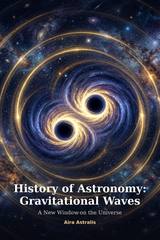 History of Astronomy: Gravitational Waves · Vol. 10
A New Window on the Universe
Table of contents
- Introduction
- Chapter 1: The Discovery of Gravitational Waves
- Chapter 2: Understanding Gravitational Waves
- Chapter 3: Key Characteristics of Gravitational Waves
- Chapter 4: The Science Behind Gravitational Waves
- Chapter 5: Observation and Measurement of Gravitational Waves
- Chapter 6: Important Features of Gravitational Waves
- Chapter 7: Gravitational Waves in Context
- Chapter 8: Modern Understanding of Gravitational Waves
- Chapter 9: Research and Exploration of Gravitational Waves
- Chapter 10: Significant Discoveries About Gravitational Waves
- Chapter 11: Challenges and Mysteries of Gravitational Waves
- Chapter 12: Future Directions in Gravitational Waves Research
- Chapter 13: Fun Facts and Trivia About Gravitational Waves
- Chapter 14: Conclusion: The Significance of Gravitational Waves
- Conclusion
 Earth's Sky: Earthshine and Earthlight · Vol. 11
The Glow on the Moon's Dark Side
Table of contents
- Introduction
- Chapter 1: The Discovery of Earthshine and Earthlight
- Chapter 2: Understanding Earthshine and Earthlight
- Chapter 3: Key Characteristics of Earthshine and Earthlight
- Chapter 4: The Science Behind Earthshine and Earthlight
- Chapter 5: Observation and Measurement of Earthshine and Earthlight
- Chapter 6: Important Features of Earthshine and Earthlight
- Chapter 7: Earthshine and Earthlight in Context
- Chapter 8: Modern Understanding of Earthshine and Earthlight
- Chapter 9: Research and Exploration of Earthshine and Earthlight
- Chapter 10: Significant Discoveries About Earthshine and Earthlight
- Chapter 11: Challenges and Mysteries of Earthshine and Earthlight
- Chapter 12: Future Directions in Earthshine and Earthlight Research
- Chapter 13: Fun Facts and Trivia About Earthshine and Earthlight
- Chapter 14: Conclusion: The Significance of Earthshine and Earthlight
- Conclusion
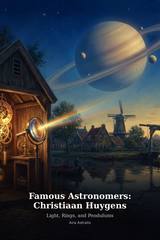 Famous Astronomers: Christiaan Huygens · Vol. 11
Light, Rings, and Pendulums
Table of contents
- Introduction
- Chapter 1: The Discovery of Christiaan Huygens
- Chapter 2: Understanding Christiaan Huygens
- Chapter 3: Key Characteristics of Christiaan Huygens
- Chapter 4: The Science Behind Huygens' Work
- Chapter 5: Observation and Measurement in Huygens' Era
- Chapter 6: Important Features and Inventions of Huygens
- Chapter 7: Huygens in Context
- Chapter 8: Modern Understanding of Huygens' Legacy
- Chapter 9: Research and Exploration Inspired by Huygens
- Chapter 10: Significant Discoveries of Christiaan Huygens
- Chapter 11: Challenges and Mysteries of the Huygens Era
- Chapter 12: Future Directions in Huygens' Questions
- Chapter 13: Fun Facts and Trivia About Christiaan Huygens
- Chapter 14: Conclusion: The Significance of Christiaan Huygens
- Conclusion
 Great Observatories: Giant Magellan Telescope · Vol. 11
Seven mirrors, each the largest and hardest ever cast, arranged into the world's sharpest telescope: this is the Giant Magellan Telescope, the first of the ELT generation to reach full-scale construction, rising on a Chilean ridge its designers' institutions have worked for half a century. This book tells the whole story: the Tucson heresy that a few giant mirrors could beat five hundred small ones, the football-stadium furnace that spins liquid glass into 8.4-meter honeycomb dishes polished to nanometers, the off-axis segments that required inventing both the polish and the test, the seismic-
Table of contents
- Introduction
- Chapter 1: The Discovery of the Giant Magellan Telescope
- Chapter 2: Understanding the Giant Magellan Telescope
- Chapter 3: Key Characteristics of the Giant Magellan Telescope
- Chapter 4: The Science Behind the Giant Magellan Telescope
- Chapter 5: Observation and Measurement Plans of the Giant Magellan
- Chapter 6: Important Features of the Giant Magellan Telescope
- Chapter 7: The Giant Magellan Telescope in Context
- Chapter 8: Modern Understanding of the Giant Magellan Telescope's Goals
- Chapter 9: Challenges and Mysteries of the Giant Magellan Telescope
- Chapter 10: Future Directions of the Giant Magellan Project
- Chapter 11: Research and Exploration Programs at the Giant Magellan
- Chapter 12: The Giant Magellan Telescope and the Chilean Sky
- Chapter 13: Fun Facts and Trivia About Giant Magellan Telescope
- Chapter 14: Conclusion: The Significance of the Giant Magellan Telescope
- Conclusion
 History of Astronomy: Greek Astronomy · Vol. 11
They argued the Earth into a sphere, measured its circumference with a well and a shadow, hung the planets on interlocking crystal spheres, and then replaced the spheres with wheels within wheels that could predict the sky for centuries ahead. This volume of the History of Astronomy series tells the story of Greek astronomy whole: the merchant-philosophers of Miletus who first treated eclipses as arithmetic instead of omens, the Pythagorean faith that the heavens are number, Aristotle's two-spheres universe, Eudoxus's mathematics, Eratosthenes at Alexandria, Aristarchus's two-thousand-year-ear
Table of contents
- Introduction
- Chapter 1: The Discovery of Greek Astronomy
- Chapter 2: Understanding Greek Astronomy
- Chapter 3: Key Characteristics of Greek Astronomy
- Chapter 4: The Science Behind Greek Astronomy
- Chapter 5: Observation and Measurement of Greek Astronomy
- Chapter 6: Important Features of Greek Astronomy
- Chapter 7: Greek Astronomy in Context
- Chapter 8: Modern Understanding of Greek Astronomy
- Chapter 9: Research and Exploration of Greek Astronomy
- Chapter 10: Significant Discoveries About Greek Astronomy
- Chapter 11: Challenges and Mysteries of Greek Astronomy
- Chapter 12: Future Directions in Greek Astronomy Research
- Chapter 13: Fun Facts and Trivia About Greek Astronomy
- Chapter 14: Conclusion: The Significance of Greek Astronomy
- Conclusion
 Earth's Sky: Eclipses · Vol. 12
Twice a year, on average, the Sun goes out in the middle of the day. This is the story of eclipses: the Babylonian scribes who found the rhythm and tamed the omen, the Greek geometry that turned fear into a clock, the war that legend says a shadow stopped, the 1868 expedition that found helium in the Sun's edge, the 1919 photographs that bent light around Einstein's universe, and the million-degree corona that still gathers aircraft, spectrographs, and millions of onlookers under the Moon's shadow. Written for the general reader, it explains the geometry of nodes and shadow cones, the saros ar
Table of contents
- Introduction
- Chapter 1: The Discovery of Eclipses
- Chapter 2: Understanding Eclipses
- Chapter 3: Key Characteristics of Eclipses
- Chapter 4: The Science Behind Eclipses
- Chapter 5: Observation and Measurement of Eclipses
- Chapter 6: Important Features of Eclipses
- Chapter 7: Eclipses in Context
- Chapter 8: Modern Understanding of Eclipses
- Chapter 9: Research and Exploration of Eclipses
- Chapter 10: Significant Discoveries About Eclipses
- Chapter 11: Challenges and Mysteries of Eclipses
- Chapter 12: Future Directions in Eclipses Research
- Chapter 13: Fun Facts and Trivia About Eclipses
- Chapter 14: Conclusion: The Significance of Eclipses
- Conclusion
 Famous Astronomers: Clyde Tombaugh · Vol. 12
Discoverer of Pluto
Table of contents
- Introduction
- Chapter 1: The Discovery of Clyde Tombaugh
- Chapter 2: Understanding Clyde Tombaugh
- Chapter 3: Key Characteristics of Clyde Tombaugh
- Chapter 4: The Science Behind Clyde Tombaugh
- Chapter 5: Observation and Measurement of Clyde Tombaugh
- Chapter 6: Important Features of Clyde Tombaugh
- Chapter 7: Clyde Tombaugh in Context
- Chapter 8: Modern Understanding of Clyde Tombaugh
- Chapter 9: Research and Exploration of Clyde Tombaugh
- Chapter 10: Significant Discoveries About Clyde Tombaugh
- Chapter 11: Challenges and Mysteries of Clyde Tombaugh
- Chapter 12: Future Directions in Clyde Tombaugh Research
- Chapter 13: Small Delights and Clyde Tombaugh Trivia
- Chapter 14: Conclusion: The Significance of Clyde Tombaugh
- Conclusion
 Great Observatories: Herschel Space Observatory · Vol. 12
The Far-Infrared Explorer
Table of contents
- Introduction
- Chapter 1: The Discovery of Herschel Space Observatory
- Chapter 2: Understanding Herschel Space Observatory
- Chapter 3: Key Characteristics of Herschel Space Observatory
- Chapter 4: The Science Behind Herschel Space Observatory
- Chapter 5: Observation and Measurement of Herschel Space Observatory
- Chapter 6: Important Features of Herschel Space Observatory
- Chapter 7: Herschel Space Observatory in Context
- Chapter 8: Modern Understanding of Herschel Space Observatory
- Chapter 9: Research and Exploration of Herschel Space Observatory
- Chapter 10: Significant Discoveries About Herschel Space Observatory
- Chapter 11: Challenges and Mysteries of Herschel Space Observatory
- Chapter 12: Future Directions in Herschel Space Observatory Research
- Chapter 13: Fun Facts and Trivia About Herschel Space Observatory
- Chapter 14: Conclusion: The Significance of Herschel Space Observatory
- Conclusion
 History of Astronomy: Indian Astronomy · Vol. 12
Mathematical Skies
Table of contents
- Introduction
- Chapter 1: The Discovery of Indian Astronomy
- Chapter 2: Understanding Indian Astronomy
- Chapter 3: Key Characteristics of Indian Astronomy
- Chapter 4: The Science Behind Indian Astronomy
- Chapter 5: Observation and Measurement of Indian Astronomy
- Chapter 6: Important Features of Indian Astronomy
- Chapter 7: Indian Astronomy in Context
- Chapter 8: Modern Understanding of Indian Astronomy
- Chapter 9: Research and Exploration of Indian Astronomy
- Chapter 10: Significant Discoveries About Indian Astronomy
- Chapter 11: Challenges and Mysteries of Indian Astronomy
- Chapter 12: Future Directions in Indian Astronomy Research
- Chapter 13: Fun Facts and Trivia About Indian Astronomy
- Chapter 14: Conclusion: The Significance of Indian Astronomy
- Conclusion
 Earth's Sky: Light Pollution · Vol. 13
How Artificial Light Hides the Stars
Table of contents
- Introduction
- Chapter 1: The Discovery of Light Pollution
- Chapter 2: Understanding Light Pollution
- Chapter 3: Key Characteristics of Light Pollution
- Chapter 4: The Science Behind Light Pollution
- Chapter 5: Observation and Measurement of Light Pollution
- Chapter 6: Important Features of Light Pollution
- Chapter 7: Light Pollution in Context
- Chapter 8: Modern Understanding of Light Pollution
- Chapter 9: Research and Exploration of Light Pollution
- Chapter 10: Significant Discoveries About Light Pollution
- Chapter 11: Challenges and Mysteries of Light Pollution
- Chapter 12: Future Directions in Light Pollution Research
- Chapter 13: Fun Facts and Trivia About Light Pollution
- Chapter 14: Conclusion: The Significance of Light Pollution
- Conclusion
 Famous Astronomers: Edmond Halley · Vol. 13
The Comet Predictor
Table of contents
- Introduction
- Chapter 1: The Discovery of Edmond Halley
- Chapter 2: Understanding Edmond Halley
- Chapter 3: Key Characteristics of Edmond Halley
- Chapter 4: The Science Behind Edmond Halley
- Chapter 5: Observation and Measurement of Edmond Halley
- Chapter 6: Important Features of Edmond Halley
- Chapter 7: Edmond Halley in Context
- Chapter 8: Modern Understanding of Edmond Halley
- Chapter 9: Research and Exploration of Edmond Halley
- Chapter 10: Significant Discoveries About Edmond Halley
- Chapter 11: Challenges and Mysteries of Edmond Halley
- Chapter 12: Future Directions in Edmond Halley Research
- Chapter 13: Fun Facts and Trivia About Edmond Halley
- Chapter 14: Conclusion: The Significance of Edmond Halley
- Conclusion
 Great Observatories: Hubble Space Telescope · Vol. 13
The Hubble Space Telescope's whole biography: the fifty-year idea, the flawed mirror, the 1993 rescue, five servicings, and the landmark science of the Key Project, the deep fields, the accelerating universe, the black-hole census, and the aging machine's long third act.
Table of contents
- Introduction
- Chapter 1: The Discovery of The Hubble Space Telescope
- Chapter 2: Understanding The Hubble Space Telescope
- Chapter 3: Key Characteristics of The Hubble Space Telescope
- Chapter 4: The Science Behind The Hubble Space Telescope
- Chapter 5: Observation and Measurement of The Hubble Space Telescope
- Chapter 6: Important Features of The Hubble Space Telescope
- Chapter 7: The Hubble Space Telescope in Context
- Chapter 8: Modern Understanding of The Hubble Space Telescope
- Chapter 9: Research and Exploration of The Hubble Space Telescope
- Chapter 10: Significant Discoveries About The Hubble Space Telescope
- Chapter 11: Challenges and Mysteries of The Hubble Space Telescope
- Chapter 12: Future Directions in The Hubble Space Telescope Research
- Chapter 13: The Hubble Space Telescope's Fun Facts and Trivia
- Chapter 14: Conclusion: The Significance of The Hubble Space Telescope
- Conclusion
 History of Astronomy: Islamic Astronomy · Vol. 13
The Golden Age
Table of contents
- Introduction
- Chapter 1: The Discovery of Islamic Astronomy
- Chapter 2: Understanding Islamic Astronomy
- Chapter 3: Key Characteristics of Islamic Astronomy
- Chapter 4: The Science Behind Islamic Astronomy
- Chapter 5: Observation and Measurement of Islamic Astronomy
- Chapter 6: Important Features of Islamic Astronomy
- Chapter 7: Islamic Astronomy in Context
- Chapter 8: Modern Understanding of Islamic Astronomy
- Chapter 9: Research and Exploration of Islamic Astronomy
- Chapter 10: Significant Discoveries About Islamic Astronomy
- Chapter 11: Challenges and Mysteries of Islamic Astronomy
- Chapter 12: Future Directions in Islamic Astronomy Research
- Chapter 13: Fun Facts and Trivia About Islamic Astronomy
- Chapter 14: Conclusion: The Significance of Islamic Astronomy
- Conclusion
 Earth's Sky: Lunar Libration and the Far Side · Vol. 14
Seeing More Than Half the Moon
Table of contents
- Introduction
- Chapter 1: The Discovery of Lunar Libration and the Far Side
- Chapter 2: Understanding Lunar Libration and the Far Side
- Chapter 3: Key Characteristics of Lunar Libration and the Far Side
- Chapter 4: The Science Behind Lunar Libration and the Far Side
- Chapter 5: Observation and Measurement of Lunar Libration and the Far Side
- Chapter 6: Important Features of Lunar Libration and the Far Side
- Chapter 7: Lunar Libration and the Far Side in Context
- Chapter 8: Modern Understanding of Lunar Libration and the Far Side
- Chapter 9: Research and Exploration of Lunar Libration and the Far Side
- Chapter 10: Significant Discoveries About Lunar Libration and the Far Side
- Chapter 11: Challenges and Mysteries of Lunar Libration and the Far Side
- Chapter 12: Future Directions in Lunar Libration and the Far Side Research
- Chapter 13: Fun Facts and Trivia About Lunar Libration and the Far Side
- Chapter 14: Conclusion: The Significance of Lunar Libration and the Far Side
- Conclusion
 Famous Astronomers: Edwin Hubble · Vol. 14
The Expanding Universe
Table of contents
- Introduction
- Chapter 1: The Discovery of Edwin Hubble
- Chapter 2: Understanding Edwin Hubble
- Chapter 3: Key Characteristics of Edwin Hubble
- Chapter 4: The Science Behind Edwin Hubble
- Chapter 5: Observation and Measurement of Edwin Hubble
- Chapter 6: Important Features of Edwin Hubble
- Chapter 7: Edwin Hubble in Context
- Chapter 8: Modern Understanding of Edwin Hubble
- Chapter 9: Research and Exploration of Edwin Hubble
- Chapter 10: Significant Discoveries About Edwin Hubble
- Chapter 11: Challenges and Mysteries of Edwin Hubble
- Chapter 12: Future Directions in Edwin Hubble Research
- Chapter 13: Small Delights and Edwin Hubble Trivia
- Chapter 14: Conclusion: The Significance of Edwin Hubble
- Conclusion
 Great Observatories: The IceCube Neutrino Observatory · Vol. 14
Detecting Ghosts at the South Pole
Table of contents
- Introduction
- Chapter 1: The Discovery of The IceCube Neutrino Observatory
- Chapter 2: Understanding The IceCube Neutrino Observatory
- Chapter 3: Key Characteristics of The IceCube Neutrino Observatory
- Chapter 4: The Science Behind The IceCube Neutrino Observatory
- Chapter 5: Observation and Measurement of The IceCube Neutrino Observatory
- Chapter 6: Important Features of The IceCube Neutrino Observatory
- Chapter 7: The IceCube Neutrino Observatory in Context
- Chapter 8: Modern Understanding of The IceCube Neutrino Observatory
- Chapter 9: Research and Exploration of The IceCube Neutrino Observatory
- Chapter 10: Significant Discoveries About The IceCube Neutrino Observatory
- Chapter 11: Challenges and Mysteries of The IceCube Neutrino Observatory
- Chapter 12: Future Directions in The IceCube Neutrino Observatory
- Chapter 13: Fun Facts and Trivia About IceCube Neutrino Observatory
- Chapter 14: Conclusion: The Significance of The IceCube Neutrino Observatory
- Conclusion
 History of Astronomy: Medieval European Astronomy · Vol. 14
The definitive history of the sky in the age between Rome and Copernicus. From Bede's Easter arithmetic and the monastic custody of the calendar, through the Carolingian classroom, the twelfth-century translation of Ptolemy and Euclid, the rise of the universities, Sacrobosco's sphere, the Alfonsine Tables, Richard of Wallingford's astronomical clock, and the fourteenth-century mathematics of motion that reached toward inertia and a rotating Earth, to Peurbach and Regiomontanus on the runway of the Copernican revolution. Written for curious readers of all ages, this volume restores a thousand-
Table of contents
- Introduction
- Chapter 1: The Discovery of Medieval European Astronomy
- Chapter 2: Understanding Medieval European Astronomy
- Chapter 3: Key Characteristics of Medieval European Astronomy
- Chapter 4: The Science Behind Medieval European Astronomy
- Chapter 5: Observation and Measurement of Medieval European Astronomy
- Chapter 6: Important Features of Medieval European Astronomy
- Chapter 7: Medieval European Astronomy in Context
- Chapter 8: Modern Understanding of Medieval European Astronomy
- Chapter 9: Research and Exploration of Medieval European Astronomy
- Chapter 10: Significant Discoveries About Medieval European Astronomy
- Chapter 11: Challenges and Mysteries of Medieval European Astronomy
- Chapter 12: Future Directions in Medieval European Astronomy Research
- Chapter 13: Fun Facts and Trivia About Medieval European Astronomy
- Chapter 14: Conclusion: The Significance of Medieval European Astronomy
- Conclusion
 Earth's Sky: Meteors and Meteor Showers · Vol. 15
Shooting Stars
Table of contents
- Introduction
- Chapter 1: The Discovery of Meteors and Meteor Showers
- Chapter 2: Understanding Meteors and Meteor Showers
- Chapter 3: Key Characteristics of Meteors and Meteor Showers
- Chapter 4: The Science Behind Meteors and Meteor Showers
- Chapter 5: Observation and Measurement of Meteors and Meteor Showers
- Chapter 6: Important Features of Meteors and Meteor Showers
- Chapter 7: Meteors and Meteor Showers in Context
- Chapter 8: Modern Understanding of Meteors and Meteor Showers
- Chapter 9: Research and Exploration of Meteors and Meteor Showers
- Chapter 10: Significant Discoveries About Meteors and Meteor Showers
- Chapter 11: Challenges and Mysteries of Meteors and Meteor Showers
- Chapter 12: Future Directions in Meteors and Meteor Showers Research
- Chapter 13: Fun Facts and Trivia About Meteors and Meteor Showers
- Chapter 14: Conclusion: The Significance of Meteors and Meteor Showers
- Conclusion
 Famous Astronomers: Eleanor Helin · Vol. 15
Asteroid Discoverer
Table of contents
- Introduction
- Chapter 1: The Discovery of Eleanor Helin
- Chapter 2: Understanding Eleanor Helin
- Chapter 3: Key Characteristics of Eleanor Helin
- Chapter 4: The Science Behind Eleanor Helin
- Chapter 5: Observation and Measurement of Eleanor Helin
- Chapter 6: Important Features of Eleanor Helin
- Chapter 7: Eleanor Helin in Context
- Chapter 8: Modern Understanding of Eleanor Helin
- Chapter 9: Research and Exploration of Eleanor Helin
- Chapter 10: Significant Discoveries About Eleanor Helin
- Chapter 11: Challenges and Mysteries of Eleanor Helin
- Chapter 12: Future Directions in Eleanor Helin Research
- Chapter 13: Fun Facts and Trivia About Eleanor Helin
- Chapter 14: Conclusion: The Significance of Eleanor Helin
- Conclusion
 Great Observatories: James Webb Space Telescope · Vol. 15
Seeing the First Light
Table of contents
- Introduction
- Chapter 1: The Discovery of James Webb Space Telescope
- Chapter 2: Understanding James Webb Space Telescope
- Chapter 3: Key Characteristics of James Webb Space Telescope
- Chapter 4: The Science Behind James Webb Space Telescope
- Chapter 5: Observation and Measurement of James Webb Space Telescope
- Chapter 6: Important Features of James Webb Space Telescope
- Chapter 7: James Webb Space Telescope in Context
- Chapter 8: Modern Understanding of James Webb Space Telescope
- Chapter 9: Research and Exploration of James Webb Space Telescope
- Chapter 10: Significant Discoveries About James Webb Space Telescope
- Chapter 11: Challenges and Mysteries of James Webb Space Telescope
- Chapter 12: Future Directions in James Webb Space Telescope Research
- Chapter 13: Fun Facts and Trivia About James Webb Space Telescope
- Chapter 14: Conclusion: The Significance of James Webb Space Telescope
- Conclusion
 History of Astronomy: Mesoamerican Astronomy · Vol. 15
Maya and Aztec Skies
Table of contents
- Introduction
- Chapter 1: The Discovery of Mesoamerican Astronomy
- Chapter 2: Understanding Mesoamerican Astronomy
- Chapter 3: Key Characteristics of Mesoamerican Astronomy
- Chapter 4: The Science Behind Mesoamerican Astronomy
- Chapter 5: Observation and Measurement of Mesoamerican Astronomy
- Chapter 6: Important Features of Mesoamerican Astronomy
- Chapter 7: Mesoamerican Astronomy in Context
- Chapter 8: Modern Understanding of Mesoamerican Astronomy
- Chapter 9: Research and Exploration of Mesoamerican Astronomy
- Chapter 10: Significant Discoveries About Mesoamerican Astronomy
- Chapter 11: Challenges and Mysteries of Mesoamerican Astronomy
- Chapter 12: Future Directions in Mesoamerican Astronomy Research
- Chapter 13: Fun Facts and Trivia About Mesoamerican Astronomy
- Chapter 14: Conclusion: The Significance of Mesoamerican Astronomy
- Conclusion
 Earth's Sky: Naked-Eye Planets · Vol. 16
Seeing Mercury Through Saturn Without a Telescope
Table of contents
- Introduction
- Chapter 1: The Discovery of Naked-Eye Planets
- Chapter 2: Mercury: The Elusive Planet
- Chapter 3: Key Characteristics of Naked-Eye Planets
- Chapter 4: The Science Behind Naked-Eye Planets
- Chapter 5: Observation and Measurement of Naked-Eye Planets
- Chapter 6: Important Features of Naked-Eye Planets
- Chapter 7: Naked-Eye Planets in Context
- Chapter 8: Planetary Conjunctions
- Chapter 9: Research and Exploration of Naked-Eye Planets
- Chapter 10: Significant Discoveries About Naked-Eye Planets
- Chapter 11: Challenges and Mysteries of Naked-Eye Planets
- Chapter 12: Future Directions in Naked-Eye Planets Research
- Chapter 13: Fun Facts and Trivia About Naked-Eye Planets
- Chapter 14: Conclusion: The Significance of Naked-Eye Planets
- Conclusion
 Famous Astronomers: Fred Hoyle · Vol. 16
Steady State and Stellar Nucleosynthesis
Table of contents
- Introduction
- Chapter 1: The Discovery of Fred Hoyle
- Chapter 2: Understanding Fred Hoyle
- Chapter 3: Key Characteristics of Fred Hoyle
- Chapter 4: The Science Behind Fred Hoyle
- Chapter 5: Observation and Measurement of Fred Hoyle
- Chapter 6: Important Features of Fred Hoyle
- Chapter 7: Fred Hoyle in Context
- Chapter 8: Modern Understanding of Fred Hoyle
- Chapter 9: Research and Exploration of Fred Hoyle
- Chapter 10: Significant Discoveries About Fred Hoyle
- Chapter 11: Challenges and Mysteries of Fred Hoyle
- Chapter 12: Future Directions in Fred Hoyle Research
- Chapter 13: Fun Facts and Trivia About Fred Hoyle
- Chapter 14: Conclusion: The Significance of Fred Hoyle
- Conclusion
 Great Observatories: The Keck Observatory · Vol. 16
Twin Giants of Mauna Kea
Table of contents
- Introduction
- Chapter 1: The Discovery of The Keck Observatory
- Chapter 2: Understanding The Keck Observatory
- Chapter 3: Key Characteristics of The Keck Observatory
- Chapter 4: The Science Behind The Keck Observatory
- Chapter 5: Observation and Measurement of The Keck Observatory
- Chapter 6: Important Features of The Keck Observatory
- Chapter 7: The Keck Observatory in Context
- Chapter 8: Modern Understanding of The Keck Observatory
- Chapter 9: Research and Exploration of The Keck Observatory
- Chapter 10: Significant Discoveries About The Keck Observatory
- Chapter 11: Challenges and Mysteries of The Keck Observatory
- Chapter 12: Future Directions in The Keck Observatory Research
- Chapter 13: Fun Facts and Trivia About Keck Observatory
- Chapter 14: Conclusion: The Significance of The Keck Observatory
- Conclusion
 History of Astronomy: Newton's Universe · Vol. 16
The universe that modern science actually lives in was invented in 1687, when Isaac Newton proved that the pull guiding a falling apple and the force steering the Moon are one and the same thing. This volume of the History of Astronomy series tells the full story of the Newtonian cosmos: how the Principia was written and published, how its mathematics conquered Europe, and how the theory was tested by the shape of the Earth, the speed of light, the return of Halley's comet on schedule in 1758, and the discovery of Neptune by pen and arithmetic alone. Later chapters follow the clockwork univers
Table of contents
- Introduction
- Chapter 1: The Discovery of Newton's Universe
- Chapter 2: Understanding Newton's Universe
- Chapter 3: Key Characteristics of Newton's Universe
- Chapter 4: The Science Behind Newton's Universe
- Chapter 5: Observation and Measurement of Newton's Universe
- Chapter 6: Important Features of Newton's Universe
- Chapter 7: Newton's Universe in Context
- Chapter 8: Modern Understanding of Newton's Universe
- Chapter 9: Research and Exploration of Newton's Universe
- Chapter 10: Significant Discoveries About Newton's Universe
- Chapter 11: Challenges and Mysteries of Newton's Universe
- Chapter 12: Future Directions in Newton's Universe Research
- Chapter 13: Fun Facts and Trivia About Newton's Universe
- Chapter 14: Conclusion: The Significance of Newton's Universe
- Conclusion
 Earth's Sky: Noctilucent Clouds and Airglow · Vol. 17
The sky's two quietest lights live at the top of the atmosphere, and this book tells their whole story. Noctilucent clouds, first recorded in the twilight after Krakatoa and photographed and named by Otto Jesse in the 1880s, are rivers of silvery-blue ice at eighty-three kilometers, the highest weather on Earth, forming in the polar summer mesopause, the coldest place in the entire Earth system, on the smoke of meteors. Airglow, established spectroscopically in the 1920s, is the atmosphere's permanent chemical glow, green, red, and sodium-yellow layers breathing through every moonless night. T
Table of contents
- Introduction
- Chapter 1: The Discovery of Noctilucent Clouds and Airglow
- Chapter 2: Understanding Noctilucent Clouds and Airglow
- Chapter 3: Key Characteristics of Noctilucent Clouds and Airglow
- Chapter 4: The Science Behind Noctilucent Clouds and Airglow
- Chapter 5: Observation and Measurement of Noctilucent Clouds and Airglow
- Chapter 6: Important Features of Noctilucent Clouds and Airglow
- Chapter 7: Noctilucent Clouds and Airglow in Context
- Chapter 8: Modern Understanding of Noctilucent Clouds and Airglow
- Chapter 9: Research and Exploration of Noctilucent Clouds and Airglow
- Chapter 10: Significant Discoveries About Noctilucent Clouds and Airglow
- Chapter 11: Challenges and Mysteries of Noctilucent Clouds and Airglow
- Chapter 12: Future Directions in Noctilucent Clouds and Airglow Research
- Chapter 13: Fun Facts and Trivia About Noctilucent Clouds and Airglow
- Chapter 14: Conclusion: The Significance of Noctilucent Clouds and Airglow
- Conclusion
 Famous Astronomers: Fritz Zwicky · Vol. 17
Dark Matter Pioneer
Table of contents
- Introduction
- Chapter 1: The Discovery of Fritz Zwicky
- Chapter 2: Understanding Fritz Zwicky
- Chapter 3: Key Characteristics of Fritz Zwicky
- Chapter 4: The Science Behind Fritz Zwicky
- Chapter 5: Observation and Measurement of Fritz Zwicky
- Chapter 6: Important Features of Fritz Zwicky
- Chapter 7: Fritz Zwicky in Context
- Chapter 8: Modern Understanding of Fritz Zwicky
- Chapter 9: Research and Exploration of Fritz Zwicky
- Chapter 10: Significant Discoveries About Fritz Zwicky
- Chapter 11: Challenges and Mysteries of Fritz Zwicky
- Chapter 12: Future Directions in Fritz Zwicky Research
- Chapter 13: Fun Facts and Trivia About Fritz Zwicky
- Chapter 14: Conclusion: The Significance of Fritz Zwicky
- Conclusion
 Great Observatories: Kepler · Vol. 17
A telescope that was told no four times, then spent nine years answering a question humanity had asked forever: how many stars hold planets like ours? This is the story of the Kepler space telescope, NASA's planet hunter, which stared without blinking at a single patch of sky between Cygnus and Lyra for four years, watching a hundred and fifty thousand stars for the minute dimming of a transit. Built to measure a rate rather than chase trophies, it returned the first census of the galaxy's worlds: more than twenty-six hundred confirmed planets, compact systems tighter than Mercury's orbit, pla
Table of contents
- Introduction
- Chapter 1: The Discovery of Kepler
- Chapter 2: Understanding Kepler
- Chapter 3: Key Characteristics of Kepler
- Chapter 4: The Science Behind Kepler
- Chapter 5: Observation and Measurement of Kepler
- Chapter 6: Important Features of Kepler
- Chapter 7: Kepler in Context
- Chapter 8: Modern Understanding of Kepler
- Chapter 9: Research and Exploration of Kepler
- Chapter 10: Significant Discoveries About Kepler
- Chapter 11: Challenges and Mysteries of Kepler
- Chapter 12: Future Directions in Kepler Research
- Chapter 13: Fun Facts and Trivia About Kepler
- Chapter 14: Conclusion: The Significance of Kepler
- Conclusion
 History of Astronomy: Polynesian Navigation · Vol. 17
Wayfinding Across the Pacific
Table of contents
- Introduction
- Chapter 1: The Discovery of Polynesian Navigation
- Chapter 2: Understanding Polynesian Navigation
- Chapter 3: Key Characteristics of Polynesian Navigation
- Chapter 4: The Science Behind Polynesian Navigation
- Chapter 5: Observation and Measurement of Polynesian Navigation
- Chapter 6: Important Features of Polynesian Navigation
- Chapter 7: Polynesian Navigation in Context
- Chapter 8: Modern Understanding of Polynesian Navigation
- Chapter 9: Research and Exploration of Polynesian Navigation
- Chapter 10: Significant Discoveries About Polynesian Navigation
- Chapter 11: Challenges and Mysteries of Polynesian Navigation
- Chapter 12: Future Directions in Polynesian Navigation Research
- Chapter 13: Fun Facts and Trivia About Polynesian Navigation
- Chapter 14: Conclusion: The Significance of Polynesian Navigation
- Conclusion
 Earth's Sky: Occultations · Vol. 18
When the Sky Hides Itself
Table of contents
- Introduction
- Chapter 1: The Discovery of Occultations
- Chapter 2: Understanding Occultations
- Chapter 3: Key Characteristics of Occultations
- Chapter 4: The Science Behind Occultations
- Chapter 5: Observation and Measurement of Occultations
- Chapter 6: Important Features of Occultations
- Chapter 7: Occultations in Context
- Chapter 8: Modern Understanding of Occultations
- Chapter 9: Research and Exploration of Occultations
- Chapter 10: Significant Discoveries About Occultations
- Chapter 11: Challenges and Mysteries of Occultations
- Chapter 12: Future Directions in Occultations Research
- Chapter 13: Fun Facts and Trivia About Occultations
- Chapter 14: Conclusion: The Significance of Occultations
- Conclusion
 Famous Astronomers: Galileo Galilei · Vol. 18
The First Telescope
Table of contents
- Introduction
- Chapter 1: The Discovery of Galileo Galilei
- Chapter 2: Understanding Galileo Galilei
- Chapter 3: Key Characteristics of Galileo Galilei
- Chapter 4: The Science Behind Galileo Galilei
- Chapter 5: Observation and Measurement of Galileo Galilei
- Chapter 6: Important Features of Galileo Galilei
- Chapter 7: Galileo Galilei in Context
- Chapter 8: Modern Understanding of Galileo Galilei
- Chapter 9: Research and Exploration of Galileo Galilei
- Chapter 10: Significant Discoveries About Galileo Galilei
- Chapter 11: Challenges and Mysteries of Galileo Galilei
- Chapter 12: Future Directions in Galileo Galilei Research
- Chapter 13: Fun Facts and Trivia About Galileo Galilei
- Chapter 14: Conclusion: The Significance of Galileo Galilei
- Conclusion
 Great Observatories: LIGO · Vol. 18
Hearing Gravitational Waves
Table of contents
- Introduction
- Chapter 1: The Discovery of LIGO
- Chapter 2: Understanding LIGO
- Chapter 3: Key Characteristics of LIGO
- Chapter 4: The Science Behind LIGO
- Chapter 5: Observation and Measurement of LIGO
- Chapter 6: Important Features of LIGO
- Chapter 7: LIGO in Context
- Chapter 8: Modern Understanding of LIGO
- Chapter 9: Research and Exploration of LIGO
- Chapter 10: Significant Discoveries About LIGO
- Chapter 11: Challenges and Mysteries of LIGO
- Chapter 12: Future Directions in LIGO Research
- Chapter 13: Fun Facts and Trivia About LIGO
- Chapter 14: Conclusion: The Significance of LIGO
- Conclusion
 History of Astronomy: Radio Astronomy History · Vol. 18
Hearing the Invisible Universe
Table of contents
- Introduction
- Chapter 1: The Discovery of Radio Astronomy
- Chapter 2: Understanding Radio Astronomy
- Chapter 3: Key Characteristics of Radio Astronomy
- Chapter 4: The Science Behind Radio Astronomy
- Chapter 5: Observation and Measurement of Radio Astronomy
- Chapter 6: Important Features of Radio Astronomy
- Chapter 7: Radio Astronomy in Context
- Chapter 8: Modern Understanding of Radio Astronomy
- Chapter 9: Research and Exploration of Radio Astronomy
- Chapter 10: Significant Discoveries About Radio Astronomy
- Chapter 11: Challenges and Mysteries of Radio Astronomy
- Chapter 12: Future Directions in Radio Astronomy Research
- Chapter 13: Fun Facts and Trivia About Radio Astronomy
- Chapter 14: Conclusion: The Significance of Radio Astronomy
- Conclusion
 Earth's Sky: Photographing the Night Sky · Vol. 19
Capturing the Cosmos
Table of contents
- Introduction
- Chapter 1: The Discovery of Photographing the Night Sky
- Chapter 2: Understanding Photographing the Night Sky
- Chapter 3: Key Characteristics of Photographing the Night Sky
- Chapter 4: The Science Behind Photographing the Night Sky
- Chapter 5: Observation and Measurement of Photographing the Night Sky
- Chapter 6: Important Features of Photographing the Night Sky
- Chapter 7: Photographing the Night Sky in Context
- Chapter 8: Modern Understanding of Photographing the Night Sky
- Chapter 9: Research and Exploration of Photographing the Night Sky
- Chapter 10: Significant Discoveries About Photographing the Night Sky
- Chapter 11: Challenges and Mysteries of Photographing the Night Sky
- Chapter 12: Future Directions in Photographing the Night Sky Research
- Chapter 13: Fun Facts and Trivia About Photographing the Night Sky
- Chapter 14: Conclusion: The Significance of Photographing the Night Sky
- Conclusion
 Famous Astronomers: George Gamow · Vol. 19
Who explained why atoms decay, why stars shine, and why the universe still glows with the light of its beginning, all with the same quantum ideas? This book tells the story of George Gamow, the Odessa-born physicist who cracked alpha decay at twenty-four with a tunnelling theory that explained decades of radioactivity measurements, gave the atomic nucleus its first mathematical model with the liquid drop picture, and then turned to the sky. It follows his escape from the Soviet Union by kayak and by Solvay passport, his American years with Teller and the young Ralph Alpher, the famous April Fi
Table of contents
- Introduction
- Chapter 1: The Discovery of George Gamow
- Chapter 2: Understanding George Gamow
- Chapter 3: Key Characteristics of George Gamow
- Chapter 4: The Science Behind George Gamow
- Chapter 5: Observation and Measurement of George Gamow
- Chapter 6: Important Features of George Gamow
- Chapter 7: George Gamow in Context
- Chapter 8: Modern Understanding of George Gamow
- Chapter 9: Research and Exploration of George Gamow
- Chapter 10: Significant Discoveries About George Gamow
- Chapter 11: Challenges and Mysteries of George Gamow
- Chapter 12: Future Directions in George Gamow Research
- Chapter 13: Fun Facts and Trivia About George Gamow
- Chapter 14: Conclusion: The Significance of George Gamow
- Conclusion
 Great Observatories: LOFAR · Vol. 19
The Low-Frequency Array
Table of contents
- Introduction
- Chapter 1: The Discovery of LOFAR
- Chapter 2: Understanding LOFAR
- Chapter 3: Key Characteristics of LOFAR
- Chapter 4: The Science Behind LOFAR
- Chapter 5: Observation and Measurement of LOFAR
- Chapter 6: Important Features of LOFAR
- Chapter 7: LOFAR in Context
- Chapter 8: Modern Understanding of LOFAR
- Chapter 9: Challenges and Mysteries of LOFAR
- Chapter 10: Significant Discoveries About LOFAR
- Chapter 11: Future Directions in LOFAR Research
- Chapter 12: Fun Facts and Trivia About LOFAR
- Chapter 13: LOFAR for the Visitor, the Student, and the Amateur
- Chapter 14: Conclusion: The Significance of LOFAR
- Conclusion
 History of Astronomy: The Big Bang Theory · Vol. 19
The definitive history of how humanity discovered the universe has a beginning. From Vesto Slipher's lonely redshifts and Georges Lemaitre's primeval atom, through Hubble's mountaintop measurements and the great rivalry with Fred Hoyle's steady state, to the accidental discovery of the cosmic microwave background and the satellite era of precision cosmology. Written for curious readers of all ages, this volume explains what the Big Bang theory actually claims, how each piece of evidence was won, and which mysteries - dark matter, dark energy, the Hubble tension - keep cosmologists awake at nig
Table of contents
- Introduction
- Chapter 1: The Discovery of The Big Bang Theory
- Chapter 2: Understanding The Big Bang Theory
- Chapter 3: Key Characteristics of The Big Bang Theory
- Chapter 4: The Science Behind The Big Bang Theory
- Chapter 5: Observation and Measurement of The Big Bang Theory
- Chapter 6: Important Features of The Big Bang Theory
- Chapter 7: The Big Bang Theory in Context
- Chapter 8: Modern Understanding of The Big Bang Theory
- Chapter 9: Research and Exploration of The Big Bang Theory
- Chapter 10: Significant Discoveries About The Big Bang Theory
- Chapter 11: Challenges and Mysteries of The Big Bang Theory
- Chapter 12: Future Directions in The Big Bang Theory Research
- Chapter 13: Fun Facts and Trivia About Big Bang Theory
- Chapter 14: Conclusion: The Significance of The Big Bang Theory
- Conclusion
 Earth's Sky: Precession of the Equinoxes · Vol. 20
The Wobble of the Earth
Table of contents
- Introduction
- Chapter 1: The Discovery of Precession of the Equinoxes
- Chapter 2: Understanding Precession of the Equinoxes
- Chapter 3: Key Characteristics of Precession of the Equinoxes
- Chapter 4: The Science Behind Precession of the Equinoxes
- Chapter 5: Observation and Measurement of Precession of the Equinoxes
- Chapter 6: Important Features of Precession of the Equinoxes
- Chapter 7: Precession of the Equinoxes in Context
- Chapter 8: Modern Understanding of Precession of the Equinoxes
- Chapter 9: Research and Exploration of Precession of the Equinoxes
- Chapter 10: Significant Discoveries About Precession of the Equinoxes
- Chapter 11: Challenges and Mysteries of Precession of the Equinoxes
- Chapter 12: Future Directions in Precession of the Equinoxes Research
- Chapter 13: Fun Facts and Trivia About Precession of the Equinoxes
- Chapter 14: Conclusion: The Significance of Precession of the Equinoxes
- Conclusion
 Famous Astronomers: Georges Lemaitre · Vol. 20
The Father of the Big Bang
Table of contents
- Introduction
- Chapter 1: The Discovery of Georges Lemaitre
- Chapter 2: Understanding Georges Lemaitre
- Chapter 3: Key Characteristics of Georges Lemaitre
- Chapter 4: The Science Behind Georges Lemaitre
- Chapter 5: Observation and Measurement of Georges Lemaitre
- Chapter 6: Important Features of Georges Lemaitre
- Chapter 7: Georges Lemaitre in Context
- Chapter 8: Modern Understanding of Georges Lemaitre
- Chapter 9: Research and Exploration of Georges Lemaitre
- Chapter 10: Significant Discoveries About Georges Lemaitre
- Chapter 11: Challenges and Mysteries of Georges Lemaitre
- Chapter 12: Future Directions in Georges Lemaitre Research
- Chapter 13: Fun Facts and Trivia About Georges Lemaitre
- Chapter 14: Conclusion: The Significance of Georges Lemaitre
- Conclusion
 Great Observatories: Mount Wilson Observatory · Vol. 20
Where the Universe Expanded
Table of contents
- Introduction
- Chapter 1: The Discovery of Mount Wilson Observatory
- Chapter 2: Understanding Mount Wilson Observatory
- Chapter 3: Key Characteristics of Mount Wilson Observatory
- Chapter 4: The Science Behind Mount Wilson Observatory
- Chapter 5: Observation and Measurement of Mount Wilson Observatory
- Chapter 6: Important Features of Mount Wilson Observatory
- Chapter 7: Mount Wilson Observatory in Context
- Chapter 8: Modern Understanding of Mount Wilson Observatory
- Chapter 9: Research and Exploration of Mount Wilson Observatory
- Chapter 10: Significant Discoveries About Mount Wilson Observatory
- Chapter 11: Challenges and Mysteries of Mount Wilson Observatory
- Chapter 12: Future Directions in Mount Wilson Observatory Research
- Chapter 13: Fun Facts and Trivia About Mount Wilson Observatory
- Chapter 14: Conclusion: The Significance of Mount Wilson Observatory
- Conclusion
 History of Astronomy: The Discovery of Pluto · Vol. 20
Finding Planet X
Table of contents
- Introduction
- Chapter 1: The Discovery of The Discovery of Pluto
- Chapter 2: Understanding The Discovery of Pluto
- Chapter 3: Key Characteristics of The Discovery of Pluto
- Chapter 4: The Science Behind The Discovery of Pluto
- Chapter 5: Observation and Measurement of The Discovery of Pluto
- Chapter 6: Important Features of The Discovery of Pluto
- Chapter 7: The Discovery of Pluto in Context
- Chapter 8: Modern Understanding of The Discovery of Pluto
- Chapter 9: Research and Exploration of The Discovery of Pluto
- Chapter 10: Significant Discoveries About The Discovery of Pluto
- Chapter 11: Challenges and Mysteries of The Discovery of Pluto
- Chapter 12: Future Directions in The Discovery of Pluto Research
- Chapter 13: Fun Facts and Trivia About Discovery of Pluto
- Chapter 14: Conclusion: The Significance of The Discovery of Pluto
- Conclusion
 Earth's Sky: Red Sky at Morning · Vol. 21
The oldest weather forecast still in daily use is a rhyme about the color of the sky, and this book takes it seriously: quoted in the Gospel of Matthew as wisdom already proverbial, red sky at morning is a working piece of meteorology, not folklore. The rhyme works because mid-latitude weather travels west to east: a gilded western sunset samples the dry, clean air of an approaching high, while a red dawn means clear air to the east and moisture and cloud coming from the west. This volume follows the rule from its two-thousand-year paper trail through the physics that explains it, Rayleigh's a
Table of contents
- Introduction
- Chapter 1: The Discovery of Red Sky at Morning
- Chapter 2: Understanding Red Sky at Morning
- Chapter 3: Key Characteristics of Red Sky at Morning
- Chapter 4: The Science Behind Red Sky at Morning
- Chapter 5: Observation and Measurement of Red Sky at Morning
- Chapter 6: Important Features of Red Sky at Morning
- Chapter 7: Red Sky at Morning in Context
- Chapter 8: Modern Understanding of Red Sky at Morning
- Chapter 9: Research and Exploration of Red Sky at Morning
- Chapter 10: Significant Discoveries About Red Sky at Morning
- Chapter 11: Challenges and Mysteries of Red Sky at Morning
- Chapter 12: Future Directions in Red Sky at Morning Research
- Chapter 13: Fun Facts and Trivia About Red Sky at Morning
- Chapter 14: Conclusion: The Significance of Red Sky at Morning
- Conclusion
 Famous Astronomers: Gerard Kuiper · Vol. 21
The Belt Beyond Neptune
Table of contents
- Introduction
- Chapter 1: The Discovery of Gerard Kuiper
- Chapter 2: Understanding Gerard Kuiper
- Chapter 3: Key Characteristics of Gerard Kuiper
- Chapter 4: The Science Behind Gerard Kuiper
- Chapter 5: Observation and Measurement of Gerard Kuiper
- Chapter 6: Important Features of Gerard Kuiper
- Chapter 7: Gerard Kuiper in Context
- Chapter 8: Modern Understanding of Gerard Kuiper
- Chapter 9: Research and Exploration of Gerard Kuiper
- Chapter 10: Significant Discoveries About Gerard Kuiper
- Chapter 11: Challenges and Mysteries of Gerard Kuiper
- Chapter 12: Future Directions in Gerard Kuiper Research
- Chapter 13: Fun Facts and Trivia About Gerard Kuiper
- Chapter 14: Conclusion: The Significance of Gerard Kuiper
- Conclusion
 Great Observatories: NuSTAR · Vol. 21
Nuclear Spectroscopy in Space
Table of contents
- Introduction
- Chapter 1: The Discovery of NuSTAR
- Chapter 2: Understanding NuSTAR
- Chapter 3: Key Characteristics of NuSTAR
- Chapter 4: The Science Behind NuSTAR
- Chapter 5: Observation and Measurement with NuSTAR
- Chapter 6: Important Features of the NuSTAR Observatory
- Chapter 7: NuSTAR in Context
- Chapter 8: Modern Understanding of NuSTAR
- Chapter 9: Research and Exploration with NuSTAR
- Chapter 10: Significant Discoveries About NuSTAR
- Chapter 11: Challenges and Mysteries of NuSTAR
- Chapter 12: Future Directions in NuSTAR Research
- Chapter 13: Fun Facts and Trivia About NuSTAR
- Chapter 14: Conclusion: The Significance of NuSTAR
- Conclusion
 History of Astronomy: The Exoplanet Revolution · Vol. 21
New Worlds Beyond
Table of contents
- Introduction
- Chapter 1: The Discovery of The Exoplanet Revolution
- Chapter 2: Understanding The Exoplanet Revolution
- Chapter 3: Key Characteristics of The Exoplanet Revolution
- Chapter 4: The Science Behind The Exoplanet Revolution
- Chapter 5: Observation and Measurement of The Exoplanet Revolution
- Chapter 6: Important Features of The Exoplanet Revolution
- Chapter 7: The Exoplanet Revolution in Context
- Chapter 8: Modern Understanding of The Exoplanet Revolution
- Chapter 9: Research and Exploration of The Exoplanet Revolution
- Chapter 10: Significant Discoveries About The Exoplanet Revolution
- Chapter 11: Challenges and Mysteries of The Exoplanet Revolution
- Chapter 12: Future Directions in The Exoplanet Revolution Research
- Chapter 13: Fun Facts and Trivia About Exoplanet Revolution
- Chapter 14: Conclusion: The Significance of The Exoplanet Revolution
- Conclusion
 Earth's Sky: Star Catalogues · Vol. 22
Bayer, Flamsteed, and the Naming of Stars
Table of contents
- Introduction
- Chapter 1: The Discovery of Star Catalogues
- Chapter 2: Understanding Star Catalogues
- Chapter 3: Key Characteristics of Star Catalogues
- Chapter 4: The Science Behind Star Catalogues
- Chapter 5: Observation and Measurement of Star Catalogues
- Chapter 6: Important Features of Star Catalogues
- Chapter 7: Star Catalogues in Context
- Chapter 8: Modern Understanding of Star Catalogues
- Chapter 9: Research and Exploration of Star Catalogues
- Chapter 10: Significant Discoveries About Star Catalogues
- Chapter 11: Challenges and Mysteries of Star Catalogues
- Chapter 12: Future Directions in Star Catalogues Research
- Chapter 13: Fun Facts and Trivia About Star Catalogues
- Chapter 14: Conclusion: The Significance of Star Catalogues
- Conclusion
 Famous Astronomers: Giovanni Cassini · Vol. 22
Mapping the Rings of Saturn
Table of contents
- Introduction
- Chapter 1: The Discovery of Giovanni Cassini
- Chapter 2: Understanding Giovanni Cassini
- Chapter 3: Key Characteristics of Giovanni Cassini
- Chapter 4: The Science Behind Giovanni Cassini
- Chapter 5: Observation and Measurement of Giovanni Cassini
- Chapter 6: Important Features of Giovanni Cassini
- Chapter 7: Giovanni Cassini in Context
- Chapter 8: Modern Understanding of Giovanni Cassini
- Chapter 9: Research and Exploration of Giovanni Cassini
- Chapter 10: Significant Discoveries About Giovanni Cassini
- Chapter 11: Challenges and Mysteries of Giovanni Cassini
- Chapter 12: Future Directions in Giovanni Cassini Research
- Chapter 13: Fun Facts and Trivia About Giovanni Cassini
- Chapter 14: Conclusion: The Significance of Giovanni Cassini
- Conclusion
 Great Observatories: Palomar Observatory · Vol. 22
The Giant Eye
Table of contents
- Introduction
- Chapter 1: The Discovery of Palomar Observatory
- Chapter 2: Understanding Palomar Observatory
- Chapter 3: Key Characteristics of Palomar Observatory
- Chapter 4: The Science Behind Palomar Observatory
- Chapter 5: Observation and Measurement of Palomar Observatory
- Chapter 6: Important Features of Palomar Observatory
- Chapter 7: Palomar Observatory in Context
- Chapter 8: Modern Understanding of Palomar Observatory
- Chapter 9: Research and Exploration of Palomar Observatory
- Chapter 10: Significant Discoveries About Palomar Observatory
- Chapter 11: Challenges and Mysteries of Palomar Observatory
- Chapter 12: Future Directions in Palomar Observatory Research
- Chapter 13: Small Delights and Palomar Trivia
- Chapter 14: Conclusion: The Significance of Palomar Observatory
- Conclusion
 History of Astronomy: The Expanding Universe · Vol. 22
How the Sky Began to Grow
Table of contents
- Introduction
- Chapter 1: The Discovery of The Expanding Universe
- Chapter 2: Understanding The Expanding Universe
- Chapter 3: Key Characteristics of The Expanding Universe
- Chapter 4: The Science Behind The Expanding Universe
- Chapter 5: Observation and Measurement of The Expanding Universe
- Chapter 6: Important Features of The Expanding Universe
- Chapter 7: The Expanding Universe in Context
- Chapter 8: Modern Understanding of The Expanding Universe
- Chapter 9: Research and Exploration of The Expanding Universe
- Chapter 10: Significant Discoveries About The Expanding Universe
- Chapter 11: Challenges and Mysteries of The Expanding Universe
- Chapter 12: Future Directions in The Expanding Universe Research
- Chapter 13: Fun Facts and Trivia About Expanding Universe
- Chapter 14: Conclusion: The Significance of The Expanding Universe
- Conclusion
 Earth's Sky: Star Clusters · Vol. 23
Pleiades, Hyades, and the Great Globulars
Table of contents
- Introduction
- Chapter 1: The Discovery of Star Clusters
- Chapter 2: Understanding Star Clusters
- Chapter 3: Key Characteristics of Star Clusters
- Chapter 4: The Science Behind Star Clusters
- Chapter 5: Observation and Measurement of Star Clusters
- Chapter 6: Important Features of Star Clusters
- Chapter 7: Star Clusters in Context
- Chapter 8: Modern Understanding of Star Clusters
- Chapter 9: Research and Exploration of Star Clusters
- Chapter 10: Significant Discoveries About Star Clusters
- Chapter 11: Challenges and Mysteries of Star Clusters
- Chapter 12: Future Directions in Star Clusters Research
- Chapter 13: Small Delights and Star Cluster Trivia
- Chapter 14: Conclusion: The Significance of Star Clusters
- Conclusion
 Famous Astronomers: Giuseppe Piazzi · Vol. 23
The First Asteroid
Table of contents
- Introduction
- Chapter 1: The Discovery of Giuseppe Piazzi
- Chapter 2: Understanding Giuseppe Piazzi
- Chapter 3: Key Characteristics of Giuseppe Piazzi
- Chapter 4: The Science Behind Giuseppe Piazzi
- Chapter 5: Observation and Measurement of Giuseppe Piazzi
- Chapter 6: Important Features of Giuseppe Piazzi
- Chapter 7: Giuseppe Piazzi in Context
- Chapter 8: Modern Understanding of Giuseppe Piazzi
- Chapter 9: Research and Exploration of Giuseppe Piazzi
- Chapter 10: Significant Discoveries About Giuseppe Piazzi
- Chapter 11: Challenges and Mysteries of Giuseppe Piazzi
- Chapter 12: Future Directions in Giuseppe Piazzi Research
- Chapter 13: Fun Facts and Trivia About Giuseppe Piazzi
- Chapter 14: Conclusion: The Significance of Giuseppe Piazzi
- Conclusion
 Great Observatories: Parkes Radio Telescope · Vol. 23
The Parkes radio telescope's whole biography: the foundations' money and the 1961 opening, the master-equatorial wit, the hydrogen atlases, the Vela pulsar, the Apollo relay, the multibeam pulsar empire, the double pulsar, the first fast radio burst, the perytons, and the Wiradjuri name.
Table of contents
- Introduction
- Chapter 1: The Discovery of Parkes Radio Telescope
- Chapter 2: Understanding Parkes Radio Telescope
- Chapter 3: Key Characteristics of Parkes Radio Telescope
- Chapter 4: The Science Behind Parkes Radio Telescope
- Chapter 5: Observation and Measurement of Parkes Radio Telescope
- Chapter 6: Important Features of Parkes Radio Telescope
- Chapter 7: Parkes Radio Telescope in Context
- Chapter 8: Modern Understanding of Parkes Radio Telescope
- Chapter 9: Research and Exploration of Parkes Radio Telescope
- Chapter 10: Significant Discoveries About Parkes Radio Telescope
- Chapter 11: Challenges and Mysteries of Parkes Radio Telescope
- Chapter 12: Future Directions in Parkes Radio Telescope Research
- Chapter 13: Fun Facts and Trivia: The Dish
- Chapter 14: Conclusion: The Significance of Parkes Radio Telescope
- Conclusion
 History of Astronomy: The Renaissance · Vol. 23
The century that moved the Earth. From Copernicus's quiet manuscript and the crisis of the old tables, through Tycho Brahe's island observatory and its brass instruments, the nova of 1572 and the comet of 1577 that broke the doctrine of the perfect heavens, to Galileo's telescope with its moons, mountains, and phases, and Kepler's three laws, wrested from the greatest observations ever made, that revealed the true shape of the planetary orbits. This volume tells the whole astronomical Renaissance: its printers and patrons, its calendar reform of 1582, its disputes and trials, and the true stor
Table of contents
- Introduction
- Chapter 1: The Discovery of The Renaissance
- Chapter 2: Understanding The Renaissance
- Chapter 3: Key Characteristics of The Renaissance
- Chapter 4: The Science Behind The Renaissance
- Chapter 5: Observation and Measurement of The Renaissance
- Chapter 6: Important Features of The Renaissance
- Chapter 7: The Renaissance in Context
- Chapter 8: Modern Understanding of The Renaissance
- Chapter 9: Research and Exploration of The Renaissance
- Chapter 10: Significant Discoveries About The Renaissance
- Chapter 11: Challenges and Mysteries of The Renaissance
- Chapter 12: Future Directions in The Renaissance Research
- Chapter 13: Fun Facts and Trivia About Renaissance
- Chapter 14: Conclusion: The Significance of The Renaissance
- Conclusion
 Earth's Sky: Star Hopping · Vol. 24
Star hopping is astronomy's oldest craft: finding your way across the night sky by jumping from bright, recognizable stars to fainter ones until the target sits in the eyepiece, with nothing but a chart, a finder, and a practiced eye. This book is the craft's field manual and biography: how the first constellation figures became routes, how the atlas and Dobsonian eras made the method teachable, and how the go-to telescope's arrival changed the hobby without ending it. It covers the science beneath every hop, the celestial sphere's geometry and the eye's rod-and-cone physiology, the anchor-and
Table of contents
- Introduction
- Chapter 1: The Discovery of Star Hopping
- Chapter 2: Understanding Star Hopping
- Chapter 3: Key Characteristics of Star Hopping
- Chapter 4: The Science Behind Star Hopping
- Chapter 5: Observation and Measurement in Star Hopping
- Chapter 6: Important Features of the Star Hopper's Kit
- Chapter 7: Star Hopping in Context
- Chapter 8: Modern Understanding of Star Hopping
- Chapter 9: Challenges and Mysteries of Star Hopping
- Chapter 10: Future Directions of the Craft of Star Hopping
- Chapter 11: Fun Facts and Trivia About Star Hopping
- Chapter 12: Star Hopping Across the Seasons
- Chapter 13: Star Hopping in the Southern Sky
- Chapter 14: Conclusion: The Significance of Star Hopping
- Conclusion
 Famous Astronomers: Harlow Shapley · Vol. 24
Mapping the Milky Way
Table of contents
- Introduction
- Chapter 1: The Discovery of Harlow Shapley
- Chapter 2: Understanding Harlow Shapley
- Chapter 3: Key Characteristics of Harlow Shapley
- Chapter 4: The Science Behind Harlow Shapley
- Chapter 5: Observation and Measurement of Harlow Shapley
- Chapter 6: Important Features of Harlow Shapley
- Chapter 7: Harlow Shapley in Context
- Chapter 8: Modern Understanding of Harlow Shapley
- Chapter 9: Research and Exploration of Harlow Shapley
- Chapter 10: Significant Discoveries About Harlow Shapley
- Chapter 11: Challenges and Mysteries of Harlow Shapley
- Chapter 12: Future Directions in Harlow Shapley Research
- Chapter 13: Fun Facts and Trivia About Harlow Shapley
- Chapter 14: Conclusion: The Significance of Harlow Shapley
- Conclusion
 Great Observatories: The Planck Satellite · Vol. 24
Mapping the Cosmic Microwave Background
Table of contents
- Introduction
- Chapter 1: The Discovery of The Planck Satellite
- Chapter 2: Understanding The Planck Satellite
- Chapter 3: Key Characteristics of The Planck Satellite
- Chapter 4: The Science Behind The Planck Satellite
- Chapter 5: Observation and Measurement of The Planck Satellite
- Chapter 6: Important Features of The Planck Satellite
- Chapter 7: The Planck Satellite in Context
- Chapter 8: Modern Understanding of The Planck Satellite
- Chapter 9: Research and Exploration of The Planck Satellite
- Chapter 10: Significant Discoveries About The Planck Satellite
- Chapter 11: Challenges and Mysteries of The Planck Satellite
- Chapter 12: Future Directions in The Planck Satellite Research
- Chapter 13: Fun Facts and Trivia of The Planck Satellite
- Chapter 14: Conclusion: The Significance of The Planck Satellite
- Conclusion
 History of Astronomy: The Space Age · Vol. 24
Sputnik to Apollo
Table of contents
- Introduction
- Chapter 1: The Discovery of The Space Age
- Chapter 2: Understanding The Space Age
- Chapter 3: Key Characteristics of The Space Age
- Chapter 4: The Science Behind The Space Age
- Chapter 5: Observation and Measurement of The Space Age
- Chapter 6: Important Features of The Space Age
- Chapter 7: The Space Age in Context
- Chapter 8: Modern Understanding of The Space Age
- Chapter 9: Research and Exploration of The Space Age
- Chapter 10: Significant Discoveries About The Space Age
- Chapter 11: Challenges and Mysteries of The Space Age
- Chapter 12: Future Directions in The Space Age Research
- Chapter 13: Fun Facts and Trivia From The Space Age
- Chapter 14: Conclusion: The Significance of The Space Age
- Conclusion
 Earth's Sky: Star Names and Their Stories · Vol. 25
From the desert astronomers who measured the sky with wooden instruments to the committee that votes names into official existence, this book traces the remarkable human history of what we call the stars. Nearly every bright star visible tonight carries a name that crossed languages and centuries to reach you: Greek descriptions rendered into Arabic, mistranslated into Latin, and finally printed into permanence by Renaissance mapmakers. Aldebaran the follower, Vega the swooping eagle, Antares the rival of Mars — each name is a fossil of how civilizations traded knowledge, and together they for
Table of contents
- Introduction
- Chapter 1: The Discovery of Star Names and Their Stories
- Chapter 2: Understanding Star Names and Their Stories
- Chapter 3: The Great Naming Traditions
- Chapter 4: The Science Behind Star Names and Their Stories
- Chapter 5: Observation and Measurement of Star Names and Their Stories
- Chapter 6: Important Features of Star Names and Their Stories
- Chapter 7: Star Names and Their Stories in Context
- Chapter 8: A Tour of Famous Named Stars
- Chapter 9: Research and Exploration of Star Names and Their Stories
- Chapter 10: Significant Discoveries About Star Names and Their Stories
- Chapter 11: Challenges and Mysteries of Star Names and Their Stories
- Chapter 12: Future Directions in Star Names and Their Stories Research
- Chapter 13: Fun Facts and Trivia About Star Names and Their Stories
- Chapter 14: Conclusion: The Significance of Star Names and Their Stories
- Conclusion
 Famous Astronomers: Heinrich Olbers · Vol. 25
The Paradox of the Dark Sky
Table of contents
- Introduction
- Chapter 1: The Discovery of Heinrich Olbers
- Chapter 2: Understanding Heinrich Olbers
- Chapter 3: Key Characteristics of Heinrich Olbers
- Chapter 4: The Science Behind Olbers' Work
- Chapter 5: Observation and Measurement of Olbers' Discoveries
- Chapter 6: Important Features of Olbers' Career
- Chapter 7: Olbers in Context
- Chapter 8: Modern Understanding of Olbers' Legacy
- Chapter 9: Research and Exploration Inspired by Olbers
- Chapter 10: Significant Discoveries of Olbers
- Chapter 11: Challenges and Mysteries of Olbers' Era and Legacy
- Chapter 12: Future Directions in Olbers' Questions
- Chapter 13: Fun Facts and Trivia About Heinrich Olbers
- Chapter 14: Conclusion: The Significance of Heinrich Olbers
- Conclusion
 Great Observatories: Roman Space Telescope · Vol. 25
Wide-Field Cosmic Survey
Table of contents
- Introduction
- Chapter 1: The Discovery of Roman Space Telescope
- Chapter 2: Understanding Roman Space Telescope
- Chapter 3: Key Characteristics of Roman Space Telescope
- Chapter 4: The Science Behind Roman Space Telescope
- Chapter 5: Observation and Measurement of Roman Space Telescope
- Chapter 6: Important Features of Roman Space Telescope
- Chapter 7: Roman Space Telescope in Context
- Chapter 8: Modern Understanding of Roman Space Telescope
- Chapter 9: Research and Exploration of Roman Space Telescope
- Chapter 10: Significant Discoveries About Roman Space Telescope
- Chapter 11: Challenges and Mysteries of Roman Space Telescope
- Chapter 12: Future Directions in Roman Space Telescope Research
- Chapter 13: Fun Facts and Trivia About Roman Space Telescope
- Chapter 14: Conclusion: The Significance of Roman Space Telescope
- Conclusion
 History of Astronomy: The Telescope Era · Vol. 25
Four centuries ago a tube of two spectacle lenses doubled the power of the human eye overnight, and astronomy has been rebuilding itself around bigger tubes ever since. This is the story of the telescope era: Lipperhey's 1608 patent fight and Galileo's two months that dismantled the perfect heavens; Kepler's optics, Newton's mirrors, and the century-long cure for colored starlight; the giant refractors bought with robber-baron money; the mountain observatories, the first photographs, and the spectrographs that turned starlight into laboratory data; the radio dishes that heard the universe hiss
Table of contents
- Introduction
- Chapter 1: The Discovery of The Telescope Era
- Chapter 2: Understanding The Telescope Era
- Chapter 3: Key Characteristics of The Telescope Era
- Chapter 4: The Science Behind The Telescope Era
- Chapter 5: Observation and Measurement of The Telescope Era
- Chapter 6: Important Features of The Telescope Era
- Chapter 7: The Telescope Era in Context
- Chapter 8: Modern Understanding of The Telescope Era
- Chapter 9: Research and Exploration of The Telescope Era
- Chapter 10: Significant Discoveries About The Telescope Era
- Chapter 11: Challenges and Mysteries of The Telescope Era
- Chapter 12: Future Directions in The Telescope Era
- Chapter 13: Fun Facts and Trivia About Telescope Era
- Chapter 14: Conclusion: The Significance of The Telescope Era
- Conclusion
 Earth's Sky: Sundials and Shadow Clocks · Vol. 26
Ancient Sky-Based Timekeeping
Table of contents
- Introduction
- Chapter 1: The Discovery of Sundials and Shadow Clocks
- Chapter 2: Understanding Sundials and Shadow Clocks
- Chapter 3: Key Characteristics of Sundials and Shadow Clocks
- Chapter 4: The Science Behind Sundials and Shadow Clocks
- Chapter 5: Observation and Measurement of Sundials and Shadow Clocks
- Chapter 6: Important Features of Sundials and Shadow Clocks
- Chapter 7: Sundials and Shadow Clocks in Context
- Chapter 8: Modern Understanding of Sundials and Shadow Clocks
- Chapter 9: Research and Exploration of Sundials and Shadow Clocks
- Chapter 10: Significant Discoveries About Sundials and Shadow Clocks
- Chapter 11: Challenges and Mysteries of Sundials and Shadow Clocks
- Chapter 12: Future Directions in Sundials and Shadow Clocks Research
- Chapter 13: Fun Facts and Trivia About Sundials and Shadow Clocks
- Chapter 14: Conclusion: The Significance of Sundials and Shadow Clocks
- Conclusion
 Famous Astronomers: Henrietta Leavitt · Vol. 26
Measuring the Universe
Table of contents
- Introduction
- Chapter 1: The Discovery of Henrietta Leavitt
- Chapter 2: Understanding Henrietta Leavitt
- Chapter 3: Key Characteristics of Henrietta Leavitt
- Chapter 4: The Science Behind Henrietta Leavitt
- Chapter 5: Observation and Measurement of Henrietta Leavitt
- Chapter 6: Important Features of Henrietta Leavitt
- Chapter 7: Henrietta Leavitt in Context
- Chapter 8: Modern Understanding of Henrietta Leavitt
- Chapter 9: Research and Exploration of Henrietta Leavitt
- Chapter 10: Significant Discoveries About Henrietta Leavitt
- Chapter 11: Challenges and Mysteries of Henrietta Leavitt
- Chapter 12: Future Directions in Henrietta Leavitt Research
- Chapter 13: Fun Facts and Trivia About Henrietta Leavitt
- Chapter 14: Conclusion: The Significance of Henrietta Leavitt
- Conclusion
 Great Observatories: SOFIA · Vol. 26
An airplane with a hole in its side, flying above the weather to watch the coldest light in the universe: this is the story of SOFIA, the Stratospheric Observatory for Infrared Astronomy, a converted Boeing 747 that carried a 2.5-meter telescope to the edge of the stratosphere for twenty years. This volume tells the whole mission in plain language: why water vapor blinds every infrared telescope on the ground, how a generation of stubborn airborne astronomers proved a jet could do observatory work, and what it takes to hold a mirror steady through a four-meter opening in a fuselage at eight hu
Table of contents
- Introduction
- Chapter 1: The Discovery of SOFIA
- Chapter 2: Understanding SOFIA
- Chapter 3: Key Characteristics of SOFIA
- Chapter 4: The Science Behind SOFIA
- Chapter 5: Observation and Measurement of SOFIA
- Chapter 6: Important Features of SOFIA
- Chapter 7: SOFIA in Context
- Chapter 8: Modern Understanding of SOFIA
- Chapter 9: Research and Exploration of SOFIA
- Chapter 10: Significant Discoveries About SOFIA
- Chapter 11: Challenges and Mysteries of SOFIA
- Chapter 12: Future Directions in SOFIA Research
- Chapter 13: Fun Facts and Trivia About SOFIA
- Chapter 14: Conclusion: The Significance of SOFIA
- Conclusion
 History of Astronomy: Women in Astronomy · Vol. 26
The history of astronomy has always had a second column: the women who did the work while the profession's gates kept them from its titles, instruments, and credit. This book tells the whole story. It opens with the ancient scholar of Alexandria and the Renaissance sisters and wives who worked in family observatories, follows the comet hunter who became the first woman paid for astronomy and the American teacher who found a comet from a rooftop, and then lands in the paradoxical heart of the record: the Harvard computing room, where a workforce of educated women, denied the telescopes, was han
Table of contents
- Introduction
- Chapter 1: The Discovery of Women in Astronomy
- Chapter 2: Understanding Women in Astronomy
- Chapter 3: Key Characteristics of Women in Astronomy
- Chapter 4: The Science Behind Women in Astronomy
- Chapter 5: Observation and Measurement of Women in Astronomy
- Chapter 6: Important Features of Women in Astronomy
- Chapter 7: Women in Astronomy in Context
- Chapter 8: Modern Understanding of Women in Astronomy
- Chapter 9: Research and Exploration of Women in Astronomy
- Chapter 10: Significant Discoveries About Women in Astronomy
- Chapter 11: Challenges and Mysteries of Women in Astronomy
- Chapter 12: Future Directions in Women in Astronomy Research
- Chapter 13: Fun Facts and Trivia About Women in Astronomy
- Chapter 14: Conclusion: The Significance of Women in Astronomy
- Conclusion
 Earth's Sky: Supermoons, Blue Moons, and Blood Moons · Vol. 27
Special Lunar Events Explained
Table of contents
- Introduction
- Chapter 1: The Discovery of Supermoons, Blue Moons, and Blood Moons
- Chapter 2: Understanding Supermoons, Blue Moons, and Blood Moons
- Chapter 3: Key Characteristics of Supermoons, Blue Moons, and Blood Moons
- Chapter 4: The Science Behind Supermoons, Blue Moons, and Blood Moons
- Chapter 6: Important Features of Supermoons, Blue Moons, and Blood Moons
- Chapter 7: Supermoons, Blue Moons, and Blood Moons in Context
- Chapter 8: Modern Understanding of Supermoons, Blue Moons, and Blood Moons
- Chapter 9: Research and Exploration of Supermoons, Blue Moons, and Blood Moons
- Chapter 11: Challenges and Mysteries of Supermoons, Blue Moons, and Blood Moons
- Chapter 13: Fun Facts and Trivia About Supermoons, Blue Moons, and Blood Moons
- Conclusion
 Famous Astronomers: Hipparchus · Vol. 27
The Father of Trigonometry
Table of contents
- Introduction
- Chapter 1: The Discovery of Hipparchus
- Chapter 2: Understanding Hipparchus
- Chapter 3: Key Characteristics of Hipparchus
- Chapter 4: The Science Behind Hipparchus
- Chapter 5: Observation and Measurement of Hipparchus
- Chapter 6: Important Features of Hipparchus
- Chapter 7: Hipparchus in Context
- Chapter 8: Research and Exploration of Hipparchus
- Chapter 9: Significant Discoveries About Hipparchus
- Chapter 10: Challenges and Mysteries of Hipparchus
- Chapter 11: Future Directions in Hipparchus Research
- Chapter 12: Fun Facts and Trivia About Hipparchus
- Chapter 13: Hipparchus for the Reader
- Chapter 14: Conclusion: The Significance of Hipparchus
- Conclusion
 Great Observatories: The Spitzer Space Telescope · Vol. 27
In August 2003 a telescope rose from Florida into an orbit no observatory had used before: not around the Earth, but trailing it around the Sun, so that it could cool itself in the vacuum and watch the universe in the light of heat. This book tells the story of the Spitzer Space Telescope, the infrared member of NASA's Great Observatories, named for the astrophysicist who proposed space telescopes in 1946. It explains the physics that made a cold telescope necessary and an Earth-trailing orbit wise, the engineering that launched it warm and gave it two lives, a six-year cryogenic mission and a
Table of contents
- Introduction
- Chapter 1: The Discovery of The Spitzer Space Telescope
- Chapter 2: Understanding The Spitzer Space Telescope
- Chapter 3: Key Characteristics of The Spitzer Space Telescope
- Chapter 4: The Science Behind The Spitzer Space Telescope
- Chapter 5: Observation and Measurement of The Spitzer Space Telescope
- Chapter 6: Important Features of The Spitzer Space Telescope
- Chapter 7: The Spitzer Space Telescope in Context
- Chapter 8: Modern Understanding of The Spitzer Space Telescope
- Chapter 9: Research and Exploration of The Spitzer Space Telescope
- Chapter 10: Significant Discoveries About The Spitzer Space Telescope
- Chapter 11: Challenges and Mysteries of The Spitzer Space Telescope
- Chapter 12: Future Directions in The Spitzer Space Telescope Research
- Chapter 13: The Spitzer Space Telescope's Fun Facts and Trivia
- Chapter 14: Conclusion: The Significance of The Spitzer Space Telescope
- Conclusion
 Earth's Sky: The Analemma · Vol. 28
The Sun's Yearly Figure-Eight
Table of contents
- Introduction
- Chapter 1: The Discovery of The Analemma
- Chapter 2: Understanding The Analemma
- Chapter 3: Key Characteristics of The Analemma
- Chapter 4: The Science Behind The Analemma
- Chapter 5: Observation and Measurement of The Analemma
- Chapter 6: Important Features of The Analemma
- Chapter 7: The Analemma in Context
- Chapter 8: Modern Understanding of The Analemma
- Chapter 9: Research and Exploration of The Analemma
- Chapter 10: Significant Discoveries About The Analemma
- Chapter 11: Challenges and Mysteries of The Analemma
- Chapter 12: Future Directions in The Analemma Research
- Chapter 13: Small Delights and Analemma Trivia
- Chapter 14: Conclusion: The Significance of The Analemma
- Conclusion
 Famous Astronomers: Isaac Newton · Vol. 28
He invented the mathematics of change, explained the nature of light and color, showed that the heavens and the Earth obey one law of gravitation, and then spent thirty years hunting counterfeiters and studying alchemy in secret. This volume of the Famous Astronomers series tells the life of Isaac Newton in full: the fatherless Lincolnshire child nobody expected to survive, the Cambridge student who taught himself the century's mathematics, the plague years at Woolsthorpe that produced calculus, optics, and the first step toward universal gravitation, the Principia and the fame it forced on hi
Table of contents
- Introduction
- Chapter 1: The Discovery of Isaac Newton
- Chapter 2: Understanding Isaac Newton
- Chapter 3: Key Characteristics of Isaac Newton
- Chapter 4: The Science Behind Isaac Newton
- Chapter 5: Observation and Measurement of Isaac Newton
- Chapter 6: Important Features of Isaac Newton
- Chapter 7: Isaac Newton in Context
- Chapter 8: Modern Understanding of Isaac Newton
- Chapter 9: Research and Exploration of Isaac Newton
- Chapter 10: Significant Discoveries About Isaac Newton
- Chapter 11: Challenges and Mysteries of Isaac Newton
- Chapter 12: Future Directions in Isaac Newton Research
- Chapter 13: Fun Facts and Trivia About Isaac Newton
- Chapter 14: Conclusion: The Significance of Isaac Newton
- Conclusion
 Great Observatories: Square Kilometre Array · Vol. 28
The Future of Radio Astronomy
Table of contents
- Introduction
- Chapter 1: The Discovery of Square Kilometre Array
- Chapter 2: Understanding Square Kilometre Array
- Chapter 3: Key Characteristics of Square Kilometre Array
- Chapter 4: The Science Behind Square Kilometre Array
- Chapter 5: Observation and Measurement of Square Kilometre Array
- Chapter 6: Important Features of Square Kilometre Array
- Chapter 7: Square Kilometre Array in Context
- Chapter 8: Modern Understanding of Square Kilometre Array
- Chapter 9: Research and Exploration of Square Kilometre Array
- Chapter 10: Significant Discoveries About Square Kilometre Array
- Chapter 11: Challenges and Mysteries of Square Kilometre Array
- Chapter 12: Future Directions in Square Kilometre Array Research
- Chapter 13: Small Delights and Square Kilometre Array Trivia
- Chapter 14: Conclusion: The Significance of Square Kilometre Array
- Conclusion
 Earth's Sky: The Brightest Stars · Vol. 29
The 20 Luminaries of the Night Sky
Table of contents
- Introduction
- Chapter 1: The Discovery of The Brightest Stars
- Chapter 2: Understanding The Brightest Stars
- Chapter 3: Key Characteristics of The Brightest Stars
- Chapter 4: The Science Behind The Brightest Stars
- Chapter 5: Observation and Measurement of The Brightest Stars
- Chapter 6: Important Features of The Brightest Stars
- Chapter 7: The Brightest Stars in Context
- Chapter 8: Modern Understanding of The Brightest Stars
- Chapter 9: Research and Exploration of The Brightest Stars
- Chapter 10: Significant Discoveries About The Brightest Stars
- Chapter 11: Challenges and Mysteries of The Brightest Stars
- Chapter 12: Future Directions in The Brightest Stars Research
- Chapter 13: Fun Facts and Trivia About The Brightest Stars
- Chapter 14: Conclusion: The Significance of The Brightest Stars
- Conclusion
 Famous Astronomers: Jan Oort · Vol. 29
The Cloud of Comets
Table of contents
- Introduction
- Chapter 1: The Discovery of Jan Oort
- Chapter 2: Understanding Jan Oort
- Chapter 3: Key Characteristics of Jan Oort
- Chapter 4: The Science Behind Jan Oort
- Chapter 5: Observation and Measurement of Jan Oort
- Chapter 6: Important Features of Jan Oort
- Chapter 7: Jan Oort in Context
- Chapter 8: Modern Understanding of Jan Oort
- Chapter 9: Research and Exploration of Jan Oort
- Chapter 10: Significant Discoveries About Jan Oort
- Chapter 11: Challenges and Mysteries of Jan Oort
- Chapter 12: Future Directions in Jan Oort Research
- Chapter 13: Fun Facts and Trivia About Jan Oort
- Chapter 14: Conclusion: The Significance of Jan Oort
- Conclusion
 Great Observatories: The Subaru Telescope · Vol. 29
The Subaru Telescope's whole biography: Japan's boom-years decision, the 8.2-meter meniscus's making and Pacific crossing, the January 1999 first light, the wide-field cameras, the 1,400-night survey, the redshift frontier, the planet images, and the Mauna Kea context.
Table of contents
- Introduction
- Chapter 1: The Discovery of The Subaru Telescope
- Chapter 2: Understanding The Subaru Telescope
- Chapter 3: Key Characteristics of The Subaru Telescope
- Chapter 4: The Science Behind The Subaru Telescope
- Chapter 5: Observation and Measurement of The Subaru Telescope
- Chapter 6: Important Features of The Subaru Telescope
- Chapter 7: The Subaru Telescope in Context
- Chapter 8: Modern Understanding of The Subaru Telescope
- Chapter 9: Research and Exploration of The Subaru Telescope
- Chapter 10: Significant Discoveries About The Subaru Telescope
- Chapter 11: Challenges and Mysteries of The Subaru Telescope
- Chapter 12: Future Directions in The Subaru Telescope Research
- Chapter 13: Fun Facts and Trivia About Subaru
- Chapter 14: Conclusion: The Significance of The Subaru Telescope
- Conclusion
 Earth's Sky: The Deep Sky South · Vol. 30
Southern Hemisphere Deep Sky Objects
Table of contents
- Introduction
- Chapter 1: The Discovery of The Deep Sky South
- Chapter 2: Understanding The Deep Sky South
- Chapter 3: Key Characteristics of The Deep Sky South
- Chapter 4: The Science Behind The Deep Sky South
- Chapter 5: Observation and Measurement of The Deep Sky South
- Chapter 6: Important Features of The Deep Sky South
- Chapter 7: The Deep Sky South in Context
- Chapter 8: Modern Understanding of The Deep Sky South
- Chapter 9: Research and Exploration of The Deep Sky South
- Chapter 10: Significant Discoveries About The Deep Sky South
- Chapter 11: Challenges and Mysteries of The Deep Sky South
- Chapter 12: Future Directions in The Deep Sky South Research
- Chapter 13: Fun Facts and Trivia About The Deep Sky South
- Chapter 14: Conclusion: The Significance of The Deep Sky South
- Conclusion
 Famous Astronomers: Jocelyn Bell Burnell · Vol. 30
The Discoverer of Pulsars
Table of contents
- Introduction
- Chapter 1: The Discovery of Jocelyn Bell Burnell
- Chapter 2: Understanding Jocelyn Bell Burnell
- Chapter 3: Key Characteristics of Jocelyn Bell Burnell
- Chapter 4: The Science Behind Jocelyn Bell Burnell
- Chapter 5: Observation and Measurement of Jocelyn Bell Burnell
- Chapter 6: Important Features of Jocelyn Bell Burnell
- Chapter 7: Jocelyn Bell Burnell in Context
- Chapter 8: Modern Understanding of Jocelyn Bell Burnell
- Chapter 9: Research and Exploration of Jocelyn Bell Burnell
- Chapter 10: Significant Discoveries About Jocelyn Bell Burnell
- Chapter 11: Challenges and Mysteries of Jocelyn Bell Burnell
- Chapter 12: Future Directions in Bell Burnell Research
- Chapter 13: Fun Facts and Trivia About Jocelyn Bell Burnell
- Chapter 14: Conclusion: The Significance of Jocelyn Bell Burnell
- Conclusion
 Great Observatories: Swift Observatory · Vol. 30
Catching Gamma-Ray Bursts
Table of contents
- Introduction
- Chapter 1: The Discovery of Swift Observatory
- Chapter 2: Understanding Swift Observatory
- Chapter 3: Key Characteristics of Swift Observatory
- Chapter 4: The Science Behind Swift Observatory
- Chapter 5: Observation and Measurement of Swift Observatory
- Chapter 6: Important Features of Swift Observatory
- Chapter 7: Swift Observatory in Context
- Chapter 8: Modern Understanding of Swift Observatory
- Chapter 9: Research and Exploration of Swift Observatory
- Chapter 10: Significant Discoveries About Swift Observatory
- Chapter 11: Challenges and Mysteries of Swift Observatory
- Chapter 12: Future Directions in Swift Observatory Research
- Chapter 13: Fun Facts and Trivia About Swift Observatory
- Chapter 14: Conclusion: The Significance of Swift Observatory
- Conclusion
 Earth's Sky: The Ecliptic · Vol. 31
The Sun's Path Among the Stars
Table of contents
- Introduction
- Chapter 1: The Discovery of The Ecliptic
- Chapter 2: Understanding The Ecliptic
- Chapter 3: Key Characteristics of The Ecliptic
- Chapter 4: The Science Behind The Ecliptic
- Chapter 5: Observation and Measurement of The Ecliptic
- Chapter 6: Important Features of The Ecliptic
- Chapter 7: The Ecliptic in Context
- Chapter 8: Modern Understanding of The Ecliptic
- Chapter 9: Research and Exploration of The Ecliptic
- Chapter 10: Significant Discoveries About The Ecliptic
- Chapter 11: Challenges and Mysteries of The Ecliptic
- Chapter 12: Future Directions in The Ecliptic
- Chapter 13: Fun Facts and Trivia About Ecliptic
- Chapter 14: Conclusion: The Significance of The Ecliptic
- Conclusion
 Famous Astronomers: Johannes Kepler · Vol. 31
The Laws of Planetary Motion
Table of contents
- Introduction
- Chapter 1: The Discovery of Johannes Kepler
- Chapter 2: Understanding Johannes Kepler
- Chapter 3: Key Characteristics of Kepler
- Chapter 4: The Science Behind Kepler
- Chapter 5: Observation and Measurement of Kepler
- Chapter 6: Important Features of Kepler
- Chapter 7: Kepler in Context
- Chapter 8: Modern Understanding of Kepler
- Chapter 9: Research and Exploration of Kepler
- Chapter 10: Significant Discoveries About Kepler
- Chapter 11: Challenges and Mysteries of Kepler
- Chapter 12: Future Directions in Kepler Research
- Chapter 13: Fun Facts and Trivia About Kepler
- Chapter 14: Conclusion: The Significance of Kepler
- Conclusion
 Great Observatories: TESS · Vol. 31
Four cameras the size of camera lenses, an orbit tuned to the Moon, and the whole sky as its field of view: this is the story of TESS, the Transiting Exoplanet Survey Satellite, NASA's all-sky hunter of planets that cross their stars. This volume tells the mission in plain language: why the transit method demands that a survey watch hundreds of thousands of stars at once; how the lessons of the Kepler era became a strategy of bright, nearby stars the world's telescopes could follow up; what it takes to keep four small cameras cold, calm, and staring for years on a never-before-flown lunar-reso
Table of contents
- Introduction
- Chapter 1: The Discovery of TESS
- Chapter 2: Understanding TESS
- Chapter 3: Key Characteristics of TESS
- Chapter 4: The Science Behind TESS
- Chapter 5: Observation and Measurement of TESS
- Chapter 6: Important Features of TESS
- Chapter 7: TESS in Context
- Chapter 8: Modern Understanding of TESS
- Chapter 9: Research and Exploration of TESS
- Chapter 10: Significant Discoveries About TESS
- Chapter 11: Challenges and Mysteries of TESS
- Chapter 12: Future Directions in TESS Research
- Chapter 13: Fun Facts and Trivia About TESS
- Chapter 14: Conclusion: The Significance of TESS
- Conclusion
 Earth's Sky: The Milky Way from Earth · Vol. 32
How to See Our Own Galaxy
Table of contents
- Introduction
- Chapter 1: The Discovery of The Milky Way from Earth
- Chapter 2: Understanding The Milky Way from Earth
- Chapter 3: Key Characteristics of The Milky Way from Earth
- Chapter 4: The Science Behind The Milky Way from Earth
- Chapter 5: Observation and Measurement of The Milky Way from Earth
- Chapter 6: Important Features of The Milky Way from Earth
- Chapter 7: The Milky Way from Earth in Context
- Chapter 8: Modern Understanding of The Milky Way from Earth
- Chapter 9: Research and Exploration of The Milky Way from Earth
- Chapter 10: Significant Discoveries About The Milky Way from Earth
- Chapter 11: Challenges and Mysteries of The Milky Way from Earth
- Chapter 12: Future Directions in The Milky Way from Earth Research
- Chapter 13: Small Delights and Milky Way Trivia
- Chapter 14: Conclusion: The Significance of The Milky Way from Earth
- Conclusion
 Famous Astronomers: Kip Thorne · Vol. 32
Gravitational Waves and Black Holes
Table of contents
- Introduction
- Chapter 1: The Discovery of Kip Thorne
- Chapter 2: Understanding Kip Thorne
- Chapter 3: Key Characteristics of Kip Thorne
- Chapter 4: The Science Behind Kip Thorne
- Chapter 5: Observation and Measurement of Kip Thorne
- Chapter 6: Important Features of Kip Thorne
- Chapter 7: Kip Thorne in Context
- Chapter 8: Modern Understanding of Kip Thorne
- Chapter 9: Research and Exploration of Kip Thorne
- Chapter 10: Significant Discoveries About Kip Thorne
- Chapter 11: Challenges and Mysteries of Kip Thorne
- Chapter 12: Future Directions in Kip Thorne Research
- Chapter 13: Fun Facts and Trivia About Kip Thorne
- Chapter 14: Conclusion: The Significance of Kip Thorne
- Conclusion
 Great Observatories: The Very Large Telescope · Vol. 32
Four Eyes on the Sky
Table of contents
- Introduction
- Chapter 1: The Discovery of The Very Large Telescope
- Chapter 2: Understanding The Very Large Telescope
- Chapter 3: Key Characteristics of The Very Large Telescope
- Chapter 4: The Science Behind The Very Large Telescope
- Chapter 5: Observation and Measurement of The Very Large Telescope
- Chapter 6: Important Features of The Very Large Telescope
- Chapter 7: The Very Large Telescope in Context
- Chapter 8: Modern Understanding of The Very Large Telescope
- Chapter 9: Research and Exploration of The Very Large Telescope
- Chapter 10: Significant Discoveries About The Very Large Telescope
- Chapter 11: Challenges and Mysteries of The Very Large Telescope
- Chapter 12: Future Directions in The Very Large Telescope Research
- Chapter 13: Fun Facts and Trivia About Very Large Telescope
- Chapter 14: Conclusion: The Significance of The Very Large Telescope
- Conclusion
 Earth's Sky: The Moon in Our Sky · Vol. 33
Phases, Tides, and Eclipses
Table of contents
- Introduction
- Chapter 1: The Discovery of The Moon in Our Sky
- Chapter 2: Understanding The Moon in Our Sky
- Chapter 3: Key Characteristics of The Moon in Our Sky
- Chapter 4: The Science Behind The Moon in Our Sky
- Chapter 5: Observation and Measurement of The Moon in Our Sky
- Chapter 6: Important Features of The Moon in Our Sky
- Chapter 7: The Moon in Our Sky in Context
- Chapter 8: Modern Understanding of The Moon in Our Sky
- Chapter 9: Research and Exploration of The Moon in Our Sky
- Chapter 10: Significant Discoveries About The Moon in Our Sky
- Chapter 11: Challenges and Mysteries of The Moon in Our Sky
- Chapter 12: Future Directions in The Moon in Our Sky Research
- Chapter 13: Small Delights and Moon Trivia
- Chapter 14: Conclusion: The Significance of The Moon in Our Sky
- Conclusion
 Famous Astronomers: Maarten Schmidt · Vol. 33
The Quasar Pioneer
Table of contents
- Introduction
- Chapter 1: The Discovery of Maarten Schmidt
- Chapter 2: Understanding Maarten Schmidt
- Chapter 3: Key Characteristics of Maarten Schmidt
- Chapter 4: The Science Behind Maarten Schmidt
- Chapter 5: Observation and Measurement of Maarten Schmidt
- Chapter 6: Important Features of Maarten Schmidt
- Chapter 7: Maarten Schmidt in Context
- Chapter 8: Modern Understanding of Maarten Schmidt
- Chapter 9: Research and Exploration of Maarten Schmidt
- Chapter 10: Significant Discoveries About Maarten Schmidt
- Chapter 11: Challenges and Mysteries of Maarten Schmidt
- Chapter 12: Future Directions in Maarten Schmidt Research
- Chapter 13: Fun Facts and Trivia About Maarten Schmidt
- Chapter 14: Conclusion: The Significance of Maarten Schmidt
- Conclusion
 Great Observatories: Thirty Meter Telescope · Vol. 33
The Next Giant Eye
Table of contents
- Introduction
- Chapter 1: The Discovery of Thirty Meter Telescope
- Chapter 2: Understanding Thirty Meter Telescope
- Chapter 3: Key Characteristics of Thirty Meter Telescope
- Chapter 4: The Science Behind Thirty Meter Telescope
- Chapter 5: Observation and Measurement of Thirty Meter Telescope
- Chapter 6: Important Features of Thirty Meter Telescope
- Chapter 7: Thirty Meter Telescope in Context
- Chapter 8: Modern Understanding of Thirty Meter Telescope
- Chapter 9: Research and Exploration of Thirty Meter Telescope
- Chapter 10: Significant Discoveries About Thirty Meter Telescope
- Chapter 11: Challenges and Mysteries of Thirty Meter Telescope
- Chapter 12: Future Directions in Thirty Meter Telescope Research
- Chapter 13: Fun Facts and Trivia About Thirty Meter Telescope
- Chapter 14: Conclusion: The Significance of Thirty Meter Telescope
- Conclusion
 Earth's Sky: The Night Sky · Vol. 34
A Guide to the Stars
Table of contents
- Introduction
- Chapter 1: The Discovery of The Night Sky
- Chapter 2: Understanding The Night Sky
- Chapter 3: Key Characteristics of The Night Sky
- Chapter 4: The Science Behind The Night Sky
- Chapter 5: Observation and Measurement of The Night Sky
- Chapter 6: Important Features of The Night Sky
- Chapter 7: The Night Sky in Context
- Chapter 8: Modern Understanding of The Night Sky
- Chapter 9: Research and Exploration of The Night Sky
- Chapter 10: Significant Discoveries About The Night Sky
- Chapter 11: Challenges and Mysteries of The Night Sky
- Chapter 12: Future Directions in The Night Sky Research
- Chapter 13: Fun Facts and Trivia About Night Sky
- Chapter 14: Conclusion: The Significance of The Night Sky
- Conclusion
 Famous Astronomers: Margaret Burbidge · Vol. 34
Stellar Nucleosynthesis Pioneer
Table of contents
- Introduction
- Chapter 1: The Discovery of Margaret Burbidge
- Chapter 2: Understanding Margaret Burbidge
- Chapter 3: Key Characteristics of Margaret Burbidge
- Chapter 4: The Science Behind Margaret Burbidge
- Chapter 5: Observation and Measurement of Margaret Burbidge
- Chapter 6: Important Features of Margaret Burbidge
- Chapter 7: Margaret Burbidge in Context
- Chapter 8: Modern Understanding of Margaret Burbidge
- Chapter 9: Research and Exploration of Margaret Burbidge
- Chapter 10: Significant Discoveries About Margaret Burbidge
- Chapter 11: Challenges and Mysteries of Margaret Burbidge
- Chapter 12: Future Directions in Margaret Burbidge Research
- Chapter 13: Fun Facts and Trivia About Margaret Burbidge
- Chapter 14: Conclusion: The Significance of Margaret Burbidge
- Conclusion
 Great Observatories: Vera Rubin Observatory · Vol. 34
On a mountain in Chile stands the telescope built to watch everything: an 8.4-meter mirror feeding the largest camera ever made, sweeping the whole southern sky every few nights for ten years. This volume of the Great Observatories series tells the full story of the Vera C. Rubin Observatory, named for the astronomer whose rotation curves founded the dark-matter problem: a quarter-century of planning and construction, the cast mirror with two faces, the car-sized 3.2-gigapixel camera, the ten-year Legacy Survey of Space and Time that began in 2026, and the millions of nightly alerts that now t
Table of contents
- Introduction
- Chapter 1: The Discovery of the Vera Rubin Observatory
- Chapter 2: Understanding the Vera Rubin Observatory
- Chapter 3: Key Characteristics of the Vera Rubin Observatory
- Chapter 4: The Science Behind the Vera Rubin Observatory
- Chapter 5: Observation and Measurement of the Vera Rubin Observatory
- Chapter 6: Important Features of the Vera Rubin Observatory
- Chapter 7: The Vera Rubin Observatory in Context
- Chapter 8: Modern Understanding of the Vera Rubin Observatory
- Chapter 9: Research and Exploration of the Vera Rubin Observatory
- Chapter 10: Significant Discoveries About the Vera Rubin Observatory
- Chapter 11: Challenges and Mysteries of the Vera Rubin Observatory
- Chapter 12: Future Directions in Vera Rubin Observatory Research
- Chapter 13: Fun Facts and Trivia About Rubin Observatory
- Chapter 14: Conclusion: The Significance of the Vera Rubin Observatory
- Conclusion
 Earth's Sky: The Northern Lights · Vol. 35
Auroras and the Solar Wind
Table of contents
- Introduction
- Chapter 1: The
- Chapter 2: Understanding
- Chapter 3: Key
- Chapter 4: The
- Chapter 5: Observation
- Chapter 6: Important
- Chapter 7: The
- Chapter 8: Modern
- Chapter 9: Research
- Chapter 10: Significant
- Chapter 11: Challenges
- Chapter 12: Future
- Chapter 13: Fun
- Chapter 14: Conclusion:
- Conclusion
 Famous Astronomers: Nicolaus Copernicus · Vol. 35
The Earth Moves
Table of contents
- Introduction
- Chapter 1: The Discovery of Nicolaus Copernicus
- Chapter 2: Understanding Nicolaus Copernicus
- Chapter 3: Key Characteristics of Nicolaus Copernicus
- Chapter 4: The Science Behind Nicolaus Copernicus
- Chapter 5: Observation and Measurement of Nicolaus Copernicus
- Chapter 6: Important Features of Nicolaus Copernicus
- Chapter 7: Nicolaus Copernicus in Context
- Chapter 8: Modern Understanding of Nicolaus Copernicus
- Chapter 9: Research and Exploration of Nicolaus Copernicus
- Chapter 10: Significant Discoveries About Nicolaus Copernicus
- Chapter 11: Challenges and Mysteries of Nicolaus Copernicus
- Chapter 12: Future Directions in Nicolaus Copernicus Research
- Chapter 13: Fun Facts and Trivia About Nicolaus Copernicus
- Chapter 14: Conclusion: The Significance of Nicolaus Copernicus
- Conclusion
 Great Observatories: WMAP · Vol. 35
The Wilkinson Microwave Anisotropy Probe
Table of contents
- Introduction
- Chapter 1: The Discovery of WMAP
- Chapter 2: Understanding WMAP
- Chapter 3: Key Characteristics of WMAP
- Chapter 4: The Science Behind WMAP
- Chapter 5: Observation and Measurement of WMAP
- Chapter 6: Important Features of WMAP
- Chapter 7: WMAP in Context
- Chapter 8: Modern Understanding of WMAP
- Chapter 9: Research and Exploration of WMAP
- Chapter 10: Significant Discoveries About WMAP
- Chapter 11: Challenges and Mysteries of WMAP
- Chapter 12: Future Directions in WMAP Research
- Chapter 13: Fun Facts and Trivia About WMAP
- Chapter 14: Conclusion: The Significance of WMAP
- Conclusion
 Earth's Sky: The Pole Stars · Vol. 36
Polaris, Navigation, and the Celestial Poles
Table of contents
- Introduction
- Chapter 1: The Discovery of The Pole Stars
- Chapter 2: Understanding The Pole Stars
- Chapter 3: Key Characteristics of The Pole Stars
- Chapter 4: The Science Behind The Pole Stars
- Chapter 5: Observation and Measurement of The Pole Stars
- Chapter 6: Important Features of The Pole Stars
- Chapter 7: The Pole Stars in Context
- Chapter 8: Modern Understanding of The Pole Stars
- Chapter 9: Research and Exploration of The Pole Stars
- Chapter 10: Significant Discoveries About The Pole Stars
- Chapter 11: Challenges and Mysteries of The Pole Stars
- Chapter 12: Future Directions in The Pole Stars Research
- Chapter 13: Fun Facts and Trivia About The Pole Stars
- Chapter 14: Conclusion: The Significance of The Pole Stars
- Conclusion
 Famous Astronomers: Ptolemy · Vol. 36
The Geocentric Universe
Table of contents
- Introduction
- Chapter 1: The Discovery of Ptolemy
- Chapter 2: Understanding Ptolemy
- Chapter 3: Key Characteristics of Ptolemy
- Chapter 4: The Science Behind Ptolemy
- Chapter 5: Observation and Measurement of Ptolemy
- Chapter 6: Important Features of Ptolemy
- Chapter 7: Ptolemy in Context
- Chapter 8: Modern Understanding of Ptolemy
- Chapter 9: Research and Exploration of Ptolemy
- Chapter 10: Significant Discoveries About Ptolemy
- Chapter 11: Challenges and Mysteries of Ptolemy
- Chapter 12: Future Directions in Ptolemy Research
- Chapter 13: Fun Facts and Trivia About Ptolemy
- Chapter 14: Conclusion: The Significance of Ptolemy
- Conclusion
 Great Observatories: XMM-Newton · Vol. 36
Europe's X-Ray Eye
Table of contents
- Introduction
- Chapter 1: The Discovery of XMM-Newton
- Chapter 2: Understanding XMM-Newton
- Chapter 3: Key Characteristics of XMM-Newton
- Chapter 4: The Science Behind XMM-Newton
- Chapter 5: Observation and Measurement with XMM-Newton
- Chapter 6: Important Features of XMM-Newton
- Chapter 7: XMM-Newton in Context
- Chapter 8: Modern Understanding of XMM-Newton
- Chapter 9: Research and Exploration with XMM-Newton
- Chapter 10: Significant Discoveries with XMM-Newton
- Chapter 11: Challenges and Mysteries of XMM-Newton
- Chapter 12: Future Directions in XMM-Newton Research
- Chapter 13: Fun Facts and Trivia About XMM-Newton
- Chapter 14: Conclusion: The Significance of XMM-Newton
- Conclusion
 Earth's Sky: The Seasons · Vol. 37
Why summer is warm and winter is cold, told honestly at last. The seasons are not caused by the Earth's distance from the Sun, in fact the Earth is FARTHEST from the Sun in July, but by the twenty-three-and-a-half-degree tilt of its axis, and this book is the biography of that lean. From the solstice-watching stone monuments and the Greek geometers who measured the tilt with shadows, through the great calendars that tamed the year's length, to the satellites that now watch the planet's green wave and sea ice, this volume explains the whole mechanism plainly: the angle of sunlight, the arithmet
Table of contents
- Introduction
- Chapter 1: The Discovery of The Seasons
- Chapter 2: Understanding The Seasons
- Chapter 3: Key Characteristics of The Seasons
- Chapter 4: The Science Behind The Seasons
- Chapter 5: Observation and Measurement of The Seasons
- Chapter 6: Important Features of The Seasons
- Chapter 7: The Seasons in Context
- Chapter 8: Modern Understanding of The Seasons
- Chapter 9: Challenges and Mysteries of The Seasons
- Chapter 10: Future Directions in The Seasons
- Chapter 11: Fun Facts and Trivia About The Seasons
- Chapter 12: Future Seasons
- Chapter 13: The Seasons and the Sky's Other Clocks
- Chapter 14: Conclusion: The Significance of The Seasons
- Conclusion
 Famous Astronomers: Reinhard Genzel · Vol. 37
Proving the Black Hole at the Galactic Center
Table of contents
- Introduction
- Chapter 1: The Discovery of Reinhard Genzel
- Chapter 2: Understanding Reinhard Genzel
- Chapter 3: Key Characteristics of Reinhard Genzel
- Chapter 4: The Science Behind Reinhard Genzel
- Chapter 5: Observation and Measurement of Reinhard Genzel
- Chapter 6: Important Features of Reinhard Genzel
- Chapter 7: Reinhard Genzel in Context
- Chapter 8: Modern Understanding of Reinhard Genzel
- Chapter 9: Research and Exploration of Reinhard Genzel
- Chapter 10: Significant Discoveries About Reinhard Genzel
- Chapter 11: Challenges and Mysteries of Reinhard Genzel
- Chapter 12: Future Directions in Reinhard Genzel Research
- Chapter 13: Fun Facts and Trivia About Reinhard Genzel
- Chapter 14: Conclusion: The Significance of Reinhard Genzel
- Conclusion
 Earth's Sky: The Sky From Other Worlds · Vol. 38
What the Sky Looks Like on Mars, the Moon, and Titan
Table of contents
- Introduction
- Chapter 1: The Discovery of The Sky From Other Worlds
- Chapter 2: Understanding The Sky From Other Worlds
- Chapter 3: Key Characteristics of The Sky From Other Worlds
- Chapter 4: The Science Behind The Sky From Other Worlds
- Chapter 5: Observation and Measurement of The Sky From Other Worlds
- Chapter 6: Important Features of The Sky From Other Worlds
- Chapter 7: The Sky From Other Worlds in Context
- Chapter 8: Modern Understanding of The Sky From Other Worlds
- Chapter 9: Research and Exploration of The Sky From Other Worlds
- Chapter 10: Significant Discoveries About The Sky From Other Worlds
- Chapter 11: Challenges and Mysteries of The Sky From Other Worlds
- Chapter 12: Future Directions in The Sky From Other Worlds Research
- Chapter 13: Fun Facts and Trivia About The Sky From Other Worlds
- Chapter 14: Conclusion: The Significance of The Sky From Other Worlds
- Conclusion
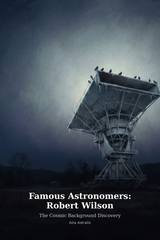 Famous Astronomers: Robert Wilson · Vol. 38
The man who heard the universe begin. This is the story of Robert Woodrow Wilson, the Texas-born radio astronomer whose stubborn checking of a noisy antenna at Bell Labs in 1964 and 1965 led to the discovery of the cosmic microwave background, the cooled afterglow of the Big Bang. From his Houston boyhood and radio apprenticeship in the California desert, through the ten months of excluding every mundane explanation, the evicted pigeons and their white dielectric material, the telephone call to Princeton that supplied the missing theory, and the Nobel Prize of 1978, to his second great discove
Table of contents
- Introduction
- Chapter 1: The Discovery of Robert Wilson
- Chapter 2: Understanding Robert Wilson
- Chapter 3: Key Characteristics of Robert Wilson
- Chapter 4: The Science Behind Robert Wilson
- Chapter 5: Observation and Measurement of Robert Wilson
- Chapter 6: Important Features of Robert Wilson
- Chapter 7: Robert Wilson in Context
- Chapter 8: Modern Understanding of Robert Wilson
- Chapter 9: Research and Exploration of Robert Wilson
- Chapter 10: Significant Discoveries About Robert Wilson
- Chapter 11: Challenges and Mysteries of Robert Wilson
- Chapter 12: Future Directions in Robert Wilson Research
- Chapter 13: Fun Facts and Trivia About Robert Wilson
- Chapter 14: Conclusion: The Significance of Robert Wilson
- Conclusion
 Earth's Sky: The Sky Through History · Vol. 39
For five thousand years, humanity's only astronomical instrument was the human eye. The Sky Through History follows the people who used it: the prehistoric builders of solstice monuments, the Babylonian scribes whose eclipse diaries still calibrate the earth's rotation, the Egyptian calendar-keepers who timed the Nile by Sirius, and the Chinese observers who logged the supernova of 1054 as routine paperwork. It traces how naked-eye watching became Greek geometry, Islamic instrumentation, Tycho Brahe's calibrated precision, and finally the telescope, spectroscopy, and the modern use of ancient
Table of contents
- Introduction
- Chapter 1: The Discovery of The Sky Through History
- Chapter 2: Understanding The Sky Through History
- Chapter 3: The First Skywatchers of the Ancient World
- Chapter 4: The Science Behind The Sky Through History
- Chapter 5: Observation and Measurement of The Sky Through History
- Chapter 6: Important Features of The Sky Through History
- Chapter 7: The Sky Through History in Context
- Chapter 8: The Sky in the Medieval World
- Chapter 9: Research and Exploration of The Sky Through History
- Chapter 10: Significant Discoveries About The Sky Through History
- Chapter 11: Challenges and Mysteries of The Sky Through History
- Chapter 12: Future Directions in The Sky Through History Research
- Chapter 13: Sky History in Legend and Memory
- Chapter 14: Conclusion: The Significance of The Sky Through History
- Conclusion
 Famous Astronomers: Ruby Payne-Scott · Vol. 39
In 1945, at a borrowed radar station above the Pacific, Ruby Payne-Scott heard the Sun's radio storms and helped found a science that did not yet have a name. This is her story: the physicist who classified the solar bursts still used to forecast space weather, who helped confirm the million-degree corona by radio, and whose cliff-top interferometer, using the ocean as a mirror, introduced the Fourier reasoning behind every modern radio telescope. It is also the story of the rule that ended her: the marriage bar that forced her resignation in 1951, the six-year secret that tried to outwit it,
Table of contents
- Introduction
- Chapter 1: The Discovery of Ruby Payne-Scott
- Chapter 2: Understanding Ruby Payne-Scott
- Chapter 3: Key Characteristics of Ruby Payne-Scott
- Chapter 4: The Science Behind Ruby Payne-Scott
- Chapter 5: Ruby Payne-Scott in Context
- Chapter 6: Important Features of the Payne-Scott Story
- Chapter 7: Observation and Measurement in Her Era
- Chapter 8: Modern Understanding of Her Work
- Chapter 9: Research and Exploration of Her Career's Program
- Chapter 10: Significant Discoveries About Ruby Payne-Scott
- Chapter 11: Challenges and Mysteries of Ruby Payne-Scott
- Chapter 12: Future Directions in Her Legacy
- Chapter 13: Fun Facts and Trivia About Ruby Payne-Scott
- Chapter 14: Conclusion: The Significance of Ruby Payne-Scott
- Conclusion
 Earth's Sky: The Southern Sky · Vol. 40
North of the equator the sky has a pole star; south of it, the sky has treasures. This book is the southern sky: the constellations invisible or marginal from northern latitudes, Crux with the Coal Sack and the Jewel Box, Centaurus holding the nearest star system and the grandest globular cluster, Carina with its dying giant Eta Carinae, and the two Magellanic Clouds, satellite galaxies that grace the south alone. It covers the southern Milky Way's brightest stretch with the galactic center passing overhead, the unmarked pole that makes southern observers navigators of pattern, the hemisphere'
Table of contents
- Introduction
- Chapter 1: The Discovery of The Southern Sky
- Chapter 2: Understanding The Southern Sky
- Chapter 3: Key Characteristics of The Southern Sky
- Chapter 4: The Science Behind The Southern Sky
- Chapter 5: Observation and Measurement of The Southern Sky
- Chapter 6: Important Features of The Southern Sky
- Chapter 7: The Southern Sky in Context
- Chapter 8: Modern Understanding of The Southern Sky
- Chapter 9: Research and Exploration of The Southern Sky
- Chapter 10: Significant Discoveries About The Southern Sky
- Chapter 11: Challenges and Mysteries of The Southern Sky
- Chapter 12: Future Directions in The Southern Sky
- Chapter 13: Fun Facts and Trivia About Southern Sky
- Chapter 14: Conclusion: The Significance of The Southern Sky
- Conclusion
 Famous Astronomers: Stephen Hawking · Vol. 40
Horizons, Time, and the Limits of Physics
Table of contents
- Introduction
- Chapter 1: The Discovery of Stephen Hawking
- Chapter 2: Understanding Stephen Hawking
- Chapter 3: Key Characteristics of Stephen Hawking
- Chapter 4: The Science Behind Hawking's Work
- Chapter 5: Observation and Measurement of Hawking's Discoveries
- Chapter 6: Important Features of Stephen Hawking's Career
- Chapter 7: Stephen Hawking in Context
- Chapter 8: Modern Understanding of Hawking's Legacy
- Chapter 9: Research and Exploration Inspired by Hawking
- Chapter 10: Significant Discoveries of Hawking
- Chapter 11: Challenges and Mysteries of the Hawking Legacy
- Chapter 12: Future Directions in Hawking's Questions
- Chapter 13: Fun Facts and Trivia About Stephen Hawking
- Chapter 14: Conclusion: The Significance of Stephen Hawking
- Conclusion
 Earth's Sky: The Sun and Earth · Vol. 41
A star and its planet, told as one system: the four couplings, light, gravity, wind, and field, that make Earth habitable and keep it interesting. From Aristarchus's triangle to a spacecraft inside the corona, this is the story of the Sun-Earth relationship: the pharmacist who counted spots for forty years and found the star's heartbeat, the flare Carrington watched for five minutes that set telegraph offices sparking that same night, the neutrinos that crossed the whole system to prove the fusion engine, the aurora pioneer who died before his vindication, and the modern watch, a fleet at the
Table of contents
- Introduction
- Chapter 1: The Discovery of The Sun and Earth
- Chapter 2: Understanding The Sun and Earth
- Chapter 3: Key Characteristics of The Sun and Earth
- Chapter 4: The Science Behind The Sun and Earth
- Chapter 5: Observation and Measurement of The Sun and Earth
- Chapter 6: Important Features of The Sun and Earth
- Chapter 7: The Sun and Earth in Context
- Chapter 8: Modern Understanding of The Sun and Earth
- Chapter 9: Research and Exploration of The Sun and Earth
- Chapter 10: Significant Discoveries About The Sun and Earth
- Chapter 11: Challenges and Mysteries of The Sun and Earth
- Chapter 12: Future Directions in The Sun and Earth Research
- Chapter 13: Fun Facts and Trivia About Sun and Earth
- Chapter 14: Conclusion: The Significance of The Sun and Earth
- Conclusion
 Famous Astronomers: Subrahmanyan Chandrasekhar · Vol. 41
The Limit of Stars
Table of contents
- Introduction
- Chapter 1: The Discovery of Subrahmanyan Chandrasekhar
- Chapter 2: Understanding Subrahmanyan Chandrasekhar
- Chapter 3: Key Characteristics of Subrahmanyan Chandrasekhar
- Chapter 4: The Science Behind Subrahmanyan Chandrasekhar
- Chapter 5: Observation and Measurement of Subrahmanyan Chandrasekhar
- Chapter 6: Important Features of Subrahmanyan Chandrasekhar
- Chapter 7: Subrahmanyan Chandrasekhar in Context
- Chapter 8: Modern Understanding of Subrahmanyan Chandrasekhar
- Chapter 9: Research and Exploration of Subrahmanyan Chandrasekhar
- Chapter 10: Significant Discoveries About Subrahmanyan Chandrasekhar
- Chapter 11: Challenges and Mysteries of Subrahmanyan Chandrasekhar
- Chapter 12: Future Directions in Subrahmanyan Chandrasekhar Research
- Chapter 13: Fun Facts and Trivia About Subrahmanyan Chandrasekhar
- Chapter 14: Conclusion: The Significance of Subrahmanyan Chandrasekhar
- Conclusion
 Earth's Sky: The Zodiac · Vol. 42
Astronomy vs Astrology
Table of contents
- Introduction
- Chapter 1: The Discovery of The Zodiac
- Chapter 2: Understanding The Zodiac
- Chapter 3: Key Characteristics of The Zodiac
- Chapter 4: The Science Behind The Zodiac
- Chapter 5: Observation and Measurement of The Zodiac
- Chapter 6: Important Features of The Zodiac
- Chapter 7: The Zodiac in Context
- Chapter 8: Modern Understanding of The Zodiac
- Chapter 9: Research and Exploration of The Zodiac
- Chapter 10: Significant Discoveries About The Zodiac
- Chapter 11: Challenges and Mysteries of The Zodiac
- Chapter 12: Future Directions in The Zodiac Research
- Chapter 13: Fun Facts and Trivia About The Zodiac
- Chapter 14: Conclusion: The Significance of The Zodiac
- Conclusion
 Famous Astronomers: Tycho Brahe · Vol. 42
Tycho Brahe measured the sky better than anyone before him, with instruments he built on an island a king gave him, and the data he would not let die became the foundation of modern astronomy. This is his full story: the duel that cost him his nose, the new star of 1572 that made him famous across Europe, the comet of 1577 that dissolved the ancient crystal spheres, the observatory Uraniborg — the first true research institution of modern science — and its loss to politics and exile. It follows his hybrid cosmology and why he rejected both Ptolemy and Copernicus, his twenty-year war with Mars,
Table of contents
- Introduction
- Chapter 1: The Discovery of Tycho Brahe
- Chapter 2: Understanding Tycho Brahe
- Chapter 3: Key Characteristics of Tycho Brahe
- Chapter 4: The Science Behind Tycho Brahe
- Chapter 5: Observation and Measurement of Tycho Brahe
- Chapter 6: Important Features of Tycho Brahe
- Chapter 7: Tycho Brahe in Context
- Chapter 8: Modern Understanding of Tycho Brahe
- Chapter 9: Research and Exploration of Tycho Brahe
- Chapter 10: Significant Discoveries About Tycho Brahe
- Chapter 11: Challenges and Mysteries of Tycho Brahe
- Chapter 12: Future Directions in Tycho Brahe Research
- Chapter 13: Fun Facts and Trivia About Tycho Brahe
- Chapter 14: Conclusion: The Significance of Tycho Brahe
- Conclusion
 Earth's Sky: The Zodiacal Light and Gegenschein · Vol. 43
Faint Glows in the Sky
Table of contents
- Introduction
- Chapter 1: The Discovery of The Zodiacal Light and Gegenschein
- Chapter 2: Understanding The Zodiacal Light and Gegenschein
- Chapter 3: Key Characteristics of The Zodiacal Light and Gegenschein
- Chapter 4: The Science Behind The Zodiacal Light and Gegenschein
- Chapter 5: Observation and Measurement of The Zodiacal Light and Gegenschein
- Chapter 6: Important Features of The Zodiacal Light and Gegenschein
- Chapter 7: The Zodiacal Light and Gegenschein in Context
- Chapter 8: Modern Understanding of The Zodiacal Light and Gegenschein
- Chapter 9: Research and Exploration of The Zodiacal Light and Gegenschein
- Chapter 10: Significant Discoveries About The Zodiacal Light and Gegenschein
- Chapter 11: Challenges and Mysteries of The Zodiacal Light and Gegenschein
- Chapter 12: Future Directions in The Zodiacal Light and Gegenschein Research
- Chapter 13: Fun Facts and Trivia About Zodiacal Light and Gegenschein
- Chapter 14: Conclusion: The Significance of The Zodiacal Light and Gegenschein
- Conclusion
 Famous Astronomers: Vera Rubin · Vol. 43
The Evidence for Dark Matter
Table of contents
- Introduction
- Chapter 1: The Discovery of Vera Rubin
- Chapter 2: Understanding Vera Rubin
- Chapter 3: Key Characteristics of Vera Rubin
- Chapter 4: The Science Behind Vera Rubin
- Chapter 5: Observation and Measurement of Vera Rubin
- Chapter 6: Important Features of Vera Rubin
- Chapter 7: Vera Rubin in Context
- Chapter 8: Modern Understanding of Vera Rubin
- Chapter 9: Research and Exploration of Vera Rubin
- Chapter 10: Significant Discoveries About Vera Rubin
- Chapter 11: Challenges and Mysteries of Vera Rubin
- Chapter 12: Future Directions in Vera Rubin Research
- Chapter 13: Fun Facts and Trivia About Vera Rubin
- Chapter 14: Conclusion: The Significance of Vera Rubin
- Conclusion
 Earth's Sky: Tides · Vol. 44
The Dance of Moon, Sun, and Earth's Oceans
Table of contents
- Introduction
- Chapter 1: The Discovery of Tides
- Chapter 2: Understanding Tides
- Chapter 3: Key Characteristics of Tides
- Chapter 4: The Science Behind Tides
- Chapter 5: Observation and Measurement of Tides
- Chapter 6: Important Features of Tides
- Chapter 7: Tides in Context
- Chapter 8: Modern Understanding of Tides
- Chapter 9: Research and Exploration of Tides
- Chapter 10: Significant Discoveries About Tides
- Chapter 11: Challenges and Mysteries of Tides
- Chapter 12: Future Directions in Tides Research
- Chapter 13: Fun Facts and Trivia About Tides
- Chapter 14: Conclusion: The Significance of Tides
- Conclusion
 Famous Astronomers: William Herschel · Vol. 44
Discoverer of Uranus
Table of contents
- Introduction
- Chapter 1: The Discovery of William Herschel
- Chapter 2: Understanding William Herschel
- Chapter 3: Key Characteristics of William Herschel
- Chapter 4: The Science Behind William Herschel
- Chapter 5: Observation and Measurement of William Herschel
- Chapter 6: Important Features of William Herschel
- Chapter 7: William Herschel in Context
- Chapter 8: Modern Understanding of William Herschel
- Chapter 9: Research and Exploration of William Herschel
- Chapter 10: Significant Discoveries About William Herschel
- Chapter 11: Challenges and Mysteries of William Herschel
- Chapter 12: Future Directions in William Herschel Research
- Chapter 13: Fun Facts and Trivia About William Herschel
- Chapter 14: Conclusion: The Significance of William Herschel
- Conclusion
 Earth's Sky: Transits of Venus and Mercury · Vol. 45
Planets Crossing the Sun
Table of contents
- Introduction
- Chapter 1: The Discovery of Transits of Venus and Mercury
- Chapter 2: Understanding Transits of Venus and Mercury
- Chapter 3: Key Characteristics of Transits of Venus and Mercury
- Chapter 4: The Science Behind Transits of Venus and Mercury
- Chapter 5: Observation and Measurement of Transits of Venus and Mercury
- Chapter 6: Important Features of Transits of Venus and Mercury
- Chapter 7: Transits of Venus and Mercury in Context
- Chapter 8: Modern Understanding of Transits of Venus and Mercury
- Chapter 9: Research and Exploration of Transits of Venus and Mercury
- Chapter 10: Significant Discoveries About Transits of Venus and Mercury
- Chapter 11: Challenges and Mysteries of Transits of Venus and Mercury
- Chapter 12: Future Directions in Transits of Venus and Mercury Research
- Chapter 13: Fun Facts and Trivia About Transits of Venus and Mercury
- Chapter 14: Conclusion: The Significance of Transits of Venus and Mercury
- Conclusion
 Famous Astronomers: Williamina Fleming · Vol. 45
The Star Classifier
Table of contents
- Introduction
- Chapter 1: The Discovery of Williamina Fleming
- Chapter 2: Understanding Williamina Fleming
- Chapter 3: Key Characteristics of Williamina Fleming
- Chapter 4: The Science Behind Fleming's Work
- Chapter 5: Observation and Measurement of Fleming's Discoveries
- Chapter 6: Important Features of Williamina Fleming's Career
- Chapter 7: Williamina Fleming in Context
- Chapter 8: Modern Understanding of Fleming's Legacy
- Chapter 9: Research and Exploration Inspired by Fleming
- Chapter 10: Significant Discoveries of Williamina Fleming
- Chapter 11: Challenges and Mysteries of the Fleming Story
- Chapter 12: Future Directions in the Fleming Program
- Chapter 13: Fun Facts and Trivia About Williamina Fleming
- Chapter 14: Conclusion: The Significance of Williamina Fleming
- Conclusion
 Earth's Sky: Radio Astronomy for Amateurs · Vol. 46
Radio astronomy was founded by a telephone engineer who heard the galaxy in the static and an amateur who mapped the radio sky from a backyard dish, and this book is the guide to joining them. The radio sky is the sky's other half: the sun's storms, Jupiter's Io-controlled bursts, the meteors' pings, the galactic hiss Jansky found, the protected hydrogen line at 1420 megahertz, and the ticking of pulsars, all audible in daylight and cloud to a station a hobbyist can build. This volume follows the practice from the founding discoveries through the science, the radio window, the emission mechani
Table of contents
- Introduction
- Chapter 1: The Discovery of Radio Astronomy for Amateurs
- Chapter 2: Understanding Radio Astronomy for Amateurs
- Chapter 3: Key Characteristics of Radio Astronomy for Amateurs
- Chapter 4: The Science Behind Radio Astronomy for Amateurs
- Chapter 5: Observation and Measurement of Radio Astronomy for Amateurs
- Chapter 6: Important Features of Radio Astronomy for Amateurs
- Chapter 7: Radio Astronomy for Amateurs in Context
- Chapter 8: Modern Understanding of Radio Astronomy for Amateurs
- Chapter 9: Research and Exploration of Radio Astronomy for Amateurs
- Chapter 10: Significant Discoveries About Radio Astronomy for Amateurs
- Chapter 11: Challenges and Mysteries of Radio Astronomy for Amateurs
- Chapter 12: Future Directions in Radio Astronomy for Amateurs
- Chapter 13: Fun Facts and Trivia About Amateur Radio Astronomy
- Chapter 14: Conclusion: The Significance of Radio Astronomy for Amateurs
- Conclusion
 Earth's Sky: Solstices and Equinoxes · Vol. 47
The Turning Points of the Year
Table of contents
- Introduction
- Chapter 1: The Discovery of Solstices and Equinoxes
- Chapter 2: Understanding Solstices and Equinoxes
- Chapter 3: Key Characteristics of Solstices and Equinoxes
- Chapter 4: The Science Behind Solstices and Equinoxes
- Chapter 5: Observation and Measurement of Solstices and Equinoxes
- Chapter 6: Important Features of Solstices and Equinoxes
- Chapter 7: Solstices and Equinoxes in Context
- Chapter 8: Modern Understanding of Solstices and Equinoxes
- Chapter 9: Research and Exploration of Solstices and Equinoxes
- Chapter 10: Significant Discoveries About Solstices and Equinoxes
- Chapter 11: Challenges and Mysteries of Solstices and Equinoxes
- Chapter 12: Future Directions in Solstices and Equinoxes Research
- Chapter 13: Fun Facts and Trivia About Solstices and Equinoxes
- Chapter 14: Conclusion: The Significance of Solstices and Equinoxes
- Conclusion
 Earth's Sky: The Celestial Sphere · Vol. 48
Mapping the Heavens
Table of contents
- Introduction
- Chapter 1: The Discovery of the Celestial Sphere
- Chapter 2: Understanding the Celestial Sphere
- Chapter 3: Key Characteristics of the Celestial Sphere
- Chapter 4: The Science Behind the Celestial Sphere
- Chapter 5: Observation and Measurement of the Celestial Sphere
- Chapter 6: Important Features of the Celestial Sphere
- Chapter 7: The Celestial Sphere in Context
- Chapter 8: Modern Understanding of the Celestial Sphere
- Chapter 9: Research and Exploration of the Celestial Sphere
- Chapter 10: Significant Discoveries About the Celestial Sphere
- Chapter 11: Challenges and Mysteries of the Celestial Sphere
- Chapter 12: Future Directions in the Celestial Sphere Research
- Chapter 13: Small Delights and the Celestial Sphere Trivia
- Chapter 14: Conclusion: The Significance of the Celestial Sphere
- Conclusion
 Earth's Sky: The Hertzsprung-Russell Diagram · Vol. 49
The story of the most important plot in astronomy: how a Danish chemist and a Princeton astronomer turned two columns of starlight data into the census that sorts the galaxy, from the photographic plates of 1911 to the billion-star river of the modern surveys.
Table of contents
- Introduction
- Chapter 1: The Discovery of The Hertzsprung-Russell Diagram
- Chapter 2: Understanding The Hertzsprung-Russell Diagram
- Chapter 3: Key Characteristics of The Hertzsprung-Russell Diagram
- Chapter 4: The Science Behind The Hertzsprung-Russell Diagram
- Chapter 5: Observation and Measurement of The Hertzsprung-Russell Diagram
- Chapter 6: Important Features of The Hertzsprung-Russell Diagram
- Chapter 7: The Hertzsprung-Russell Diagram in Context
- Chapter 8: Modern Understanding of The Hertzsprung-Russell Diagram
- Chapter 9: Research and Exploration of The Hertzsprung-Russell Diagram
- Chapter 10: Significant Discoveries About The Hertzsprung-Russell Diagram
- Chapter 11: Challenges and Mysteries of The Hertzsprung-Russell Diagram
- Chapter 12: Future Directions in The Hertzsprung-Russell Diagram Research
- Chapter 13: Fun Facts and Trivia About The Hertzsprung-Russell Diagram
- Chapter 14: Conclusion: The Significance of The Hertzsprung-Russell Diagram
- Conclusion
 Earth's Sky: The Magnitude Scale · Vol. 50
Why do astronomers call the brightest stars by the smallest numbers? The magnitude scale is astronomy's oldest working instrument: a ranking of star brightness begun by Hipparchus in the second century BCE, made exact by Pogson's 1856 rule that each step means a fixed ratio, and stretched by modern photometry into a single ruler spanning everything from the noonday Sun to the faintest galaxies. This volume tells the scale's whole story in plain language: why the numbers run backwards, why the eye itself measures in ratios, how apparent brightness is separated from true luminosity, and how the
Table of contents
- Introduction
- Chapter 1: The Discovery of The Magnitude Scale
- Chapter 2: Understanding The Magnitude Scale
- Chapter 3: Key Characteristics of The Magnitude Scale
- Chapter 4: The Science Behind The Magnitude Scale
- Chapter 5: Observation and Measurement of The Magnitude Scale
- Chapter 6: Important Features of The Magnitude Scale
- Chapter 7: The Magnitude Scale in Context
- Chapter 8: Modern Understanding of The Magnitude Scale
- Chapter 9: Research and Exploration of The Magnitude Scale
- Chapter 10: Significant Discoveries About The Magnitude Scale
- Chapter 11: Challenges and Mysteries of The Magnitude Scale
- Chapter 12: Future Directions in The Magnitude Scale Research
- Chapter 13: Fun Facts and Trivia About Magnitude Scale
- Chapter 14: Conclusion: The Significance of The Magnitude Scale
- Conclusion
Solar System & Earth — 80 volumes
 Earth's Dynamic Systems: Atmospheric Circulation · Vol. 1
A tour of the planet-scale wind machine: the trades and the sailors' map, the Coriolis effect, the Hadley cells and the deserts they create, the wave-driven middle latitudes and their storm machinery, the jet streams, monsoons, ENSO's coupled moods, the ocean partnership, the instruments that watch it all, chaos's two-week horizon, and the observed changes in a warming world. No equations, for curious readers.
Table of contents
- Introduction
- Chapter 1: The Problem the Circulation Solves
- Chapter 2: The Trade Winds and the Map Made by Sailors
- Chapter 3: Rotation's Long Hand: The Coriolis Effect
- Chapter 4: Three Cells and the Truth About the Middle Latitudes
- Chapter 5: The Jet Streams: Rivers of Wind
- Chapter 6: Mid-Latitude Weather: The Storm Machine
- Chapter 7: Monsoons: The Circulation That Changes Its Mind
- Chapter 8: The Walker Circulation and the Ocean's Moods
- Chapter 9: The Ocean's Half of the Bargain
- Chapter 10: Watching a Planet: The Instruments of the Circulation
- Chapter 11: Why the Weather Can't Be Forecast: Chaos and the Circulation
- Chapter 12: A Changing Circulation
- Chapter 13: The Ends of the Map: The Polar Atmosphere
- Chapter 14: The Circulation on Other Worlds
- Chapter 15: Conclusion
 Solar System Missions: BepiColombo · Vol. 1
The story of the joint European-Japanese mission to the hardest planet to reach: why Mercury costs more velocity than Pluto, the orbital billiards of Giuseppe Colombo, the four-craft stack and its eight-year ion-propelled fall sunward, the furnace-class thermal design, sixteen instruments on two orbiters, Mercury's magnetic enigma and oversized core, the ghost exosphere and polar ice, the relativity test in the Sun's deepest accessible well, and the arrival scheduled for the end of 2026. No equations, for curious readers.
Table of contents
- Introduction
- Chapter 1: Why Mercury Is the Hardest Planet to Reach
- Chapter 2: The Planet Nobody Knows: Mercury's Open Questions
- Chapter 3: The Solo Cartographer: The Orbiter That Went Before
- Chapter 4: The Man and the Name: Giuseppe Colombo
- Chapter 5: Four Craft, One Mission: The Architecture of the Stack
- Chapter 6: The Long Fall: Launch and the Cruise to Mercury
- Chapter 7: Building for a Furnace: The Thermal Battle
- Chapter 8: The Instrument Suites: Two Orbiters' Cargo
- Chapter 9: The Magnetic Enigma: Mercury's Field and Bubble
- Chapter 10: The Coupling: How the Wind and the Field Breathe Together
- Chapter 11: The Planet That Shrunk: Interior and Crust
- Chapter 12: Caloris and the Face of the Sun's Neighbor
- Chapter 13: The Ghost Ocean: Exosphere, Escape, and the Weather of Atoms
- Chapter 14: Testing Einstein on the Approach: The Relativity Dividend
- Chapter 15: Arrival: Orbit Insertion and the Campaign Ahead
- Chapter 16: Conclusion: What the Mission Means
 Earth's Dynamic Systems: Avalanches · Vol. 2
Snow in Motion
Table of contents
- Introduction
- Chapter 1: The Discovery of Avalanches
- Chapter 2: Understanding Avalanches
- Chapter 3: Key Characteristics of Avalanches
- Chapter 4: The Science Behind Avalanches
- Chapter 5: Observation and Measurement of Avalanches
- Chapter 6: Important Features of Avalanches
- Chapter 7: Avalanches in Context
- Chapter 8: Research and Exploration of Avalanches
- Chapter 9: Significant Discoveries About Avalanches
- Chapter 10: Challenges and Mysteries of Avalanches
- Chapter 11: Future Directions in Avalanches Research
- Chapter 12: Fun Facts and Trivia About Avalanches
- Chapter 13: Conclusion: The Significance of Avalanches
- Conclusion
 Solar System Missions: Cassini-Huygens · Vol. 2
Saturn Revealed
Table of contents
- Introduction
- Chapter 1: The Discovery of Cassini-Huygens
- Chapter 2: Understanding Cassini-Huygens
- Chapter 3: Key Characteristics of Cassini-Huygens
- Chapter 4: The Science Behind Cassini-Huygens
- Chapter 5: Observation and Measurement of Cassini-Huygens
- Chapter 6: Important Features of Cassini-Huygens
- Chapter 7: Cassini-Huygens in Context
- Chapter 8: Modern Understanding of Cassini-Huygens
- Chapter 9: Research and Exploration of Cassini-Huygens
- Chapter 10: Significant Discoveries About Cassini-Huygens
- Chapter 11: Challenges and Mysteries of Cassini-Huygens
- Chapter 12: Future Directions in Cassini-Huygens Research
- Chapter 13: Fun Facts and Trivia About Cassini-Huygens
- Chapter 14: Conclusion: The Significance of Cassini-Huygens
- Conclusion
 Earth's Dynamic Systems: Biomes · Vol. 3
Earth's Major Ecosystems
Table of contents
- Introduction
- Chapter 1: What a Biome Is, and What It Is Not
- Chapter 2: The Master Recipe: Climate and the Sorting of Life
- Chapter 3: The Tropical Rainforest: The Green Engine
- Chapter 4: The Temperate Forests: The Seasonal Middle
- Chapter 5: The Boreal Forest: The Ring of Spruce
- Chapter 6: The Grasslands: The Ocean of Grass
- Chapter 7: The Deserts: The Art of the Possible
- Chapter 8: The Tundra: The Cold Margin
- Chapter 9: The Smaller Wardrobes: Mediterranean Scrub and the Wetlands
- Chapter 10: Mountains: The Vertical Wardrobe
- Chapter 11: Islands: The Wardrobe of Isolation
- Chapter 12: Boundaries and Gradients: Reading the Seams
- Chapter 13: The Wardrobe in Motion: Fire, Grazing, Time
- Chapter 14: The Wardrobe Through Deep Time
- Chapter 15: Water's Wardrobes: Freshwater and the Ocean
- Chapter 16: Mending the Wardrobe: The Craft of Restoration
- Chapter 17: The Human Wardrobe and the Moving Map
- Conclusion
 Solar System Missions: The Change Program · Vol. 3
China's Lunar Exploration
Table of contents
- Introduction
- Chapter 1: The Discovery of The Change Program
- Chapter 2: Understanding The Change Program
- Chapter 3: Key Characteristics of The Change Program
- Chapter 4: The Science Behind The Change Program
- Chapter 5: The Spacecraft Themselves: A Portrait of the Fleet
- Chapter 6: Observation and Measurement of The Change Program
- Chapter 7: Important Features of The Change Program
- Chapter 8: The Change Program in Context
- Chapter 9: Modern Understanding of The Change Program
- Chapter 10: Research and Exploration of The Change Program
- Chapter 11: The Sample Flights in Full
- Chapter 12: Significant Discoveries About The Change Program
- Chapter 13: Challenges and Mysteries of The Change Program
- Chapter 14: Future Directions in The Change Program Research
- Chapter 15: Fun Facts and Trivia About The Change Program
- Chapter 16: Conclusion: The Significance of The Change Program
- Conclusion
 Earth's Dynamic Systems: Climate vs Weather · Vol. 4
Understanding the Difference
Table of contents
- Introduction
- Chapter 1: The Discovery of Climate vs Weather
- Chapter 2: Understanding Climate vs Weather
- Chapter 3: Key Characteristics of Climate vs Weather
- Chapter 4: The Science Behind Climate vs Weather
- Chapter 5: Observation and Measurement of Climate vs Weather
- Chapter 6: Important Features of Climate vs Weather
- Chapter 7: Climate vs Weather in Context
- Chapter 8: Modern Understanding of Climate vs Weather
- Chapter 9: Research and Exploration of Climate vs Weather
- Chapter 10: Significant Discoveries About Climate vs Weather
- Chapter 11: Challenges and Mysteries of Climate vs Weather
- Chapter 12: Future Directions in Climate vs Weather Research
- Chapter 13: Fun Facts and Trivia About Climate vs Weather
- Chapter 14: Conclusion: The Significance of Climate vs Weather
- Conclusion
 Solar System Missions: Clementine · Vol. 4
Mapping the Moon
Table of contents
- Introduction
- Chapter 1: The Discovery of Clementine
- Chapter 2: Understanding Clementine
- Chapter 3: Key Characteristics of Clementine
- Chapter 4: The Science Behind Clementine
- Chapter 5: Observation and Measurement of Clementine
- Chapter 6: Important Features of Clementine
- Chapter 7: Clementine in Context
- Chapter 8: Modern Understanding of Clementine
- Chapter 9: Research and Exploration of Clementine
- Chapter 10: Significant Discoveries About Clementine
- Chapter 11: The Instruments: Eleven Eyes and a Laser
- Chapter 12: Challenges and Mysteries of Clementine
- Chapter 13: The Mission That Taught the Agencies to Run Small
- Chapter 14: Future Directions in Clementine Research
- Chapter 15: Fun Facts and Trivia About Clementine
- Chapter 16: Conclusion: The Significance of Clementine
- Conclusion
 Earth's Dynamic Systems: Cloud Types · Vol. 5
Reading the Sky
Table of contents
- Introduction
- Chapter 1: The Discovery of Cloud Types
- Chapter 2: Understanding Cloud Types
- Chapter 3: Key Characteristics of Cloud Types
- Chapter 4: The Science Behind Cloud Types
- Chapter 5: Observation and Measurement of Cloud Types
- Chapter 6: Important Features of Cloud Types
- Chapter 7: Cloud Types in Context
- Chapter 8: Modern Understanding of Cloud Types
- Chapter 9: Research and Exploration of Cloud Types
- Chapter 10: Significant Discoveries About Cloud Types
- Chapter 11: Challenges and Mysteries of Cloud Types
- Chapter 12: Future Directions in Cloud Types Research
- Chapter 13: Fun Facts and Trivia About Cloud Types
- Chapter 14: Conclusion: The Significance of Cloud Types
- Conclusion
 Solar System Missions: DART · Vol. 5
Deflecting an Asteroid
Table of contents
- Introduction
- Chapter 1: The Discovery of DART
- Chapter 2: Understanding DART
- Chapter 3: Key Characteristics of DART
- Chapter 4: The Science Behind DART
- Chapter 5: Observation and Measurement of DART
- Chapter 6: Important Features of DART
- Chapter 7: The Instruments: A Deliberate Crash and Its Witnesses
- Chapter 8: The Lineage: Asteroid Defenders Observed
- Chapter 9: DART in Context
- Chapter 10: Modern Understanding of DART
- Chapter 11: Research and Exploration of DART
- Chapter 12: Significant Discoveries About DART
- Chapter 13: Challenges and Mysteries of DART
- Chapter 14: Future Directions in DART Research
- Chapter 15: Fun Facts and Trivia About DART
- Chapter 16: Conclusion: The Significance of DART
- Conclusion
 Earth's Dynamic Systems: Coral Reefs · Vol. 6
The Rainforests of the Sea
Table of contents
- Introduction
- Chapter 1: The Discovery of Coral Reefs
- Chapter 2: Understanding Coral Reefs
- Chapter 8: Modern Understanding of Coral Reefs
- Chapter 11: Challenges and Mysteries of Coral Reefs van Oppen, James K.
- Chapter 12: Future Directions in Coral Reefs Research
- Chapter 13: Fun Facts and Trivia About Coral Reefs
- Conclusion
 Solar System Missions: Dawn · Vol. 6
Vesta and Ceres
Table of contents
- Introduction
- Chapter 1: The Discovery of Dawn
- Chapter 2: Understanding Dawn
- Chapter 3: Key Characteristics of Dawn
- Chapter 4: The Science Behind Dawn
- Chapter 5: Observation and Measurement of Dawn
- Chapter 6: Important Features of Dawn
- Chapter 7: Dawn in Context
- Chapter 8: Modern Understanding of Dawn
- Chapter 9: Research and Exploration of Dawn
- Chapter 10: Significant Discoveries About Dawn
- Chapter 11: Challenges and Mysteries of Dawn
- Chapter 12: Future Directions in Dawn Research
- Chapter 13: Fun Facts and Trivia About Dawn
- Chapter 14: Conclusion: The Significance of Dawn
- Conclusion
 Earth's Dynamic Systems: Deserts · Vol. 7
The Dry Places
Table of contents
- Introduction
- Chapter 1: The Discovery of Deserts
- Chapter 2: Understanding Deserts
- Chapter 3: Key Characteristics of Deserts
- Chapter 4: The Science Behind Deserts
- Chapter 5: Observation and Measurement of Deserts
- Chapter 6: Important Features of Deserts
- Chapter 7: Deserts in Context
- Chapter 8: Research and Exploration of Deserts
- Chapter 9: Significant Discoveries About Deserts
- Chapter 10: Challenges and Mysteries of Deserts
- Chapter 11: Future Directions in Deserts Research
- Chapter 12: Fun Facts and Trivia About Deserts
- Chapter 13: Conclusion: The Significance of Deserts
- Conclusion
 Solar System Missions: Deep Impact · Vol. 7
Comet Tempel 1
Table of contents
- Introduction
- Chapter 1: The Discovery of Deep Impact
- Chapter 2: The Long Road to Approval: How Deep Impact Was Built
- Chapter 3: The Anatomy of Deep Impact
- Chapter 4: Understanding Deep Impact
- Chapter 5: Key Characteristics of Deep Impact
- Chapter 6: The Fourth of July: The Impact, Minute by Minute
- Chapter 7: The Science Behind Deep Impact
- Chapter 8: Observation and Measurement of Deep Impact
- Chapter 9: Important Features of Deep Impact
- Chapter 10: Deep Impact in Context
- Chapter 11: Modern Understanding of Deep Impact
- Chapter 12: Research and Exploration of Deep Impact
- Chapter 13: Significant Discoveries About Deep Impact
- Chapter 14: Challenges and Mysteries of Deep Impact
- Chapter 15: Future Directions in Deep Impact Research
- Chapter 16: Fun Facts and Trivia About Deep Impact
- Chapter 17: Conclusion: The Significance of Deep Impact
- Conclusion
 Earth's Dynamic Systems: Droughts · Vol. 8
When the Rain Stops
Table of contents
- Introduction
- Chapter 1: The Deficit That Cannot Be Defined
- Chapter 2: Why Rain Fails
- Chapter 3: The Anatomy of a Dry Spell
- Chapter 4: Measuring the Absence
- Chapter 5: The Ground and the Green: Soil, Plants, and the Farm
- Chapter 6: The Water Systems: Rivers, Reservoirs, and the Water Below
- Chapter 7: The Dust and the Wind: The Deficit Takes Flight
- Chapter 8: The Wild Ledger: Ecosystems Under Dryness
- Chapter 9: The Fire Weather: Drought's Hot Companion
- Chapter 10: The Historical Droughts: The Human Ledger, Part One
- Chapter 11: The Megadroughts: The Deep Archive
- Chapter 12: The Cities Under the Deficit
- Chapter 13: The Drylands and Their Futures: Degradation and the Grazing Debate
- Chapter 14: The Forecast and the Plan: Living With the Deficit
- Chapter 15: The Changing Climate and the Deficit
- Conclusion
 Solar System Missions: ExoMars · Vol. 8
Europe's Mars Program
Table of contents
- Introduction
- Chapter 1: The Discovery of ExoMars
- Chapter 2: Understanding ExoMars
- Chapter 3: Key Characteristics of ExoMars
- Chapter 4: The Science Behind ExoMars
- Chapter 5: Observation and Measurement of ExoMars
- Chapter 6: Important Features of ExoMars
- Chapter 7: ExoMars in Context
- Chapter 8: Modern Understanding of ExoMars
- Chapter 9: Research and Exploration of ExoMars
- Chapter 10: Significant Discoveries About ExoMars
- Chapter 11: Challenges and Mysteries of ExoMars
- Chapter 12: Future Directions in ExoMars Research
- Chapter 13: Fun Facts and Trivia About ExoMars
- Chapter 14: Conclusion: The Significance of ExoMars
- Conclusion
 Earth's Dynamic Systems: Earthquakes · Vol. 9
The Shaking Planet
Table of contents
- Introduction
- Chapter 1: The Discovery of Earthquakes
- Chapter 2: Understanding Earthquakes
- Chapter 3: Key Characteristics of Earthquakes
- Chapter 4: The Science Behind Earthquakes
- Chapter 5: Observation and Measurement of Earthquakes
- Chapter 6: Important Features of Earthquakes
- Chapter 7: Earthquakes in Context
- Chapter 8: Modern Understanding of Earthquakes
- Chapter 9: Research and Exploration of Earthquakes
- Chapter 10: Significant Discoveries About Earthquakes
- Chapter 11: Challenges and Mysteries of Earthquakes
- Chapter 12: Future Directions in Earthquakes Research
- Chapter 13: Fun Facts and Trivia About Earthquakes
- Chapter 14: Conclusion: The Significance of Earthquakes
- Conclusion
 Solar System Missions: GRAIL · Vol. 9
Mapping Lunar Gravity
Table of contents
- Introduction
- Chapter 1: The Discovery of GRAIL
- Chapter 2: Understanding GRAIL
- Chapter 3: Key Characteristics of GRAIL
- Chapter 4: The Science Behind GRAIL
- Chapter 5: Observation and Measurement of GRAIL
- Chapter 6: Important Features of GRAIL
- Chapter 7: GRAIL in Context
- Chapter 8: Modern Understanding of GRAIL
- Chapter 9: Research and Exploration of GRAIL
- Chapter 10: Significant Discoveries About GRAIL
- Chapter 11: Challenges and Mysteries of GRAIL
- Chapter 12: Future Directions in GRAIL Research
- Chapter 13: Fun Facts and Trivia About GRAIL
- Chapter 14: Conclusion: The Significance of GRAIL
 Earth's Dynamic Systems: Earth's Magnetic Field · Vol. 10
The Geodynamo
Table of contents
- Introduction
- Chapter 1: A Force Older Than Its Discovery
- Chapter 2: The Invisible Architecture
- Chapter 3: The Engine in the Core
- Chapter 4: The Restless Field
- Chapter 5: The Shield in Space
- Chapter 6: Lights in the Sky
- Chapter 7: The Field in the Rocks
- Chapter 8: Clocks and Catastrophes in the Record
- Chapter 9: Storms and the Shield at Work
- Chapter 10: Compasses in the Flesh
- Chapter 11: Measuring the Field Today
- Chapter 12: The Compass at Sea: The Needle and the Ages of Sail
- Chapter 13: The Field at Work: Magnetism in Human Hands
- Chapter 14: A Tour of the Family: The Fields of Other Worlds
- Chapter 15: The Shield and the Habitable Planet
- Chapter 16: Conclusion: The Quiet Architecture
 Solar System Missions: Galileo · Vol. 10
Jupiter and Its Moons
Table of contents
- Galileo
- Introduction
- Chapter 1: Before Galileo — Jupiter from the Ground and the Flybys
- Chapter 2: Designing an Orbiter — The Making of the Mission
- Chapter 3: Getting There — Launch, Gravity Assists, and the Long Road
- Chapter 4: The Broken Antenna — Crisis in the Void
- Chapter 5: Shoemaker-Levy 9 — The Comet That Hit Jupiter
- Chapter 6: Arrival — Orbit Insertion and the Probe's Descent
- Chapter 7: Io — The Volcanic Moon
- Chapter 8: Europa — The Ocean Moon
- Chapter 9: Ganymede and Callisto — The Outer Moons
- Chapter 10: The Magnetosphere — A Sea of Plasma
- Chapter 11: Jupiter's Clouds and Weather
- Chapter 12: Engineering Survival — Eight Years on the Front Line
- Chapter 13: The Extended Mission — Going Back for More
- Chapter 14: The Cassini Handshake — Two Missions, One Planet
- Chapter 15: The End — A Deliberate Descent
- Chapter 16: The Namesake — Galileo Galilei and the First Moons
- Chapter 17: Fun Facts and Trivia About Galileo
- Chapter 18: Conclusion — The Significance of Galileo
- Conclusion
 Earth's Dynamic Systems: Earth's Seasons · Vol. 11
Why They Happen
Table of contents
- Introduction
- Chapter 1: The Discovery of Earth's Seasons
- Chapter 2: Understanding Earth's Seasons
- Chapter 3: Key Characteristics of Earth's Seasons
- Chapter 4: The Science Behind Earth's Seasons
- Chapter 5: Observation and Measurement of Earth's Seasons
- Chapter 6: Important Features of Earth's Seasons
- Chapter 7: Earth's Seasons in Context
- Chapter 8: Modern Understanding of Earth's Seasons
- Chapter 9: Research and Exploration of Earth's Seasons
- Chapter 10: Significant Discoveries About Earth's Seasons
- Chapter 11: Challenges and Mysteries of Earth's Seasons
- Chapter 12: Future Directions in Earth's Seasons Research
- Chapter 13: Fun Facts and Trivia About Earth's Seasons
- Conclusion
 Solar System Missions: Genesis · Vol. 11
Collecting Solar Wind
Table of contents
- Introduction
- Chapter 1: The Discovery of Genesis
- Chapter 2: Understanding Genesis
- Chapter 3: Key Characteristics of Genesis
- Chapter 4: The Science Behind Genesis
- Chapter 5: Observation and Measurement of Genesis
- Chapter 6: Important Features of Genesis
- Chapter 7: Genesis in Context
- Chapter 8: Modern Understanding of Genesis
- Chapter 9: Research and Exploration of Genesis
- Chapter 10: Significant Discoveries About Genesis
- Chapter 11: Challenges and Mysteries of Genesis
- Chapter 12: Future Directions in Genesis Research
- Chapter 13: Fun Facts and Trivia About Genesis
- Chapter 14: Conclusion: The Significance of Genesis
- Conclusion
 Earth's Dynamic Systems: El Nino and La Nina · Vol. 12
The Pacific's Global Reach
Table of contents
- Introduction
- Chapter 1: The Discovery of El Nino and La Nina
- Chapter 2: Key Characteristics of El Nino and La Nina
- Chapter 3: The Science Behind El Nino and La Nina
- Chapter 4: Observation and Measurement of El Nino and La Nina
- Chapter 5: Important Features of El Nino and La Nina
- Chapter 6: El Nino and La Nina in Context
- Chapter 7: Research and Exploration of El Nino and La Nina
- Chapter 8: Significant Discoveries About El Nino and La Nina
- Chapter 9: Challenges and Mysteries of El Nino and La Nina
- Chapter 10: Future Directions in El Nino and La Nina Research
- Chapter 11: Fun Facts and Trivia About El Nino and La Nina
- Chapter 12: Conclusion: The Significance of El Nino and La Nina
- Conclusion
 Solar System Missions: Hayabusa2 · Vol. 12
Sampling Ryugu
Table of contents
- Introduction
- Chapter 1: A Sequel With a Harder Promise
- Chapter 2: Falcon Over a Spinning Top
- Chapter 3: Ryugu, the Dragon Palace
- Chapter 4: The Slow Spin: The Sun's Touch and the Top's Clock
- Chapter 5: Hoppers on a Boulderscape
- Chapter 6: The Gentle Art of Touching
- Chapter 7: Making a Crater of One's Own
- Chapter 8: The Treasure Comes Home
- Chapter 9: Reading the Grains
- Chapter 10: The Comet Connection: Kin of the Icy Wanderers
- Chapter 11: The Shared Sample
- Chapter 12: The Falcon Flies On
- Chapter 13: Two Craft, Two Asteroids, One Question
- Chapter 14: Why Asteroid Samples Matter
- Chapter 15: Conclusion: What the Dragon Palace Returned
 Earth's Dynamic Systems: Erosion · Vol. 13
The Sculpting of Earth's Surface
Table of contents
- Introduction
- Chapter 1: The Discovery of Erosion
- Chapter 2: Key Characteristics of Erosion
- Chapter 3: The Science Behind Erosion
- Chapter 4: Observation and Measurement of Erosion
- Chapter 5: Important Features of Erosion
- Chapter 6: Erosion in Context
- Chapter 7: Research and Exploration of Erosion
- Chapter 8: Significant Discoveries About Erosion
- Chapter 9: Challenges and Mysteries of Erosion
- Chapter 10: Future Directions in Erosion Research
- Chapter 11: Fun Facts and Trivia About Erosion
- Chapter 12: Conclusion: The Significance of Erosion
- Conclusion
 Solar System Missions: InSight · Vol. 13
Mars Interior Exploration
Table of contents
- Introduction
- Chapter 1: The Discovery of InSight
- Chapter 2: Understanding InSight
- Chapter 3: Key Characteristics of InSight
- Chapter 4: The Science Behind InSight
- Chapter 5: Observation and Measurement of InSight
- Chapter 6: Important Features of InSight
- Chapter 7: InSight in Context
- Chapter 8: Modern Understanding of InSight
- Chapter 9: Research and Exploration of InSight
- Chapter 10: Significant Discoveries About InSight
- Chapter 11: Challenges and Mysteries of InSight
- Chapter 12: Future Directions in InSight Research
- Chapter 13: Fun Facts and Trivia About InSight
- Chapter 14: Conclusion: The Significance of InSight
- Conclusion
 Earth's Dynamic Systems: Forests · Vol. 14
The Lungs of the Planet
Table of contents
- Introduction
- Chapter 1: The Discovery of Forests
- Chapter 2: Understanding Forests
- Chapter 3: Key Characteristics of Forests
- Chapter 4: The Science Behind Forests
- Chapter 5: Observation and Measurement of Forests
- Chapter 6: Important Features of Forests
- Chapter 7: Forests in Context
- Chapter 8: Research and Exploration of Forests
- Chapter 9: Significant Discoveries About Forests
- Chapter 10: Challenges and Mysteries of Forests
- Chapter 11: Future Directions in Forests Research
- Chapter 12: Fun Facts and Trivia About Forests
- Chapter 13: Conclusion: The Significance of Forests
- Conclusion
 Solar System Missions: Juno · Vol. 14
Jupiter Up Close
Table of contents
- Introduction
- Chapter 1: The Discovery of Juno
- Chapter 2: Understanding Juno
- Chapter 3: Key Characteristics of Juno
- Chapter 4: The Science Behind Juno
- Chapter 5: Observation and Measurement of Juno
- Chapter 6: Important Features of Juno
- Chapter 7: The Instruments: Nine Ways to Read a Giant
- Chapter 8: The Lineage: Jupiter Observed
- Chapter 9: Juno in Context
- Chapter 10: Modern Understanding of Juno
- Chapter 11: Research and Exploration of Juno
- Chapter 12: Significant Discoveries About Juno
- Chapter 13: Challenges and Mysteries of Juno
- Chapter 14: Future Directions in Juno Research
- Chapter 15: Fun Facts and Trivia About Juno
- Chapter 16: Conclusion: The Significance of Juno
- Conclusion
 Earth's Dynamic Systems: Geomagnetic Reversal · Vol. 15
When North Becomes South
Table of contents
- Introduction
- Chapter 1: The Discovery of Geomagnetic Reversal
- Chapter 2: Understanding Geomagnetic Reversal
- Chapter 3: Key Characteristics of Geomagnetic Reversal
- Chapter 4: The Science Behind Geomagnetic Reversal
- Chapter 5: Observation and Measurement of Geomagnetic Reversal
- Chapter 6: Important Features of Geomagnetic Reversal
- Chapter 7: Geomagnetic Reversal in Context
- Chapter 8: Modern Understanding of Geomagnetic Reversal
- Chapter 9: Research and Exploration of Geomagnetic Reversal
- Chapter 10: Significant Discoveries About Geomagnetic Reversal
- Chapter 11: Challenges and Mysteries of Geomagnetic Reversal
- Chapter 12: Future Directions in Geomagnetic Reversal Research
- Chapter 13: Fun Facts and Trivia About Geomagnetic Reversal
- Chapter 14: Conclusion: The Significance of Geomagnetic Reversal
- Conclusion
 Solar System Missions: Lucy · Vol. 15
Visiting the Trojan Asteroids
Table of contents
- Introduction
- Chapter 1: The Discovery of Lucy
- Chapter 2: Understanding Lucy
- Chapter 3: Key Characteristics of Lucy
- Chapter 4: The Science Behind Lucy
- Chapter 5: The Machine Itself: A Portrait of the Spacecraft
- Chapter 6: Observation and Measurement of Lucy
- Chapter 7: Important Features of Lucy
- Chapter 8: Lucy in Context
- Chapter 9: Modern Understanding of Lucy
- Chapter 10: The Targets in Profile: The Itinerary's Worlds
- Chapter 11: Research and Exploration of Lucy
- Chapter 12: Significant Discoveries About Lucy
- Chapter 13: Challenges and Mysteries of Lucy
- Chapter 14: Future Directions in Lucy Research
- Chapter 15: Fun Facts and Trivia About Lucy
- Chapter 16: Conclusion: The Significance of Lucy
- Conclusion
 Earth's Dynamic Systems: Glaciers · Vol. 16
Rivers of Ice
Table of contents
- Introduction
- Chapter 1: What a Glacier Is
- Chapter 2: How Ice Becomes a Glacier
- Chapter 3: Reading the Landscape
- Chapter 4: How Glaciers Move
- Chapter 5: The Bed
- Chapter 6: The Water Beneath
- Chapter 7: Surges and Quakes
- Chapter 8: The Carving Machine
- Chapter 9: What the Ice Leaves Behind
- Chapter 10: The World's Glaciers
- Chapter 11: Ice Cores and the Long Record
- Chapter 12: Glaciers Beyond Earth
- Chapter 13: The Great Retreat
- Chapter 14: What the Retreat Costs
- Chapter 15: Fun Facts and Trivia, Weighed
- Chapter 16: The Hazards of the Melt
- Conclusion
 Solar System Missions: Luna Program · Vol. 16
Soviet Lunar Exploration
Table of contents
- Introduction
- Chapter 1: The Discovery of Luna Program
- Chapter 2: Key Characteristics of Luna Program
- Chapter 3: The Science Behind Luna Program
- Chapter 4: Observation and Measurement of Luna Program
- Chapter 5: Important Features of Luna Program
- Chapter 6: Luna Program in Context
- Chapter 7: Research and Exploration of Luna Program
- Chapter 8: Significant Discoveries About Luna Program
- Chapter 9: Challenges and Mysteries of Luna Program
- Chapter 10: Future Directions in Luna Program Research
- Chapter 11: Fun Facts and Trivia About Luna Program
- Chapter 12: Conclusion: The Significance of Luna Program
- Conclusion
 Earth's Dynamic Systems: Groundwater · Vol. 17
The Hidden Water Below
Table of contents
- Introduction
- Chapter 1: The Discovery of Groundwater
- Chapter 2: Understanding Groundwater
- Chapter 3: Key Characteristics of Groundwater
- Chapter 4: The Science Behind Groundwater
- Chapter 5: Observation and Measurement of Groundwater
- Chapter 6: Important Features of Groundwater
- Chapter 7: Groundwater in Context
- Chapter 8: Modern Understanding of Groundwater
- Chapter 9: Research and Exploration of Groundwater
- Chapter 10: Significant Discoveries About Groundwater
- Chapter 11: Challenges and Mysteries of Groundwater
- Chapter 12: Future Directions in Groundwater Research
- Chapter 13: Fun Facts and Trivia About Groundwater
- Chapter 14: Conclusion: The Significance of Groundwater
- Conclusion
 Solar System Missions: Lunar Reconnaissance Orbiter · Vol. 17
Mapping the Moon
Table of contents
- Introduction
- Chapter 1: The Discovery of Lunar Reconnaissance Orbiter
- Chapter 2: Understanding Lunar Reconnaissance Orbiter
- Chapter 3: Key Characteristics of Lunar Reconnaissance Orbiter
- Chapter 4: The Science Behind Lunar Reconnaissance Orbiter
- Chapter 5: Observation and Measurement of Lunar Reconnaissance Orbiter
- Chapter 6: Important Features of Lunar Reconnaissance Orbiter
- Chapter 7: Lunar Reconnaissance Orbiter in Context
- Chapter 8: Challenges and Mysteries of Lunar Reconnaissance Orbiter
- Chapter 9: Future Directions in Lunar Reconnaissance Orbiter Research
- Chapter 10: Fun Facts and Trivia About Lunar Reconnaissance Orbiter
- Chapter 11: Conclusion: The Significance of Lunar Reconnaissance Orbiter
- Conclusion
 Earth's Dynamic Systems: Hurricanes and Cyclones · Vol. 18
Nature's Most Powerful Storms
Table of contents
- Introduction
- Chapter 1: The Discovery of Hurricanes and Cyclones
- Chapter 2: Key Characteristics of Hurricanes and Cyclones
- Chapter 3: The Science Behind Hurricanes and Cyclones
- Chapter 4: Observation and Measurement of Hurricanes and Cyclones
- Chapter 5: Important Features of Hurricanes and Cyclones
- Chapter 6: Hurricanes and Cyclones in Context
- Chapter 7: Research and Exploration of Hurricanes and Cyclones
- Chapter 8: Significant Discoveries About Hurricanes and Cyclones
- Chapter 9: Challenges and Mysteries of Hurricanes and Cyclones
- Chapter 10: Future Directions in Hurricanes and Cyclones Research
- Chapter 11: Fun Facts and Trivia About Hurricanes and Cyclones
- Chapter 12: Conclusion: The Significance of Hurricanes and Cyclones
- Conclusion
 Solar System Missions: MAVEN · Vol. 18
Mars Atmosphere and Volatile Evolution
Table of contents
- Introduction
- Chapter 1: The Science Goals of MAVEN
- Chapter 2: The MAVEN Spacecraft
- Chapter 3: The Launch and Journey to Mars
- Chapter 4: The Upper Atmosphere of Mars
- Chapter 5: The Solar Wind and Atmospheric Escape
- Chapter 6: The History of Water on Mars
- Chapter 7: Mars' Changing Climate
- Chapter 8: The Aurora on Mars
- Chapter 9: The Magnetic Field of Mars
- Chapter 10: Dust in the Martian Atmosphere
- Chapter 11: The Moons of Mars - Phobos and Deimos
- Chapter 12: Fun Facts and Trivia About MAVEN
- Chapter 13: The Future of Mars Exploration
- Chapter 14: The Comet's Gift - Siding Spring at Mars
- Chapter 15: Deep Dips - Sampling the Escape Zone Up Close
- Chapter 16: From Drawing Board to Launch Pad - Building MAVEN
- Chapter 17: A Decade of Records - MAVEN's Long Service
- Chapter 18: Conclusion: The Legacy of MAVEN
- Conclusion
 Earth's Dynamic Systems: Ice Ages · Vol. 19
From mile-thick ice sheets that once buried much of North America and Europe to the slow orbital rhythms that set them advancing and retreating, this book explores the coldest chapters in Earth's history. Beginning with how scientists first discovered that glaciers once covered far more of the planet than anyone imagined, it explains what ice ages are, how they begin and end, and why Earth - currently enjoying the warmth of an interglacial - remains inside a long-running icehouse period that began 34 million years ago. Readers will meet the cryosphere, the great Pleistocene ice sheets, and the
Table of contents
- Introduction
- Chapter 1: The Discovery of Ice Ages
- Chapter 2: Understanding Ice Ages
- Chapter 4: The Cryosphere — Ice on Planet Earth
- Chapter 5: The Science Behind Ice Ages
- Chapter 6: Observation and Measurement of Ice Ages
- Chapter 7: Important Features of Ice Ages
- Chapter 8: Ice Ages in Context
- Chapter 9: The Great Ice Sheets of the Pleistocene
- Chapter 10: Research and Exploration of Ice Ages
- Chapter 11: Significant Discoveries About Ice Ages
- Chapter 12: Challenges and Mysteries of Ice Ages
- Chapter 13: Future Directions in Ice Ages Research
- Chapter 14: Fun Facts and Trivia About Ice Ages
- Chapter 15: Conclusion: The Significance of Ice Ages
- Conclusion
 Solar System Missions: Magellan · Vol. 19
Mapping Venus
Table of contents
- Introduction
- Chapter 1: The Discovery of Magellan
- Chapter 2: Understanding Magellan
- Chapter 3: Key Characteristics of Magellan
- Chapter 4: The Science Behind Magellan
- Chapter 5: Observation and Measurement of Magellan
- Chapter 6: Important Features of Magellan
- Chapter 7: Magellan in Context
- Chapter 8: Modern Understanding of Magellan
- Chapter 9: Research and Exploration of Magellan
- Chapter 10: Significant Discoveries About Magellan
- Chapter 11: Challenges and Mysteries of Magellan
- Chapter 12: Future Directions in Magellan Research
- Chapter 13: Fun Facts and Trivia About Magellan
- Chapter 14: Conclusion: The Significance of Magellan
- Conclusion
 Earth's Dynamic Systems: Monsoons · Vol. 20
The Seasonal Rains
Table of contents
- Introduction
- Chapter 1: The Discovery of Monsoons
- Chapter 2: Understanding Monsoons
- Chapter 3: Key Characteristics of Monsoons
- Chapter 4: The Science Behind Monsoons
- Chapter 5: Observation and Measurement of Monsoons
- Chapter 6: Important Features of Monsoons
- Chapter 7: Monsoons in Context
- Chapter 8: Research and Exploration of Monsoons
- Chapter 9: Significant Discoveries About Monsoons
- Chapter 10: Challenges and Mysteries of Monsoons
- Chapter 11: Future Directions in Monsoons Research
- Chapter 12: Fun Facts and Trivia About Monsoons
- Chapter 13: Conclusion: The Significance of Monsoons
- Conclusion
 Solar System Missions: Mariner · Vol. 20
Ten Ships, Three Worlds
Table of contents
- Introduction
- Chapter 1: The Discovery of Mariner
- Chapter 2: Understanding Mariner
- Chapter 3: Key Characteristics of Mariner
- Chapter 4: The Ships Themselves: A Portrait of the Fleet
- Chapter 5: The Science Behind Mariner
- Chapter 6: Observation and Measurement of Mariner
- Chapter 7: Important Features of Mariner
- Chapter 8: Mariner in Context
- Chapter 9: Modern Understanding of Mariner
- Chapter 10: Research and Exploration of Mariner
- Chapter 11: The Rescue Files: The Fleet's Failures and Saves
- Chapter 12: Significant Discoveries About Mariner
- Chapter 13: Challenges and Mysteries of Mariner
- Chapter 14: Future Directions in Mariner Research
- Chapter 15: Fun Facts and Trivia About Mariner
- Chapter 16: Conclusion: The Significance of Mariner
- Conclusion
 Earth's Dynamic Systems: Ocean Currents · Vol. 21
The Great Conveyor Belts
Table of contents
- Introduction
- Chapter 1: The Discovery of Ocean Currents
- Chapter 2: Understanding Ocean Currents
- Chapter 3: Key Characteristics of Ocean Currents
- Chapter 4: The Science Behind Ocean Currents
- Chapter 5: Observation and Measurement of Ocean Currents
- Chapter 6: Important Features of Ocean Currents
- Chapter 7: Ocean Currents in Context
- Chapter 8: Modern Understanding of Ocean Currents
- Chapter 9: Research and Exploration of Ocean Currents
- Chapter 10: Significant Discoveries About Ocean Currents
- Chapter 11: Challenges and Mysteries of Ocean Currents
- Chapter 12: Future Directions in Ocean Currents Research
- Chapter 13: Fun Facts and Trivia About Ocean Currents
- Chapter 14: Conclusion: The Significance of Ocean Currents
- Conclusion
 Solar System Missions: Messenger · Vol. 21
Mercury at Last
Table of contents
- Introduction
- Chapter 1: The Discovery of Messenger
- Chapter 2: Understanding Messenger
- Chapter 3: The Science Behind Messenger
- Chapter 4: Observation and Measurement of Messenger
- Chapter 5: Important Features of Messenger
- Chapter 6: Messenger in Context
- Chapter 7: Research and Exploration of Messenger
- Chapter 8: Significant Discoveries About Messenger
- Chapter 9: Challenges and Mysteries of Messenger
- Chapter 10: Future Directions in Messenger Research
- Chapter 11: Fun Facts and Trivia About Messenger
- Chapter 12: Conclusion: The Significance of Messenger
 Earth's Dynamic Systems: Ocean Tides · Vol. 22
The Moon's Pull on the Sea
Table of contents
- Introduction
- Chapter 1: The Discovery of Ocean Tides
- Chapter 2: Understanding Ocean Tides
- Chapter 3: Key Characteristics of Ocean Tides
- Chapter 4: The Science Behind Ocean Tides
- Chapter 5: Observation and Measurement of Ocean Tides
- Chapter 6: Important Features of Ocean Tides
- Chapter 7: Ocean Tides in Context
- Chapter 8: Modern Understanding of Ocean Tides
- Chapter 9: Research and Exploration of Ocean Tides
- Chapter 10: Significant Discoveries About Ocean Tides
- Chapter 11: Challenges and Mysteries of Ocean Tides
- Chapter 12: Future Directions in Ocean Tides Research
- Chapter 13: Fun Facts and Trivia About Tides
- Chapter 14: Conclusion: The Significance of Ocean Tides
- Conclusion
 Solar System Missions: NEAR Shoemaker · Vol. 22
First Asteroid Landing
Table of contents
- Introduction
- Chapter 1: The Discovery of NEAR Shoemaker
- Chapter 2: Understanding NEAR Shoemaker
- Chapter 3: Key Characteristics of NEAR Shoemaker
- Chapter 4: The Science Behind NEAR Shoemaker
- Chapter 5: Observation and Measurement of NEAR Shoemaker
- Chapter 6: Important Features of NEAR Shoemaker
- Chapter 7: NEAR Shoemaker in Context
- Chapter 8: Modern Understanding of NEAR Shoemaker
- Chapter 9: Research and Exploration of NEAR Shoemaker
- Chapter 10: Significant Discoveries About NEAR Shoemaker
- Chapter 11: Challenges and Mysteries of NEAR Shoemaker
- Chapter 12: Future Directions in NEAR Shoemaker Research
- Chapter 13: Fun Facts and Trivia About NEAR Shoemaker
- Chapter 14: Conclusion: The Significance of NEAR Shoemaker
- Conclusion
 Earth's Dynamic Systems: Permafrost · Vol. 23
The Thawing North
Table of contents
- Introduction
- Chapter 1: What Permafrost Is and Where It Lies
- Chapter 2: Mapping the Frozen Ground: Zones, Extent, and Deep History
- Chapter 3: Ice, Landforms, and Life at the Frozen Edge
- Chapter 4: Thaw Underway: Warming Rates, Foundations, and Feedbacks
- Chapter 5: The Carbon Question: What the Frozen Ground Holds
- Chapter 6: When the Ground Fails: Slopes, Settlements, and the Shifting Tundra
- Chapter 8: Reading the Ground: Tunnels, Networks, and Field Observations
- Chapter 9: Fire and Shipping: The Changing Arctic Economy
- Chapter 10: The Carbon Engine: Storage, Movement, and Release
- Chapter 11: Feedbacks and Communities: Estimating the Uncertain Release
- Chapter 12: Estimates, Debates, and the Watchers of the North
- Chapter 13: The Verdict: Permafrost in the Climate Balance
- Conclusion
 Solar System Missions: New Horizons · Vol. 23
Pluto and Beyond
Table of contents
- Introduction
- Chapter 1: The Discovery of New Horizons
- Chapter 2: Understanding New Horizons
- Chapter 3: Key Characteristics of New Horizons
- Chapter 4: The Science Behind New Horizons
- Chapter 5: Observation and Measurement of New Horizons
- Chapter 6: Important Features of New Horizons
- Chapter 7: New Horizons in Context
- Chapter 8: Modern Understanding of New Horizons
- Chapter 9: Research and Exploration of New Horizons
- Chapter 10: Significant Discoveries About New Horizons
- Chapter 11: Challenges and Mysteries of New Horizons
- Chapter 12: Future Directions in New Horizons Research
- Chapter 13: Fun Facts and Trivia About New Horizons
- Chapter 14: Conclusion: The Significance of New Horizons
- Conclusion
 Earth's Dynamic Systems: Plate Tectonics · Vol. 24
The Moving Earth
Table of contents
- Introduction
- Chapter 1: The Discovery of Plate Tectonics
- Chapter 2: Understanding Plate Tectonics
- Chapter 3: Key Characteristics of Plate Tectonics
- Chapter 4: The Science Behind Plate Tectonics
- Chapter 5: Observation and Measurement of Plate Tectonics
- Chapter 6: Important Features of Plate Tectonics
- Chapter 7: Plate Tectonics in Context
- Chapter 8: Research and Exploration of Plate Tectonics
- Chapter 9: Significant Discoveries About Plate Tectonics
- Chapter 10: Challenges and Mysteries of Plate Tectonics
- Chapter 11: Future Directions in Plate Tectonics Research
- Chapter 12: Fun Facts and Trivia About Plate Tectonics
- Chapter 13: Conclusion: The Significance of Plate Tectonics
- Conclusion
 Solar System Missions: OSIRIS-REx · Vol. 24
Touching an Asteroid
Table of contents
- Introduction
- Chapter 1: The Discovery of OSIRIS-REx
- Chapter 2: Understanding OSIRIS-REx
- Chapter 3: Key Characteristics of OSIRIS-REx
- Chapter 4: The Science Behind OSIRIS-REx
- Chapter 5: Observation and Measurement of OSIRIS-REx
- Chapter 6: Important Features of OSIRIS-REx
- Chapter 7: OSIRIS-REx in Context
- Chapter 8: Modern Understanding of OSIRIS-REx
- Chapter 9: Research and Exploration of OSIRIS-REx
- Chapter 10: Significant Discoveries About OSIRIS-REx
- Chapter 11: Challenges and Mysteries of OSIRIS-REx
- Chapter 12: Future Directions in OSIRIS-REx Research
- Chapter 13: Fun Facts and Trivia About OSIRIS-REx
- Chapter 14: Conclusion: The Significance of OSIRIS-REx
- Conclusion
 Earth's Dynamic Systems: Sea Level Rise · Vol. 25
The Rising Oceans
Table of contents
- Introduction
- Chapter 1: The Discovery of Sea Level Rise
- Chapter 2: Understanding Sea Level Rise
- Chapter 3: Key Characteristics of Sea Level Rise
- Chapter 4: The Science Behind Sea Level Rise
- Chapter 5: Observation and Measurement of Sea Level Rise
- Chapter 6: Important Features of Sea Level Rise
- Chapter 7: Sea Level Rise in Context
- Chapter 8: Modern Understanding of Sea Level Rise
- Chapter 9: Research and Exploration of Sea Level Rise
- Chapter 10: Significant Discoveries About Sea Level Rise
- Chapter 11: Challenges and Mysteries of Sea Level Rise
- Chapter 12: Future Directions in Sea Level Rise Research
- Chapter 13: Fun Facts and Trivia About Sea Level Rise
- Chapter 14: Conclusion: The Significance of Sea Level Rise
- Conclusion
 Solar System Missions: Parker Solar Probe · Vol. 25
Touching the Sun
Table of contents
- Introduction
- Chapter 1: The Riddle of the Crown
- Chapter 2: Comet Tails and the First Whisper of a Wind
- Chapter 3: The Thirty-One-Year-Old Heretic
- Chapter 4: The Father of Heliophysics
- Chapter 5: Sixty Years of Trying
- Chapter 6: Why the Corona Burns
- Chapter 7: Anatomy of the Sun's Atmosphere
- Chapter 8: The Wind from the Sun
- Chapter 9: The Impossible Orbit
- Chapter 10: Eleven Centimeters of Carbon
- Chapter 11: Four Suites of Instruments
- Chapter 12: Touching the Sun
- Chapter 13: The Wind and the Worlds
- Chapter 14: What Remains Unsolved
- Chapter 15: Fun Facts and Trivia, Weighed
- Chapter 16: The Trophy and the Legacy
- Conclusion
 Earth's Dynamic Systems: Soil Formation · Vol. 26
The Living Ground
Table of contents
- Introduction
- Chapter 1: The Discovery of Soil Formation
- Chapter 2: Understanding Soil Formation
- Chapter 3: Key Characteristics of Soil Formation
- Chapter 4: The Science Behind Soil Formation
- Chapter 5: Observation and Measurement of Soil Formation
- Chapter 6: Important Features of Soil Formation
- Chapter 7: Soil Formation in Context
- Chapter 8: Modern Understanding of Soil Formation
- Chapter 9: Research and Exploration of Soil Formation
- Chapter 10: Significant Discoveries About Soil Formation
- Chapter 11: Challenges and Mysteries of Soil Formation
- Chapter 12: Future Directions in Soil Formation Research
- Chapter 13: Fun Facts and Trivia About Soil Formation
- Chapter 14: Conclusion: The Significance of Soil Formation
- Conclusion
 Solar System Missions: Perseverance and Ingenuity · Vol. 26
The New Mars Mission
Table of contents
- Introduction
- Chapter 1: The Discovery of Perseverance and Ingenuity
- Chapter 2: Understanding Perseverance and Ingenuity
- Chapter 3: Key Characteristics of Perseverance and Ingenuity
- Chapter 4: The Science Behind Perseverance and Ingenuity
- Chapter 5: Observation and Measurement of Perseverance and Ingenuity
- Chapter 6: Important Features of Perseverance and Ingenuity
- Chapter 7: Perseverance and Ingenuity in Context
- Chapter 8: Modern Understanding of Perseverance and Ingenuity
- Chapter 9: Research and Exploration of Perseverance and Ingenuity
- Chapter 10: Significant Discoveries About Perseverance and Ingenuity
- Chapter 11: Challenges and Mysteries of Perseverance and Ingenuity
- Chapter 12: Future Directions in Perseverance and Ingenuity Research
- Chapter 13: Fun Facts and Trivia About Perseverance and Ingenuity
- Chapter 14: Conclusion: The Significance of Perseverance and Ingenuity
- Conclusion
 Earth's Dynamic Systems: The Atmosphere · Vol. 27
Layers of Air
Table of contents
- Introduction
- Chapter 1: The Discovery of Air
- Chapter 2: The Census of the Air
- Chapter 3: The Stack of Layers
- Chapter 4: The Weight of the Sky
- Chapter 5: The Ozone Shield
- Chapter 6: The Attic's Charge
- Chapter 7: Light in the Air
- Chapter 8: The Electric Air
- Chapter 9: The Winds: The Air in Motion
- Chapter 10: The Forecasters: Reading Tomorrow's Air
- Chapter 11: The Catcher of Stones
- Chapter 12: The Life of the Air
- Chapter 13: The Changing Air
- Chapter 14: The Leaky Roof
- Chapter 15: Conclusion: The Ocean of Air
 Solar System Missions: Phoenix · Vol. 27
Mars Polar Lander
Table of contents
- Introduction
- Chapter 1: The Discovery of Phoenix
- Chapter 2: Understanding Phoenix
- Chapter 3: Key Characteristics of Phoenix
- Chapter 4: The Science Behind Phoenix
- Chapter 5: Observation and Measurement of Phoenix
- Chapter 6: Important Features of Phoenix
- Chapter 7: Phoenix in Context
- Chapter 8: Modern Understanding of Phoenix
- Chapter 9: Research and Exploration of Phoenix
- Chapter 10: Significant Discoveries About Phoenix
- Chapter 11: Challenges and Mysteries of Phoenix
- Chapter 12: Future Directions in Phoenix Research
- Chapter 13: Fun Facts and Trivia About Phoenix
- Chapter 14: Conclusion: The Significance of Phoenix
- Conclusion
 Earth's Dynamic Systems: The Carbon Cycle · Vol. 28
Earth's Climate Engine
Table of contents
- Introduction
- Chapter 1: The Discovery of The Carbon Cycle
- Chapter 2: Key Characteristics of The Carbon Cycle
- Chapter 3: The Science Behind The Carbon Cycle
- Chapter 4: Observation and Measurement of The Carbon Cycle
- Chapter 5: Important Features of The Carbon Cycle
- Chapter 6: The Carbon Cycle in Context
- Chapter 7: Research and Exploration of The Carbon Cycle
- Chapter 8: Significant Discoveries About The Carbon Cycle
- Chapter 9: Challenges and Mysteries of The Carbon Cycle
- Chapter 10: Future Directions in The Carbon Cycle Research
- Chapter 11: Fun Facts and Trivia About The Carbon Cycle
- Chapter 12: Conclusion: The Significance of The Carbon Cycle
- Conclusion
 Solar System Missions: Pioneer · Vol. 28
First to the Outer Planets
Table of contents
- Introduction
- Chapter 1: A Word That Chose Itself
- Chapter 2: The Watchers Between the Planets
- Chapter 3: Why Jupiter, and Why Then
- Chapter 4: Building an Unflyable Thing
- Chapter 5: The Atlas-Centaur and the Art of Leaving
- Chapter 6: Pioneer F Goes to Space
- Chapter 7: Crossing the Belt Nobody Had Seen
- Chapter 8: Jupiter at Close Range
- Chapter 9: Encounter: The Hours at Jupiter
- Chapter 10: The Jupiter System: Moons and the Glowing Torus
- Chapter 11: The Haze and the Heat: What the Atmosphere Revealed
- Chapter 12: The First Portrait of a Magnetosphere
- Chapter 13: Imaging a Planet With a Spinning Machine
- Chapter 14: Pioneer G and the Second Act
- Chapter 15: Pathfinder to Saturn
- Chapter 16: Saturn's First Close-Up: The System in Detail
- Chapter 17: The Grand Tour That Wasn't
- Chapter 18: Radiation, and How to Survive It
- Chapter 19: Science from Silence: The Long Coast Beyond the Planets
- Chapter 20: Spin and the Philosophy of Simple Flight
- Chapter 21: Atomic Fire: The RTG Story
- Chapter 22: Anatomy of a Family: The Other Pioneers
- Chapter 23: The Plaque: A Message Before Launch
- Chapter 24: Reading the Plaque: A Decoder's Tour
- Chapter 25: The Plaque Argues With Its Critics
- Chapter 26: The Art of Listening: The Deep Space Network
- Chapter 27: Reading the Beacon: How Controllers Ran a Distant Ship
- Chapter 28: The People Who Flew Them
- Chapter 29: Myths and Misreadings
- Chapter 30: Life After the Planets
- Chapter 31: The Slowdown That Wasn't Physics
- Chapter 32: Suspects, Eliminated One by One
- Chapter 33: Heat, the Ordinary Culprit
- Chapter 34: The Other Spacecraft and Their Lessons
- Chapter 35: Interstellar Address: The Physics of Leaving
- Chapter 36: Where They Are Going
- Chapter 37: The Ledger: A Mission in Numbers
- Chapter 38: What the Pioneers Left Behind
- Conclusion
 Earth's Dynamic Systems: The Cryosphere · Vol. 29
A tour of Earth's frozen realm, from the physics of a snowflake through sea ice, glaciers, the great ice sheets of Greenland and Antarctica, permafrost's carbon ledger, and the ice-core archive of ancient air, to the albedo feedbacks, rising seas, polar life, and the measured retreat of the whole white Earth. No equations, for curious readers.
Table of contents
- Introduction
- Chapter 1: A Census of the Cold
- Chapter 2: The Physics of the Flake
- Chapter 3: Snow on the Ground
- Chapter 4: The Frozen Skin of the Sea
- Chapter 5: Glaciers: The Mountain's Slow Rivers
- Chapter 6: The Great Domes: Greenland and Antarctica
- Chapter 7: The Frozen Ground: Permafrost and Its Secret Ledger
- Chapter 8: The Still Water: Lakes and Rivers in Winter
- Chapter 9: The Ice That Sails: Icebergs
- Chapter 10: The Archive in the Ice
- Chapter 11: The Mirror and the Thermostat: Feedbacks
- Chapter 12: Where the Ice Goes: Sea Level
- Chapter 13: Life and People at the Frozen Edge
- Chapter 14: Measuring a Shrinking Realm
- Chapter 15: Conclusion: The Meaning of the White Earth
 Solar System Missions: Psyche · Vol. 29
The story of NASA's Psyche mission, the spacecraft launched in 2023 toward the one world in the catalog that may be a planet's exposed heart: the metal asteroid 16 Psyche, its discovery in 1852, the core hypothesis, the troubled project and its repair, the Falcon Heavy launch, the electric cruise and Martian flyby, the four instruments that will test the metal world's nature, and the rendezvous of 2029.
Table of contents
- Introduction
- Chapter 1: The Discovery of Psyche
- Chapter 2: Understanding Psyche
- Chapter 3: Key Characteristics of Psyche
- Chapter 4: The Science Behind Psyche
- Chapter 5: Observation and Measurement of Psyche
- Chapter 6: The Craft's Five Senses: A Portrait of the Instruments
- Chapter 7: Important Features of Psyche
- Chapter 8: Psyche in Context
- Chapter 9: Modern Understanding of Psyche
- Chapter 10: Research and Exploration of Psyche
- Chapter 11: The Prospectors' Question: Metal, Money, and the Law of the Belt
- Chapter 12: Significant Discoveries About Psyche
- Chapter 13: Challenges and Mysteries of Psyche
- Chapter 14: Future Directions in Psyche Research
- Chapter 15: Fun Facts and Trivia About Psyche
- Chapter 16: Conclusion: The Significance of Psyche
- Conclusion
 Earth's Dynamic Systems: The Greenhouse Effect · Vol. 30
How Earth Stays Warm
Table of contents
- Introduction
- Chapter 1: Fourier's Question
- Chapter 2: Tyndall's Tubes
- Chapter 3: Greenhouses and Other Misleading Names
- Chapter 4: The Planet's Energy Books
- Chapter 5: How the Blanket Works, Molecule by Molecule
- Chapter 6: Measuring the Blanket
- Chapter 7: Venus: The Runaway Warning
- Chapter 8: Mars and Titan: The Blanket's Limits
- Chapter 9: Anti-Greenhouses, Haze, and the Faint Young Sun
- Chapter 10: Clouds, Feedbacks, and the Thermostat
- Chapter 11: The Runaway Question
- Chapter 12: The Enhanced Greenhouse: The Human Chapter
- Chapter 13: Ice Ages, Icehouses, and the Greenhouse's Long History
- Chapter 14: The Honest Unknowns
- Chapter 15: Living on a Greenhouse Planet
- Chapter 16: Fun Facts and Trivia, Weighed
- Conclusion
 Solar System Missions: Rosetta · Vol. 30
The story of ESA's Rosetta mission, the first spacecraft to orbit a comet: the ten-year chase with three Earth flybys and one at Mars, the two-year hibernation, the 2014 rendezvous with comet 67P/Churyumov-Gerasimenko, Philae's bouncing landing and sixty hours of surface science, the perihelion escort, the discoveries that rewrote the comet textbooks, and the deliberate descent that ended the mission on the comet in 2016.
Table of contents
- Introduction
- Chapter 1: The Stone and the Message
- Chapter 2: Twenty Years to the Launch Pad
- Chapter 3: The Machines: Building for the Far Dark
- Chapter 4: The Rubber Duck
- Chapter 5: The Kit: The Instruments of the Escort
- Chapter 6: Mapping and Naming: The Chart of the Relic
- Chapter 7: Philae's Sixty Hours
- Chapter 8: The Skin of a Comet
- Chapter 9: A Body of Dust and Emptiness
- Chapter 10: The Gases of the Waking Comet
- Chapter 11: The Chemistry of a Beginning
- Chapter 12: The Comet at Perihelion
- Chapter 13: The Comet in Human Eyes: Omens, Portents, and Questions
- Chapter 14: The Long Goodbye
- Chapter 15: The Philae Afterlife and the Archive's Second Life
- Chapter 16: What the Escort Taught
- Chapter 17: Conclusion: Reading the Stone
 Earth's Dynamic Systems: The ITCZ · Vol. 31
The Intertropical Convergence Zone
Table of contents
- Introduction
- Chapter 1: The Doldrums
- Chapter 2: A Ribbon of Cloud Around the World
- Chapter 3: Why the Winds Meet
- Chapter 4: The Rising Heart of the Atmosphere
- Chapter 5: The Clocks of the Belt
- Chapter 6: The Night Shift and the Morning Rain
- Chapter 7: The Ocean's Part
- Chapter 8: Over the Continents
- Chapter 9: The Belt in an El Nino Year
- Chapter 10: The South Pacific's Twin
- Chapter 11: The Double Belt Problem
- Chapter 12: The Sahel and the Shifting Rain
- Chapter 13: The Belt's Children
- Chapter 14: Watching an Invisible River
- Chapter 15: Conclusion: The Line That Feeds the World
 Solar System Missions: SOHO · Vol. 31
Solar and Heliospheric Observatory
Table of contents
- Introduction
- Chapter 1: The Discovery of SOHO
- Chapter 2: Understanding SOHO
- Chapter 3: Key Characteristics of SOHO
- Chapter 4: The Science Behind SOHO
- Chapter 5: Observation and Measurement of SOHO
- Chapter 6: Important Features of SOHO
- Chapter 7: The Twelve Eyes: SOHO's Instruments
- Chapter 8: The Watch's People: The Teams Behind SOHO
- Chapter 9: SOHO in Context
- Chapter 10: Modern Understanding of SOHO
- Chapter 11: Research and Exploration of SOHO
- Chapter 12: Significant Discoveries About SOHO
- Chapter 13: Challenges and Mysteries of SOHO
- Chapter 14: Future Directions in SOHO Research
- Chapter 15: Fun Facts and Trivia About SOHO
- Chapter 16: Conclusion: The Significance of SOHO
- Conclusion
 Earth's Dynamic Systems: The Jet Stream · Vol. 32
Rivers in the Sky
Table of contents
- Introduction
- Chapter 1: Found by War
- Chapter 2: The Ceiling of the Weather
- Chapter 3: Two Jets and Their Geography
- Chapter 4: Waves in the River
- Chapter 5: The River and the Rain
- Chapter 6: The Flying Age's River
- Chapter 7: Rivers Above the River
- Chapter 8: The River's Passengers
- Chapter 9: Watching the River
- Chapter 10: The River and the Ocean's Moods
- Chapter 11: The River in a Warming World
- Chapter 12: The River and the Energy Question
- Chapter 13: Rivers on Other Worlds
- Chapter 14: The River's Records
- Chapter 15: Conclusion: The River Runs On
 Solar System Missions: Solar Orbiter · Vol. 32
Close to the Sun
Table of contents
- Introduction
- Chapter 1: The Poles Nobody Could See
- Chapter 2: Building the Observatory
- Chapter 3: The Long Spiral Sunward
- Chapter 4: Ten Windows on the Star
- Chapter 5: The Tilt
- Chapter 6: The Sister Probe
- Chapter 7: The Family Tree of Solar Watchers
- Chapter 8: First Light and the Small Fires
- Chapter 9: The Young Wind
- Chapter 10: Storms from Up Close
- Chapter 11: The Polar Campaigns
- Chapter 12: An Observatory in the Open
- Chapter 13: The Heliosphere's Cartographer
- Chapter 14: The Sun's Visitors: Comets at the Fire
- Chapter 15: Conclusion: The First Look at the Crown
 Earth's Dynamic Systems: The Oceans · Vol. 33
The ocean covers seventy-one percent of Earth, holds ninety-seven percent of its free water, and more than ninety-nine percent of the space where life can live. This book tells the story of the sea as one object: where its water came from, how plate tectonics builds and rebuilds its basins, and how its salt, heat, and layered darkness structure the largest habitat on the planet. It follows the exploration of the deep, from the Challenger expedition of the 1870s to submersibles, Argo floats, and the satellite map of the seafloor, and the great discoveries along the way: the ridges that proved t
Table of contents
- Introduction
- Chapter 1: The Discovery of the Oceans
- Chapter 2: Understanding the Oceans
- Chapter 3: Key Characteristics of the Oceans
- Chapter 4: The Science Behind the Oceans
- Chapter 5: Observation and Measurement of the Oceans
- Chapter 6: Important Features of the Ocean World
- Chapter 7: The Ocean of Ice: The Frozen Ends of the Sea
- Chapter 8: The Oceans in Context
- Chapter 9: Research and Exploration of the Oceans
- Chapter 10: Significant Discoveries About the Oceans
- Chapter 11: The Sea in Deep Time: The Ocean's Own Past
- Chapter 12: Challenges and Mysteries of the Oceans
- Chapter 13: Future Directions in Ocean Science and Stewardship
- Chapter 14: Fun Facts and Trivia About the Oceans
- Chapter 15: Conclusion: The Significance of the Oceans
 Solar System Missions: Stardust · Vol. 33
Launched in 1999 to catch a comet's dust and bring it home, Stardust flew seven years, passed through the coma of comet Wild 2 at six kilometers per second, and returned the first comet samples ever delivered to a laboratory, along with a handful of grains from other stars. This book tells the whole mission: the Discovery Program contest that created it, the aerogel collector that caught hypervelocity dust like smoke stopping a bullet, the Wild 2 flyby, the record-speed reentry over Utah, and the citizen-science search for interstellar tracks. It carries the science in plain prose: fire-forged
Table of contents
- Introduction
- Chapter 1: The Discovery of Stardust
- Chapter 2: Understanding Stardust
- Chapter 3: Key Characteristics of Stardust
- Chapter 4: The Science Behind Stardust
- Chapter 5: Observation and Measurement of Stardust
- Chapter 6: The Fifteenth of January: The Capsule Comes Home
- Chapter 7: Important Features of Stardust
- Chapter 8: Stardust in Context
- Chapter 9: Modern Understanding of Stardust
- Chapter 10: Research and Exploration of Stardust
- Chapter 11: Significant Discoveries About Stardust
- Chapter 12: The Second Act: Return to Tempel 1
- Chapter 13: Challenges and Mysteries of Stardust
- Chapter 14: Future Directions in Stardust Research
- Chapter 15: Fun Facts and Trivia About Stardust
- Chapter 16: Conclusion: The Significance of Stardust
- Conclusion
 Earth's Dynamic Systems: The Rock Cycle · Vol. 34
Igneous, Sedimentary, Metamorphic
Table of contents
- Introduction
- Chapter 1: The Insight That Took a Century
- Chapter 2: The Three Families
- Chapter 3: Fire: The Igneous Family
- Chapter 4: Water and Ice: The Sediment Begins
- Chapter 5: Pressure and Time: The Sedimentary Family
- Chapter 6: Heat Without Melting: The Metamorphic Family
- Chapter 7: The Dissolved Road: The Cycle Without Stones
- Chapter 8: The Engine: Plates
- Chapter 9: The Supercontinent Wheel
- Chapter 10: The First Rocks: Survivors of the Unseen Era
- Chapter 11: Reading the Record: Deep Time
- Chapter 12: Rocks and Life
- Chapter 13: The Wheel Elsewhere: Rock Cycles on Other Worlds
- Chapter 14: The Cycle's Treasures: How the Wheel Concentrates
- Chapter 15: Stone in Human Hands
- Chapter 16: Fieldcraft: How the Story Is Read
- Chapter 17: Conclusion: The Turning of the Wheel
 Solar System Missions: Surveyor · Vol. 34
The story of NASA's Surveyor program, the seven-mission 1966-68 campaign of robotic lunar landers that certified the Moon for Apollo: the first American soft landing on another world, the claw that dug the lunar soil, the first chemical analysis of the Moon's surface, and the first liftoff from another world.
Table of contents
- Introduction
- Chapter 1: The Discovery of Surveyor
- Chapter 2: Understanding Surveyor
- Chapter 3: Key Characteristics of Surveyor
- Chapter 4: The Science Behind Surveyor
- Chapter 5: Observation and Measurement of Surveyor
- Chapter 6: The Seven Sites: Where the Scouts Stood
- Chapter 7: Important Features of Surveyor
- Chapter 8: Surveyor in Context
- Chapter 9: The People and the Partners: Who Built and Flew the Scouts
- Chapter 10: Modern Understanding of Surveyor
- Chapter 11: Research and Exploration of Surveyor
- Chapter 12: Significant Discoveries About Surveyor
- Chapter 13: Challenges and Mysteries of Surveyor
- Chapter 14: Future Directions in Surveyor Research
- Chapter 15: Fun Facts and Trivia About Surveyor
- Chapter 16: Conclusion: The Significance of Surveyor
- Conclusion
 Earth's Dynamic Systems: The Water Cycle · Vol. 35
From Ocean to Cloud to Rain
Table of contents
- Introduction
- Chapter 1: The Discovery of The Water Cycle
- Chapter 2: Understanding The Water Cycle
- Chapter 3: Key Characteristics of The Water Cycle
- Chapter 4: The Science Behind The Water Cycle
- Chapter 5: Observation and Measurement of The Water Cycle
- Chapter 6: Important Features of The Water Cycle
- Chapter 7: The Water Cycle in Context
- Chapter 8: Modern Understanding of The Water Cycle
- Chapter 9: Research and Exploration of The Water Cycle
- Chapter 10: Significant Discoveries About The Water Cycle
- Chapter 11: Challenges and Mysteries of The Water Cycle
- Chapter 12: Future Directions in The Water Cycle Research
- Chapter 13: Fun Facts and Trivia About Water
- Chapter 14: Conclusion: The Significance of The Water Cycle
- Conclusion
 Solar System Missions: The Apollo Program · Vol. 35
Humanity on the Moon
Table of contents
- Introduction
- Chapter 1: Before the Decision: Apollo's Origins and Kennedy's Challenge
- Chapter 2: The Goal and the Growth: Building the Organization
- Chapter 3: The Mode Debate: Charting the Way to the Moon
- Chapter 4: The Command and Service Modules: Design Under Debate
- Chapter 5: The Lunar Module and the First Saturns
- Chapter 6: The Saturn V, the Astronauts, and the Test Flights
- Chapter 7: Fire on the Pad: Apollo 1
- Chapter 8: The Road Back: Apollo 4 through Apollo 8
- Chapter 9: Triumph and Peril: Apollo 9 through 13
- Chapter 10: Science on the Moon: The Later Missions and the Samples
- Chapter 11: After the Landings: Budgets, Myths, and New Purposes
- Chapter 12: The View from Earth: Legacy, Lost Tapes, and Popular Culture
- Chapter 13: The Missions That Never Flew: Apollo's Unbuilt Future
- Chapter 14: Skylab, ASTP, and the Training Behind the Missions
- Conclusion
 Earth's Dynamic Systems: Tornadoes · Vol. 36
Nature's Most Violent Winds
Table of contents
- Introduction
- Chapter 1: The Discovery of Tornadoes
- Chapter 2: Understanding Tornadoes
- Chapter 3: Key Characteristics of Tornadoes
- Chapter 4: The Science Behind Tornadoes
- Chapter 5: Observation and Measurement of Tornadoes
- Chapter 6: Important Features of Tornadoes
- Chapter 7: Tornadoes in Context
- Chapter 8: Modern Understanding of Tornadoes
- Chapter 9: Research and Exploration of Tornadoes
- Chapter 10: Significant Discoveries About Tornadoes
- Chapter 11: Challenges and Mysteries of Tornadoes
- Chapter 12: Future Directions in Tornadoes Research
- Chapter 13: Fun Facts and Trivia About Tornadoes
- Chapter 14: Conclusion: The Significance of Tornadoes
- Conclusion
 Solar System Missions: The Mars Rovers · Vol. 36
Spirit, Opportunity, and Curiosity
Table of contents
- Introduction
- Chapter 1: The Discovery of The Mars Rovers
- Chapter 2: Understanding The Mars Rovers
- Chapter 3: Key Characteristics of The Mars Rovers
- Chapter 4: The Science Behind The Mars Rovers
- Chapter 5: Observation and Measurement of The Mars Rovers
- Chapter 6: Important Features of The Mars Rovers
- Chapter 7: The Mars Rovers in Context
- Chapter 8: Modern Understanding of The Mars Rovers
- Chapter 9: Research and Exploration of The Mars Rovers
- Chapter 10: Significant Discoveries About The Mars Rovers
- Chapter 11: Challenges and Mysteries of The Mars Rovers
- Chapter 12: Future Directions in The Mars Rovers Research
- Chapter 13: Mars Rovers Fun Facts and Trivia
- Chapter 14: Conclusion: The Significance of The Mars Rovers
- Conclusion
 Earth's Dynamic Systems: Tsunamis · Vol. 37
Waves of Destruction
Table of contents
- Introduction
- Chapter 1: The Discovery of Tsunamis
- Chapter 2: Understanding Tsunamis
- Chapter 3: Key Characteristics of Tsunamis
- Chapter 4: The Science Behind Tsunamis
- Chapter 5: Observation and Measurement of Tsunamis
- Chapter 6: Important Features of Tsunamis
- Chapter 7: Tsunamis in Context
- Chapter 8: Modern Understanding of Tsunamis
- Chapter 9: Research and Exploration of Tsunamis
- Chapter 10: Significant Discoveries About Tsunamis
- Chapter 11: Challenges and Mysteries of Tsunamis
- Chapter 12: Future Directions in Tsunamis Research
- Chapter 13: Fun Facts and Trivia About Tsunamis
- Chapter 14: Conclusion: The Significance of Tsunamis
- Conclusion
 Solar System Missions: Ulysses · Vol. 37
The story of Ulysses, the joint ESA-NASA spacecraft that flew out of the ecliptic plane to survey the Sun over its poles: the Jupiter gravity assist that bent its orbit, the discovery of the two solar winds, the polar passes at solar minimum and maximum, and the eighteen-year odyssey that gave the trade its only three-dimensional view of the heliosphere.
Table of contents
- Introduction
- Chapter 1: The Discovery of Ulysses
- Chapter 2: Understanding Ulysses
- Chapter 3: Key Characteristics of Ulysses
- Chapter 4: The Science Behind Ulysses
- Chapter 5: Observation and Measurement of Ulysses
- Chapter 6: The Data's Long Road: From Instrument to Archive
- Chapter 7: Important Features of Ulysses
- Chapter 8: Ulysses in Context
- Chapter 9: Modern Understanding of Ulysses
- Chapter 10: Research and Exploration of Ulysses
- Chapter 11: The Ground Crew: Flying Ulysses from Two Continents
- Chapter 12: Significant Discoveries About Ulysses
- Chapter 13: Challenges and Mysteries of Ulysses
- Chapter 14: Future Directions in Ulysses Research
- Chapter 15: Fun Facts and Trivia About Ulysses
- Chapter 16: Conclusion: The Significance of Ulysses
- Conclusion
 Earth's Dynamic Systems: Volcanoes · Vol. 38
Fire From Within
Table of contents
- Introduction
- Chapter 1: How Volcanoes Work
- Chapter 2: Types of Volcanoes
- Chapter 3: The Ring of Fire
- Chapter 4: Famous Volcanic Eruptions
- Chapter 5: Volcanoes and Plate Tectonics
- Chapter 6: Volcanic Hazards
- Chapter 7: Volcano Monitoring and Prediction
- Chapter 8: Volcanoes and Climate
- Chapter 9: Volcanoes in the Solar System
- Chapter 10: Hotspots and Mantle Plumes
- Chapter 11: Volcanoes and the Origin of Life
- Chapter 12: Fun Facts and Trivia About Volcanoes
- Chapter 13: Living with Volcanoes
- Chapter 14: Volcanoes and Earth's Formation
- Chapter 15: Volcanic Rocks and Minerals
- Chapter 16: Conclusion: The Power of Volcanoes
- Conclusion
 Solar System Missions: Venera · Vol. 38
Soviet Probes to Venus
Table of contents
- Introduction
- Chapter 1: The Discovery of Venera
- Chapter 2: Understanding Venera
- Chapter 3: Key Characteristics of Venera
- Chapter 4: The Science Behind Venera
- Chapter 5: Observation and Measurement of Venera
- Chapter 6: Important Features of Venera
- Chapter 7: Venera in Context
- Chapter 8: Modern Understanding of Venera
- Chapter 9: Challenges and Mysteries of Venera
- Chapter 10: Future Directions in Venera Research
- Chapter 11: Fun Facts and Trivia About Venera
- Chapter 12: Conclusion: The Significance of Venera
- Conclusion
 Earth's Dynamic Systems: Weather · Vol. 39
How the Sky Works
Table of contents
- Introduction
- Chapter 1: The Ocean of Air
- Chapter 2: The Uneven Gift of the Sun
- Chapter 3: The Circulations and the Winds
- Chapter 4: Fronts and the Traveling Lows
- Chapter 5: Water in the Air
- Chapter 6: Rain and Snow and the Falling
- Chapter 7: The Thunderstorm
- Chapter 8: Whirlwinds from Dust Devil to Tornado
- Chapter 9: The Tropical Cyclone
- Chapter 10: The Observer's Kit: Instruments and the Ledger of Days
- Chapter 11: Weather and the Ways We Traveled
- Chapter 12: The Craft of Forecasting
- Chapter 13: The Extremes
- Chapter 14: Weather in a Changing Climate
- Chapter 15: Conclusion: Reading the Sky
 Solar System Missions: Viking · Vol. 39
The story of NASA's Viking program, the two orbiter-lander pairs that reached Mars in 1976 and landed on the first tries: the site certification summer, the first clear photographs from another planet's surface, the three biology experiments and their famous ambiguous verdict, the orbiters' discovery of ancient rivers and floods, and the six-year surface record that anchored Martian science for a generation.
Table of contents
- Introduction
- Chapter 1: The Road to the Red Planet
- Chapter 2: Building and Sterilizing the Twins
- Chapter 3: The Compendium: A Walking Tour of the Machine
- Chapter 4: The Crossings and the Landings
- Chapter 5: First Look at a Desert
- Chapter 6: The Three Experiments and the Famous Answer
- Chapter 7: The Soil's Arithmetic
- Chapter 8: The Weather of a Cold Desert
- Chapter 9: The Orbiters' Watch
- Chapter 10: Seismology and the Silence Within
- Chapter 11: The Long Decline and a Human Error
- Chapter 12: The Forty-Year Argument
- Chapter 13: The People of the Project: Portraits from the Viking Years
- Chapter 14: Mars in the Mind: The Imagined Planet Before and After
- Chapter 15: What Viking Left Behind
- Chapter 16: Conclusion: The Desert That Answered
 Earth's Dynamic Systems: Wildfires · Vol. 40
Fire on the Landscape
Table of contents
- Introduction
- Chapter 1: Fire Before Us
- Chapter 2: Fire in the Human World
- Chapter 3: How a Fire Begins
- Chapter 4: The Physics of Burning
- Chapter 5: The Types and Speeds of Fire
- Chapter 6: Fire and Weather
- Chapter 7: Fire and Climate
- Chapter 8: Smoke
- Chapter 9: The Cost in Lives and Money
- Chapter 10: Detection: From Towers to Satellites
- Chapter 11: Fighting Fire
- Chapter 12: Prevention and the Goats
- Chapter 13: Fire in the Living World
- Chapter 14: The Great Seasons of the 2020s
- Chapter 15: Fun Facts and Trivia, Weighed
- Chapter 16: Living With Fire
- Conclusion
 Solar System Missions: Voyager · Vol. 40
The Grand Tour
Table of contents
- Introduction
- Chapter 1: The Discovery of Voyager
- Chapter 2: Understanding Voyager
- Chapter 3: Key Characteristics of Voyager
- Chapter 4: The Science Behind Voyager
- Chapter 5: Observation and Measurement of Voyager
- Chapter 6: Important Features of Voyager
- Chapter 7: Voyager in Context
- Chapter 8: Modern Understanding of Voyager
- Chapter 9: Research and Exploration of Voyager
- Chapter 10: Significant Discoveries About Voyager
- Chapter 11: Challenges and Mysteries of Voyager
- Chapter 12: Future Directions in Voyager Research
- Chapter 13: Fun Facts and Trivia About Voyager
- Conclusion
Aira Astralis — 62 volumes
 Antimatter · Vol. 1
From a suspicious sign in Paul Dirac's equations to antihydrogen atoms trapped and weighed at CERN, this book traces a century of antimatter science. It follows Carl Anderson's cloud-chamber discovery of the positron, the machine-made antiproton, and the anti-nuclei assembled in collider fireballs, and explains why annihilation — the perfect conversion of mass into energy — sets every challenge the field faces, from trillion-dollar-per-gram production economics to the cryogenic traps that now hold antiparticles for years. Later chapters widen to the cosmos: why the universe chose matter over a
Table of contents
- Introduction
- Chapter 1: The Discovery of Antimatter
- Chapter 2: Understanding Antimatter
- Chapter 3: Key Characteristics of Antimatter
- Chapter 4: The Science Behind Antimatter
- Chapter 5: Observation and Measurement of Antimatter
- Chapter 6: Important Features of Antimatter
- Chapter 7: Antimatter in Context
- Chapter 8: Modern Understanding of Antimatter
- Chapter 9: Research and Exploration of Antimatter
- Chapter 10: Significant Discoveries About Antimatter
- Chapter 11: Challenges and Mysteries of Antimatter
- Chapter 12: Future Directions in Antimatter Research
- Chapter 13: Fun Facts and Trivia About Antimatter
- Chapter 14: Conclusion: The Significance of Antimatter
 Atoms and Quantum Physics · Vol. 2
The Subatomic World
Table of contents
- Introduction
- Chapter 1: The Uncuttable Idea
- Chapter 2: The First Piece: The Electron
- Chapter 3: The Tiny Core
- Chapter 4: Light's Double Life
- Chapter 5: Atoms That Jump
- Chapter 6: The Equation and the Orbital
- Chapter 7: Pauli's Rule and the Building of the Table
- Chapter 8: The Fine Print: Spin and the Quantum Numbers
- Chapter 9: The Antimatter Mirror
- Chapter 10: Counting and Weighing the Invisible
- Chapter 11: Inside the Nucleus
- Chapter 12: The Nuclear Bargain
- Chapter 13: The Atom's Family Tree: Where the Elements Came From
- Chapter 14: Light from Atoms
- Chapter 15: Quantum Matter
- Chapter 16: The Single-Atom Frontier
- Chapter 17: Conclusion: The Atom's Bequest
 Bell's Theorem · Vol. 3
Can the world be made of local parts? In 1964, a physicist at CERN asked the question in his spare time - and the answer, proven and tested across half a century, is no. This is Bell's theorem, told whole in plain prose: John Bell, the Belfast boy whose hobby question ended a two-thousand-year assumption; the parent argument of Einstein, Podolsky, and Rosen; the assumptions stated honestly - locality, pre-existing values, and the freedom of the experimenter; the counting logic that no deck of cards can satisfy; Bertlmann's real mismatched socks; the basement tests of the 1970s; Aspect's fast s
Table of contents
- Introduction
- Chapter 1: The Man and the Detour
- Chapter 2: The Correlations That Started It
- Chapter 3: EPR's Inheritance: The Parent Argument
- Chapter 4: The Assumptions, Stated Honestly
- Chapter 5: The Inequality: A Counting Argument
- Chapter 6: The First Tests: Berkeley and Beyond
- Chapter 7: Aspect: The Locality Siege
- Chapter 8: The Loophole Ledger
- Chapter 9: The 2015 Closures: The Loophole-Free Era
- Chapter 10: The Cosmic Tests: Quasar Light and Freedom
- Chapter 11: What the Theorem Rules Out: The Option Space
- Chapter 12: Kochen-Specker: The Contextuality Companion
- Chapter 13: Entanglement as a Resource: The Quantum-Information Turn
- Chapter 14: The Big Questions, Labeled
- Chapter 15: Fun Facts and Trivia About Bell's Theorem
- Chapter 16: Conclusion: The Significance of Bell's Theorem
- Conclusion
 Bose-Einstein Condensates · Vol. 4
In 1924 a letter from an unknown physicist in Dhaka gave Albert Einstein a new way of counting identical particles; in 1995 a laboratory in Boulder used that counting to make the coldest object ever built. This book tells the whole story of the Bose-Einstein condensate, the fifth state of matter: Bose's mistaken counting and Einstein's prediction, superfluid helium's early promise, the twenty-year hunt for the temperature, the discovery of 5 June 1995 and the Nobel Prize that followed. It carries the physics without equations: laser cooling and evaporation, the single wave that is the theory,
Table of contents
- Introduction
- Chapter 1: The Discovery of Bose-Einstein Condensates
- Chapter 2: Bosons and Fermions: The Two Statistics
- Chapter 3: The Anatomy of a Condensate
- Chapter 4: Helium: The Condensate That Was Already There
- Chapter 5: The Long Road to 1995
- Chapter 6: The Coldest Place on Earth: June 1995
- Chapter 7: The Instruments of Cold
- Chapter 8: The Theory of the Wave
- Chapter 9: Important Features of Bose-Einstein Condensates
- Chapter 10: Vortices and Superfluid Motion
- Chapter 11: Fermions Pair Up
- Chapter 12: The Family of Condensates
- Chapter 13: Low Dimensions and Small Worlds
- Chapter 14: The Atom Laser
- Chapter 15: The Instruments of Time
- Chapter 16: The Coldest Objects Ever Made
- Chapter 17: The Sky and Free Fall
- Chapter 18: Uses and Visions
- Chapter 19: The Man Who Counted Identically: Bose and Einstein
- Chapter 20: The Fringes: From Dark Matter to the Web
- Chapter 21: Fun Facts and Trivia About Bose-Einstein Condensates
- Chapter 22: Conclusion: The Significance of Bose-Einstein Condensates
- Conclusion
 Chaos Theory · Vol. 5
The Butterfly Effect and Deterministic Chaos
Table of contents
- Introduction
- Chapter 1: The Discovery of Chaos Theory
- Chapter 2: Defining Chaos — Predictability Horizons and Formal Definitions
- Chapter 3: Understanding Chaos Theory
- Chapter 4: Key Characteristics of Chaos Theory
- Chapter 5: The Science Behind Chaos Theory
- Chapter 6: Observation and Measurement of Chaos Theory
- Chapter 7: Important Features of Chaos Theory
- Chapter 8: Chaos Theory in Context
- Chapter 9: Modern Understanding of Chaos Theory
- Chapter 10: Research and Exploration of Chaos Theory
- Chapter 11: Significant Discoveries About Chaos Theory
- Chapter 12: Challenges and Mysteries of Chaos Theory
- Chapter 13: Future Directions in Chaos Theory Research
- Chapter 14: Fun Facts and Trivia About Chaos Theory
- Conclusion
 Conservation Laws · Vol. 6
A tour of the quantities the universe never loses: momentum, angular momentum, energy in its merged mass-energy form, charge, and the particle ledgers, with the history of their discovery, Noether's theorem explaining them as the shadows of symmetry, the local bookkeeping of flows and currents, their power to veto the impossible, and the frontiers where the ledgers are still being tested, from proton decay to black hole information. No equations, for curious readers.
Table of contents
- Introduction
- Chapter 1: How to Find a Rule That Cannot Break
- Chapter 2: Momentum: The Law of the Collision
- Chapter 3: Angular Momentum: The Law of the Spin
- Chapter 4: Energy: The Law of Forms
- Chapter 5: The Discoverers' Decades: How the Balances Were Built
- Chapter 6: Mass and Energy: The Merged Ledger
- Chapter 7: Charge: The Ledger of the Circuit
- Chapter 8: Noether's Theorem: Symmetry Writes the Rules
- Chapter 9: Local Bookkeeping: Flows, Currents, and Continuity
- Chapter 10: The Quantum Ledgers: Baryon, Lepton, and the Strangeness Family
- Chapter 11: The Approximate Rules: Particle Numbers and Broken Ledgers
- Chapter 12: The Cosmic Auditors: Conservation in Astronomy
- Chapter 13: The Practical Power: What the Laws Forbid
- Chapter 14: Testing the Ledgers: Open Questions
- Chapter 15: Conclusion: The Book of the Universe
 Energy · Vol. 7
From Kinetic to Nuclear to Dark Energy
Table of contents
- Introduction
- Chapter 1: The Discovery of Energy
- Chapter 2: Understanding Energy
- Chapter 3: Key Characteristics of Energy
- Chapter 4: The Science Behind Energy
- Chapter 5: Observation and Measurement of Energy
- Chapter 6: Important Features of Energy
- Chapter 7: Energy in Context
- Chapter 8: Modern Applications of Energy
- Chapter 9: Research and Exploration of Energy
- Chapter 10: Significant Discoveries About Energy
- Chapter 11: Challenges and Mysteries of Energy
- Chapter 12: Future Directions in Energy Research
- Chapter 13: Fun Facts and Trivia About Energy
- Chapter 14: Conclusion: The Significance of Energy
 Entropy · Vol. 8
From steam engines that always fall short of their promise to the one-way arrow of time itself, this book explains entropy — the quantity that prices every process in the universe. It follows the concept from Sadi Carnot's efficiency ceiling and Clausius's naming of it, through Boltzmann's statistical reinterpretation and Gibbs's ensembles, to the twentieth-century discovery that entropy and information are the same mathematics. Chapters cover how entropy is measured in calorimeters and tabulated from spectroscopy; its strangest behaviors, from residual entropy in ice to negative absolute temp
Table of contents
- Introduction
- Chapter 1: The Discovery of Entropy
- Chapter 2: Understanding Entropy
- Chapter 3: Key Characteristics of Entropy
- Chapter 4: The Science Behind Entropy
- Chapter 5: Observation and Measurement of Entropy
- Chapter 6: Important Features of Entropy
- Chapter 7: Entropy in Context
- Chapter 8: Modern Understanding of Entropy
- Chapter 9: Research and Exploration of Entropy
- Chapter 10: Significant Discoveries About Entropy
- Chapter 11: Challenges and Mysteries of Entropy
- Chapter 12: Future Directions in Entropy Research
- Chapter 13: Fun Facts and Trivia About Entropy
- Chapter 14: Conclusion: The Significance of Entropy
 Entropy of Information · Vol. 9
How much information is in a coin flip, a gene, a photograph, a language? This book explains the quantity that answers all of them: entropy of information, Claude Shannon's 1948 measure of uncertainty in bits, and the theory built on it. Chapters build the formula from its four exact readings — average surprise, binary questions, shortest description, missing knowledge — then follow it through coding (compression floors and capacity ceilings that run every zip file and satellite link), cryptography, the physics bridge to thermodynamics (Maxwell's demon, Landauer's price of erasure), quantum en
Table of contents
- Introduction
- Chapter 1: The Discovery of Entropy of Information
- Chapter 2: Understanding Entropy of Information
- Chapter 3: Key Characteristics of Entropy of Information
- Chapter 4: The Science Behind Entropy of Information
- Chapter 5: Observation and Measurement of Entropy of Information
- Chapter 6: Important Features of Entropy of Information
- Chapter 7: Entropy of Information in Context
- Chapter 8: Modern Understanding of Entropy of Information
- Chapter 9: Research and Exploration of Entropy of Information
- Chapter 10: Significant Discoveries About Entropy of Information
- Chapter 11: Challenges and Mysteries of Entropy of Information
- Chapter 12: Future Directions in Entropy of Information Research
- Chapter 13: Fun Facts and Trivia About Entropy of Information
- Chapter 14: Conclusion: The Significance of Entropy of Information
 Fluid Dynamics · Vol. 10
Fluid dynamics is the science of everything that flows, and this book is a complete tour of it written without a single equation. It begins at the beginning: Archimedes in his bathtub and the law of buoyancy, Hero's steam toys, Torricelli's mercury column in 1643, and Pascal's barometer carried up a mountain to prove we live at the bottom of an ocean of air. It follows the subject's most productive embarrassment, d'Alembert's 1752 proof that ideal fluids exert no drag at all, through Euler's beautiful equations and the century of canals, capillaries, and blood-vessel experiments that gave the
Table of contents
- Introduction
- Chapter 1: The First Flow
- Chapter 2: Newton's Crossroads
- Chapter 3: The Century of Water
- Chapter 4: Reynolds and the Two Faces of Flow
- Chapter 5: The Grammar of a Flowing Fluid
- Chapter 6: Prandtl's Thin Layer
- Chapter 7: Laminar, Turbulent, and the Cascade Between
- Chapter 8: The Work of Vortices
- Chapter 9: The Airplane and the Air
- Chapter 10: Faster Than Sound
- Chapter 11: Water on the Move
- Chapter 12: Weather, Winds, and Other Worlds
- Chapter 13: Flow in the Body
- Chapter 14: Flow at Work and in the Machine
- Chapter 15: Flow Beyond Earth and the Open Questions
- Conclusion
 General Relativity · Vol. 11
Gravity as Curved Spacetime
Table of contents
- Introduction
- Chapter 1: The Falling Man and the Making of a Theory
- Chapter 2: The Equivalence Principle: Gravity Abolished and Restored
- Chapter 3: The Geometry of Spacetime: Light Cones and World Lines
- Chapter 4: Curvature and the Field Equations: What Matter Does to Geometry
- Chapter 5: Geodesics: The Straightest Lines in a Curved World
- Chapter 6: Schwarzschild: The First Solution and the Dark Star Within
- Chapter 7: The Three Classical Tests: Mercury, Starlight, and Reddened Clocks
- Chapter 8: The Renaissance Around 1960 and the Search for Alternatives
- Chapter 9: Binary Pulsars, Gyroscopes, and the Geometry of the Solar System
- Chapter 10: The Zoo of Exact Solutions: Model Universes One at a Time
- Chapter 11: The Evolution Problem: How the Equations Run Forward
- Chapter 12: Warp Metrics, Wormholes, and Closed Time: What the Equations Permit
- Chapter 13: Gravitational Waves: Ripples That Carry the News
- Chapter 14: Black Holes: The Geometry of No Return
- Chapter 15: Black Holes and Thermodynamics: The Warmth of the Perfect Cold
- Chapter 16: Relativistic Cosmology: The Universe as a Solution
- Chapter 17: The Unfinished Revolution: Quantum Gravity
- Chapter 18: Gravity in the Palm of the Hand: Relativity and Daily Technology
- Chapter 19: Beauty, Frontiers, and the Shape of the Question
- Conclusion
 Gravity · Vol. 12
The Force That Shapes the Universe
Table of contents
- Introduction
- Chapter 1: The Discovery of Gravity
- Chapter 2: Understanding Gravity
- Chapter 3: Key Characteristics of Gravity
- Chapter 4: The Science Behind Gravity
- Chapter 5: Observation and Measurement of Gravity
- Chapter 6: Important Features of Gravity
- Chapter 7: Gravity in Context
- Chapter 8: Modern Understanding of Gravity
- Chapter 9: Research and Exploration of Gravity
- Chapter 10: Significant Discoveries About Gravity
- Chapter 11: Challenges and Mysteries of Gravity
- Chapter 12: Future Directions in Gravity Research
- Chapter 13: Fun Facts and Trivia About Gravity
- Chapter 14: Conclusion: The Significance of Gravity
 Light · Vol. 13
The Fastest Thing in the Universe
Table of contents
- Introduction
- Chapter 1: The Discovery of Light
- Chapter 2: Understanding Light
- Chapter 3: Key Characteristics of Light
- Chapter 4: The Science Behind Light
- Chapter 5: Observation and Measurement of Light
- Chapter 6: Important Features of Light
- Chapter 7: Light in Context
- Chapter 8: Modern Understanding of Light
- Chapter 9: Research and Exploration of Light
- Chapter 10: Significant Discoveries About Light
- Chapter 11: Challenges and Mysteries of Light
- Chapter 12: Future Directions in Light Research
- Chapter 13: Fun Facts and Trivia About Light
- Chapter 14: Conclusion: The Significance of Light
- Conclusion
 Magnetism · Vol. 14
Magnetism is the invisible force that a child meets first and the universe uses most. This book is a plain-language tour of the subject from the lodestone to the magnetar, written without a single equation. It begins with the discovery: the Magnesian stone, the legend of the shepherd and its honest grading, the Chinese south-pointing spoon, Peregrinus and his mapped poles in 1269, and Gilbert's 1600 proof that the Earth itself is a magnet. It builds the grammar in words: what a field is, why the lines never cross, why no one has ever found a single pole, and how iron filings draw the map. It f
Table of contents
- Introduction
- Chapter 1: The Stone That Pointed
- Chapter 2: Gilbert and the Magnetized Earth
- Chapter 3: The Grammar of a Field
- Chapter 4: Oersted's Accident
- Chapter 5: Faraday and the Current From Motion
- Chapter 6: The Family of Magnetic Materials
- Chapter 7: The Magnet Inside the Atom
- Chapter 8: Why Iron Remembers
- Chapter 9: The Electromagnet
- Chapter 10: The Dynamo Inside the Earth
- Chapter 11: The Compass at Sea
- Chapter 12: The Magnetic Century
- Chapter 13: Magnetism in the Body and the Hospital
- Chapter 14: The Magnetic Universe
- Chapter 15: The Open Questions
- Chapter 16: Fun Facts and Trivia, Graded
- Conclusion
 Neutrinos · Vol. 15
The Ghostly Particles
Table of contents
- Introduction
- Chapter 1: The Discovery of Neutrinos
- Chapter 2: Understanding Neutrinos
- Chapter 3: Key Characteristics of Neutrinos
- Chapter 4: The Science Behind Neutrinos
- Chapter 5: Observation and Measurement of Neutrinos
- Chapter 6: Important Features of Neutrinos
- Chapter 7: Neutrinos in Context
- Chapter 8: Modern Understanding of Neutrinos
- Chapter 9: Research and Exploration of Neutrinos
- Chapter 10: Significant Discoveries About Neutrinos
- Chapter 11: Challenges and Mysteries of Neutrinos
- Chapter 12: Future Directions in Neutrinos Research
- Chapter 13: Fun Facts and Trivia About Neutrinos
- Chapter 14: Conclusion: The Significance of Neutrinos
- Conclusion
 Nuclear Physics · Vol. 16
Radioactivity, Fission, and Fusion
Table of contents
- Introduction
- Chapter 1: What Is Nuclear Physics?
- Chapter 2: Inside the Nucleus
- Chapter 3: The Strong Nuclear Force
- Chapter 4: Radioactivity
- Chapter 5: Half-Life
- Chapter 6: Nuclear Fission
- Chapter 7: Nuclear Power
- Chapter 8: Nuclear Fusion
- Chapter 9: The Sun and Stellar Fusion
- Chapter 10: The Nuclear Shell Model
- Chapter 11: Nuclear Medicine
- Chapter 12: Radiation and Health
- Chapter 13: Nuclear Weapons
- Chapter 14: Isotopes and Their Uses
- Chapter 15: The Power of the Nucleus
- Conclusion
 Optics · Vol. 17
The Study of Light and Lenses
Table of contents
- Introduction
- Chapter 1: The Oldest Lenses and the Riddle of Seeing
- Chapter 2: Alhazen's Book of Optics
- Chapter 3: Spectacles, Science, and the Lens Trade
- Chapter 4: Rays, Reflection, and the Rules of Bending
- Chapter 5: Lenses and the Making of Images
- Chapter 6: The Century of the Great Argument
- Chapter 7: Young's Fringes and the Wave's Victory
- Chapter 8: Diffraction, Resolution, and the Limits of Seeing
- Chapter 9: The Colors of Light: Dispersion, Sky, and Rainbow
- Chapter 10: Polarization: Light's Hidden Direction
- Chapter 11: Thin Films: Interference as Engineering
- Chapter 12: The Eye, Vision, and Its Corrections
- Chapter 13: Illusions: Where Seeing Goes Wrong
- Chapter 14: Instruments: Microscopes, Telescopes, and the Camera
- Chapter 15: Lasers, Fibers, and Light at Work
- Chapter 16: Fun Facts and Trivia, Weighed
- Conclusion
 Particle Physics · Vol. 18
Quarks, Leptons, and the Standard Model
Table of contents
- Introduction
- Chapter 1: The Discovery of Particle Physics
- Chapter 2: Understanding Particle Physics
- Chapter 3: Key Characteristics of Particle Physics
- Chapter 4: The Science Behind Particle Physics
- Chapter 5: Observation and Measurement of Particle Physics
- Chapter 6: Important Features of Particle Physics
- Chapter 7: Particle Physics in Context
- Chapter 8: Modern Understanding of Particle Physics
- Chapter 9: The Three Copies: Nature's Repeated Recipe and Its Puzzle
- Chapter 10: Research and Exploration of Particle Physics
- Chapter 11: Significant Discoveries About Particle Physics
- Chapter 12: The Cast: Portraits from a Century of Asking
- Chapter 13: Challenges and Mysteries of Particle Physics
- Chapter 14: Future Directions in Particle Physics Research
- Chapter 15: Fun Facts and Trivia About Particle Physics
- Chapter 16: Conclusion: The Significance of Particle Physics
- Conclusion
 Phase Transitions · Vol. 19
States of Matter and Exotic Phases
Table of contents
- Introduction
- Chapter 1: The Discovery of Phase Transitions
- Chapter 2: Key Characteristics of Phase Transitions
- Chapter 3: The Science Behind Phase Transitions
- Chapter 4: Observation and Measurement of Phase Transitions
- Chapter 5: Important Features of Phase Transitions
- Chapter 6: Phase Transitions in Context
- Chapter 7: Research and Exploration of Phase Transitions
- Chapter 8: Significant Discoveries About Phase Transitions
- Chapter 9: Challenges and Mysteries of Phase Transitions
- Chapter 10: Future Directions in Phase Transitions Research
- Chapter 11: Fun Facts and Trivia About Phase Transitions
- Chapter 12: Conclusion: The Significance of Phase Transitions
- Conclusion
 Plasma Physics · Vol. 20
Plasma is the state of matter that almost everything is made of. The stars, the space between them, the Sun's wind brushing past Earth, the glow in a neon sign, the arc of a welding torch, the filament of a lightning bolt: all plasma, more than ninety-nine percent of the ordinary matter in the visible universe. This book is a plain-language tour of the fourth state, written without a single equation. It begins with the state itself, how a gas becomes a plasma, and the two collective laws that set it apart from any neutral gas. It follows the people who recognized the state, from Geissler's glo
Table of contents
- Introduction
- Chapter 1: The Fourth State
- Chapter 2: How a Gas Becomes a Plasma
- Chapter 3: The People and the Discovery
- Chapter 4: The Grammar of a Charged Gas
- Chapter 5: The Fluid of the Cosmos
- Chapter 6: Making Plasma in the Laboratory
- Chapter 7: Reading the Invisible: The Art of Diagnostics
- Chapter 8: The Magnetic Bottle
- Chapter 9: Fusion's Honest Ledger
- Chapter 10: Plasmas of the Solar System
- Chapter 11: The Sun's Weather and the Planet's Power Grid
- Chapter 12: Plasmas Between and Beyond the Stars
- Chapter 13: Plasma at Work: The Industrial State
- Chapter 14: Frontiers of the Cold State
- Chapter 15: The Open Questions: Turbulence, Reconnection, and the Rest
- Chapter 16: Fun Facts and Trivia, Graded
- Conclusion
 Quantum Chromodynamics · Vol. 21
Quantum chromodynamics is the theory of the strongest force in nature, and the strangest: a force that grows weaker the harder it is struck and stronger the gentler it is pulled, carried by eight self-charged messengers, governing quarks that exist beyond doubt yet can never be seen alone. This tour tells the whole subject in plain prose with no equations: the quark model and the birth of the color charge, a hidden threefold label born as a legality patch for the omega minus that became the source of the strongest force; the force's two faces, asymptotic freedom and confinement, explained thro
Table of contents
- Introduction
- Chapter 1: The Discovery of Quantum Chromodynamics
- Chapter 2: Quarks and the Color Charge
- Chapter 3: The Strong Force's Two Faces
- Chapter 4: Asymptotic Freedom
- Chapter 5: Confinement
- Chapter 6: The Gluons
- Chapter 7: Symmetry in Plain Words
- Chapter 8: The Running Coupling
- Chapter 9: The Vacuum That Behaves Like a Medium
- Chapter 10: The Hadron Zoo to QCD
- Chapter 11: Lattice QCD
- Chapter 12: QCD in the Cosmos
- Chapter 13: The Machines That Probe the Strong Force
- Chapter 14: The Quark-Gluon Plasma
- Chapter 15: Challenges and Mysteries
- Chapter 16: Fun Facts and Trivia
- Conclusion
 Quantum Computing · Vol. 22
Computing Beyond Bits
Table of contents
- Introduction
- Chapter 1: The Bit and the Qubit
- Chapter 2: The Founding Decade
- Chapter 3: The Grammar of Interference
- Chapter 4: Entanglement's Errands
- Chapter 5: The Algorithmic Harvest
- Chapter 6: What Quantum Computers Cannot Do
- Chapter 7: The Supremacy Campaign
- Chapter 8: The Refrigerator's Realm: Superconducting Qubits
- Chapter 9: Ions, Atoms, Photons, and the Wider Bestiary
- Chapter 10: Decoherence: The Enemy Within
- Chapter 11: Building Reliability from Unreliable Parts
- Chapter 12: Cryptography's Reckoning
- Chapter 13: The Applications Question
- Chapter 14: The Machines and the Money
- Chapter 15: The Road Ahead
- Chapter 16: Fun Facts and Trivia, Assayed
- Conclusion
 Quantum Cryptography · Vol. 23
Unbreakable Codes
Table of contents
- Introduction
- Chapter 1: The Discovery of Quantum Cryptography
- Chapter 2: Understanding Quantum Cryptography
- Chapter 3: Key Characteristics of Quantum Cryptography
- Chapter 4: The Science Behind Quantum Cryptography
- Chapter 5: Observation and Measurement of Quantum Cryptography
- Chapter 6: Important Features of Quantum Cryptography
- Chapter 7: Quantum Cryptography in Context
- Chapter 8: Modern Understanding of Quantum Cryptography
- Chapter 9: Research and Exploration of Quantum Cryptography
- Chapter 10: Challenges and Mysteries of Quantum Cryptography
- Chapter 11: Future Directions in Quantum Cryptography Research
- Chapter 12: Fun Facts and Trivia About Quantum Cryptography
- Chapter 13: Conclusion: The Significance of Quantum Cryptography
- Conclusion
 Quantum Decoherence · Vol. 24
How the Quantum Becomes Classical
Table of contents
- Introduction
- Chapter 1: The Puzzle of Two Worlds in One
- Chapter 2: The Environment Is the Missing Actor
- Chapter 3: How Fast the World Goes Classical
- Chapter 4: States in Words: Pure, Mixed, and the Records That Divide Them
- Chapter 5: Which Alternatives Survive: Pointer States
- Chapter 6: Quantum Darwinism: How the World Publishes Its Facts
- Chapter 7: The Interpretation Question, Restated
- Chapter 8: Watching Decoherence Happen
- Chapter 9: The Cat, Revisited
- Chapter 10: Decoherence and the Quantum Computer's Clock
- Chapter 11: Decoherence in Nature
- Chapter 12: The Thermodynamic Face
- Chapter 14: Frontiers: How Big Can Coherence Grow?
- Chapter 15: Conclusion: The Seam That Sews the Worlds
 Quantum Entanglement · Vol. 25
Einstein called it spooky. Bell made it testable. Experiments proved that nature keeps correlations no local hidden story can explain. Quantum Entanglement follows that transformation from the Einstein-Podolsky-Rosen challenge of 1935 through Bell's 1964 inequality, Alain Aspect's decisive photon tests, the loophole-free experiments of 2015, and the quantum networks now being built from the same once-troubling effect. It explains in plain prose what an entangled state is, why joint properties cannot be reduced to separate parts, how Bell tests distinguish quantum predictions from ordinary shar
Table of contents
- Introduction
- Chapter 1: The Discovery of Quantum Entanglement
- Chapter 2: Understanding Quantum Entanglement
- Chapter 3: Key Characteristics of Quantum Entanglement
- Chapter 4: The Science Behind Quantum Entanglement
- Chapter 5: Observation and Measurement of Quantum Entanglement
- Chapter 6: Important Features of Quantum Entanglement
- Chapter 7: Quantum Entanglement in Context
- Chapter 8: Modern Understanding of Quantum Entanglement
- Chapter 9: Research and Exploration of Quantum Entanglement
- Chapter 10: Significant Discoveries About Quantum Entanglement
- Chapter 11: Challenges and Mysteries of Quantum Entanglement
- Chapter 12: Future Directions in Quantum Entanglement Research
- Chapter 13: Fun Facts and Trivia About Quantum Entanglement
- Chapter 14: Conclusion: The Significance of Quantum Entanglement
 Quantum Error Correction · Vol. 26
Fixing Quantum Mistakes
Table of contents
- Introduction
- Chapter 1: The Candle in the Draft
- Chapter 2: The Bookkeeping of the Impossible State
- Chapter 3: The No-Cloning Wall
- Chapter 4: Measure Without Looking
- Chapter 5: The First Code
- Chapter 6: The Seven and the Symmetry
- Chapter 7: The Grammar of Stabilizers
- Chapter 8: The Census of Codes
- Chapter 9: The Threshold
- Chapter 10: Beyond the Grammar
- Chapter 11: The Surface and the Lattice
- Chapter 12: The Decoder's Race
- Chapter 13: The Logical Qubit's Slow Birth
- Chapter 14: The Machines That Try
- Chapter 15: The Application Horizon
- Chapter 16: The Arithmetic of the Useful Machine
- Chapter 17: The Skeptics' Ledger
- Chapter 18: The Quiet Dividend
- Chapter 19: Conclusion: The Honest Ledger
 Quantum Field Theory · Vol. 27
The Framework of Modern Physics
Table of contents
- Introduction
- Chapter 1: Why Particles Were Not Enough
- Chapter 2: Fields All the Way Down
- Chapter 3: The Machinery: How the Theory Computes
- Chapter 4: The Restless Vacuum
- Chapter 5: The Scandal of the Infinities
- Chapter 6: The Symmetries That Rule the Fields
- Chapter 7: The Broken Symmetry and the Field That Fills
- Chapter 8: The Known Fields: A Working Inventory
- Chapter 9: Antimatter and the Twin Particles
- Chapter 10: Effective Theories: The View From One Scale
- Chapter 11: The Theory's Second Life: Fields in Matter
- Chapter 12: The Unfinished Union: Fields and Gravity
- Chapter 13: The Theory in the Laboratory
- Chapter 14: The Standing Questions
- Chapter 15: Conclusion: The Working Image of the World
 Quantum Gravity · Vol. 28
Quantum mechanics describes the very small with perfect success; general relativity describes gravity and the cosmos just as well; and the two cannot both be right. Quantum gravity is the theory that must reconcile them, and this book tells the hunt honestly: a century of the trade's finest minds, not one confirmed observation, and a natural scale, the Planck scale, that keeps the answer hidden twenty powers of ten below an atomic nucleus. In plain prose the story runs from the two pillars' quarrel to black holes, Hawking radiation, and the information paradox, through the two great wagers, st
Table of contents
- Introduction
- Chapter 1: The Problem: Two Theories That Cannot Both Be Right
- Chapter 2: The Two Pillars, Each in Its Own Words
- Chapter 3: Why Naive Combining Fails: The Non-Renormalizable Mess
- Chapter 4: The Planck Scale: Where the Collision Lives
- Chapter 5: Black Holes: The Collision Made Concrete
- Chapter 6: The Problem of Time
- Chapter 7: The Founding Attempt: The Wave Function of the Universe
- Chapter 8: String Theory I: The Idea
- Chapter 9: String Theory II: The Status and the Landscape
- Chapter 10: Loop Quantum Gravity: The Geometry of Webs
- Chapter 11: The Holographic Principle: Worlds in Flat Surfaces
- Chapter 12: The Other Candidates: A Bestiary
- Chapter 13: Emergent Gravity: The Thermodynamic Suspicion
- Chapter 14: The Graviton: The Quantum Nobody Will See
- Chapter 15: The First Instant: Quantum Gravity and the Origin
- Chapter 16: Analog Gravity: Black Holes in the Laboratory
- Chapter 17: The Experimental Strategies I: Watching the Sky
- Chapter 18: The Experimental Strategies II: The Tabletop
- Chapter 20: The Strings and Loops Culture: A Sociology of Two Wagers
- Chapter 21: What Is Spacetime? The Question Beneath the Physics
- Chapter 22: Fun Facts and Trivia About Quantum Gravity
- Chapter 23: Conclusion: The Significance of Quantum Gravity
- Conclusion
 Quantum Spin · Vol. 29
Every electron carries it, nothing is spinning, and the world exists because of it. This book tells the complete story of quantum spin, the intrinsic angular momentum that every fundamental particle owns as an unchanging part of its identity: how it was forced on physics by a stubborn crisis in spectroscopy, how Pauli admitted a two-valuedness he could not describe, how Kronig had the right idea first and was talked out of publishing it, and how two young Dutch physicists, Uhlenbeck and Goudsmit, rescued the spinning electron from their own second thoughts with a paper they immediately tried t
Table of contents
- Introduction
- Chapter 1: The Discovery of Quantum Spin
- Chapter 2: Understanding Quantum Spin
- Chapter 3: Key Characteristics of Quantum Spin
- Chapter 4: The Science Behind Quantum Spin
- Chapter 5: Observation and Measurement of Quantum Spin
- Chapter 6: Important Features of Quantum Spin
- Chapter 7: Quantum Spin in Context
- Chapter 8: Modern Understanding of Quantum Spin
- Chapter 9: Research and Exploration of Quantum Spin
- Chapter 10: Significant Discoveries About Quantum Spin
- Chapter 11: Challenges and Mysteries of Quantum Spin
- Chapter 12: Future Directions in Quantum Spin Research
- Chapter 13: Fun Facts and Trivia About Quantum Spin
- Chapter 14: Conclusion: The Significance of Quantum Spin
 Quantum Tunneling · Vol. 30
A ball thrown too slowly at a wall always comes back. An electron thrown too slowly at a barrier sometimes gets through. Quantum tunneling - the passage of matter through walls that classical physics calls absolute - runs the sun's fusion, sets every radioactive half-life, holds your phone's flash memory, and images individual atoms. This book tells it whole in plain prose: the alpha-decay scandal and the 1928 wave-mechanics triumph; the classical wall's logic and the evanescent tail's answer; the Gamow peak that lights the stars; the scanning tunneling microscope, the tunnel diode, the flash
Table of contents
- Introduction
- Chapter 1: The Discovery: The Decay That Would Not Behave
- Chapter 2: The Classical Wall: What Should Happen
- Chapter 3: The Wave's Answer: The Tail Through the Wall
- Chapter 4: Radioactive Decay's Arithmetic: The Gamow Triumph
- Chapter 5: The Sun's Secret: Fusion by Tunneling
- Chapter 6: The Scanning Tunneling Microscope: Seeing with the Tail
- Chapter 7: The Tunnel Diode: The Electronics Industry's Turn
- Chapter 8: Josephson Junctions: Superconductors' Turn
- Chapter 9: Tunneling in Chemistry: Protons on Short Errands
- Chapter 10: Photosynthesis and Biology's Other Tails
- Chapter 11: Tunneling Time: The Rude Question
- Chapter 12: The Folklore Corrected: No Borrowed Energy
- Chapter 13: Tunneling in the Interpretations
- Chapter 14: Vacuum and the Zero-Point Edge: Casimir's Barrier
- Chapter 15: Radiochemistry and the Heavy Nuclei: The Wider Nuclear Menu
- Chapter 16: Field Emission: The Cold Spark
- Chapter 17: The Ledger of Machines: What Tunneling Does
- Chapter 18: Fun Facts and Trivia About Quantum Tunneling
- Chapter 19: Conclusion: The Significance of Quantum Tunneling
- Conclusion
 Quantum Zeno Effect · Vol. 31
A Watched Quantum Never Changes
Table of contents
- Introduction
- Chapter 1: The Frozen Watcher
- Chapter 2: Why Watching Freezes
- Chapter 3: The Clock That Runs Square
- Chapter 4: The Anti-Zeno Effect
- Chapter 5: Zeno of Elea
- Chapter 6: The Calculus Answer
- Chapter 7: The 1990 Ion Experiment
- Chapter 8: Atoms Held by Light
- Chapter 9: The Zeno Effect for Qubits
- Chapter 10: Weak Eyes and Many Bodies
- Chapter 11: The Interpretation Wars
- Chapter 12: The Man Behind the Name
- Chapter 13: The Nobel Controversy
- Chapter 14: The Watched Pot and Its Classical Cousins
- Chapter 15: Speculative Zenos
- Chapter 16: Open Questions
- Conclusion
 Relativity · Vol. 32
Einstein's Special and General Theories
Table of contents
- Introduction
- Chapter 1: Light That Refused to Cooperate
- Chapter 2: The Patent Office Spring
- Chapter 3: What the Theory Does to Time
- Chapter 4: The Equation Everyone Can Quote
- Chapter 5: The Arena of Spacetime
- Chapter 6: The Happiest Thought
- Chapter 7: Eight Years of Mathematics
- Chapter 8: November 1915
- Chapter 9: What the New Theory Says
- Chapter 10: An Eclipse, Two Expeditions, and Sudden Fame
- Chapter 11: The Theory at Work: Physics Inside the Machines
- Chapter 12: The Universe Refuses to Cooperate
- Chapter 13: The Quantum Quarrel: The Theory That Would Not Marry the Subatomic
- Chapter 14: Collapsed Stars and Ripples in Spacetime
- Chapter 15: Conclusion: Two Theories, One Lesson
 Spacetime · Vol. 33
A guided tour of the four-dimensional fabric that fuses space and time: from Newton and Leibniz's quarrel through Einstein's 1905 papers and Minkowski's 1908 geometry to curved spacetime, light cones, worldlines, gravitational waves, black holes, the expanding universe, and the quantum frontier where the fabric refuses to fit. Written for curious readers, no equations required.
Table of contents
- Introduction
- Chapter 1: Two Rooms and an Argument
- Chapter 2: A Clerk, Two Postulates, and No Ether
- Chapter 3: The Professor's Lecture
- Chapter 4: The Interval: The Fabric's Yardstick
- Chapter 5: Light Cones: The Shape of Influence
- Chapter 6: Worldlines: Lives Drawn as Threads
- Chapter 7: When the Fabric Bends
- Chapter 8: The Verdicts of Experiment
- Chapter 9: The Arrow of Time: Why the Fabric Remembers
- Chapter 10: Ripples: The Fabric in Motion
- Chapter 11: Holes in the Fabric
- Chapter 12: The Speculative Wing: Shortcuts Through the Fabric
- Chapter 13: The Whole Fabric: An Expanding Stage
- Chapter 14: The Quantum Puzzle: Where the Fabric Refuses to Fit
- Chapter 15: Conclusion: The Significance of the Fabric
 Special Relativity · Vol. 34
In 1905 a patent clerk in Bern abolished the ether, and with it the century's picture of absolute time. Special relativity rests on two postulates, the same laws for every uniformly moving observer and one speed of light for all of them, and from that pair follow the strange geometry this book explains in plain prose: the clocks that disagree, the rulers that shorten, the spacetime of Minkowski where simultaneity is an opinion, the twin paradox and its careful resolution, and the mass-energy equivalence that prices the sun's shine at four million tons a second. The story runs from the failed e
Table of contents
- Introduction
- Chapter 1: The Discovery of Special Relativity
- Chapter 2: The Two Postulates
- Chapter 3: The Relativity of Simultaneity: Einstein's Train
- Chapter 4: Time Dilation: The Clocks That Disagree
- Chapter 5: Length Contraction: The Shrinking Ruler
- Chapter 6: The Lorentz Transformation: The Grammar of the Theory
- Chapter 7: Minkowski's Arena: Spacetime
- Chapter 8: Proper Time and the Twin Paradox
- Chapter 9: E Equals M C Squared: Mass and Energy
- Chapter 10: The Speed Limit: Why Nothing Overtakes Light
- Chapter 11: Electromagnetism: The Theory That Was Already Relativistic
- Chapter 12: The Experimental Verdict I: Light and Clocks
- Chapter 13: The Experimental Verdict II: Particles, Muons, and the Sky
- Chapter 14: Relativity in the Machines: GPS, Clocks, and the Pocket
- Chapter 15: Faster Than Light: Fiction, Physics, and the Causality Wall
- Chapter 16: The Frontier of Violations: Testing the Untestable
- Chapter 17: From Special to General: The Ten-Year Extension
- Chapter 18: Relativity and the Quantum: The Marriage and Its Children
- Chapter 19: The Poincaré Question: Who Found It First?
- Chapter 20: Einstein's Path: The Patent Office Years
- Chapter 21: Misconceptions and Corrections: What the Theory Does Not Say
- Chapter 22: The Theory in the Culture: A Century of Relativity
- Chapter 23: Mysteries and Open Doors: What the Theory Leaves Untested
- Chapter 24: Fun Facts and Trivia About Special Relativity
- Chapter 25: Conclusion: The Significance of Special Relativity
- Conclusion
 String Theory · Vol. 35
Vibrating Strings and Hidden Dimensions
Table of contents
- Introduction
- Chapter 1: The Discovery of String Theory
- Chapter 2: Understanding String Theory
- Chapter 3: Key Characteristics of String Theory
- Chapter 4: The Science Behind String Theory
- Chapter 5: Observation and Measurement of String Theory
- Chapter 6: Important Features of String Theory
- Chapter 7: String Theory in Context
- Chapter 8: Modern Understanding of String Theory
- Chapter 9: Research and Exploration of String Theory
- Chapter 10: Significant Discoveries About String Theory
- Chapter 11: Challenges and Mysteries of String Theory
- Chapter 12: Future Directions in String Theory Research
- Chapter 13: Fun Facts and Trivia About String Theory
- Chapter 14: Conclusion: The Significance of String Theory
- Conclusion
 Superconductivity · Vol. 36
Zero Resistance and the Future of Energy
Table of contents
- Introduction
- Chapter 1: The Discovery of Superconductivity
- Chapter 2: Understanding Superconductivity
- Chapter 3: Key Characteristics of Superconductivity
- Chapter 4: The Science Behind Superconductivity
- Chapter 5: Observation and Measurement of Superconductivity
- Chapter 6: Important Features of Superconductivity
- Chapter 7: Superconductivity in Context
- Chapter 8: Research and Exploration of Superconductivity
- Chapter 9: Significant Discoveries About Superconductivity
- Chapter 10: Challenges and Mysteries of Superconductivity
- Chapter 11: Future Directions in Superconductivity Research
- Chapter 12: Fun Facts and Trivia About Superconductivity
- Chapter 13: Conclusion: The Significance of Superconductivity
- Conclusion
 Symmetry and Symmetry Breaking · Vol. 37
Symmetry is the quietest idea in physics: a change that leaves a thing unchanged. Its breaking is the loudest thing the idea does. The laws of nature are almost perfectly symmetric, and the world they built is lopsided: magnets point, crystals take sides, matter outlived antimatter, and the vacuum itself chose a value when the universe was young. This tour tells the whole subject in plain prose with no equations: the definition and its countability, from a circle's infinities to a square's eight; the people who forged the idea, from Galois's groups and Pierre Curie's dissymmetry principle thro
Table of contents
- Introduction
- Chapter 1: The Idea of Symmetry
- Chapter 2: The People and the Discovery
- Chapter 3: The Grammar of Symmetry: Group Theory in Plain Words
- Chapter 4: Noether's Gift
- Chapter 5: The Everyday Evidence
- Chapter 6: Spontaneous Breaking: The Ball in the Bowl
- Chapter 7: Explicit Breaking and the Difference
- Chapter 8: Curie's Principle and the Hot-Cold Dictum
- Chapter 9: Phase Transitions and Order
- Chapter 10: Goldstone's Waves and the Higgs
- Chapter 11: The Broken Mirror: Parity and CP Violation
- Chapter 12: Superconductors and Superfluids
- Chapter 13: The Early Universe's Broken Symmetries
- Chapter 14: The Frontiers and the Open Questions
- Chapter 15: Fun Facts and Trivia
- Chapter 16: The Farewell: What Symmetry Taught Physics
- Conclusion
 Temperature and Heat · Vol. 38
From Absolute Zero to Stellar Cores
Table of contents
- Introduction
- Chapter 1: The Discovery of Temperature and Heat
- Chapter 2: Understanding Temperature and Heat
- Chapter 3: Key Characteristics of Temperature and Heat
- Chapter 4: The Science Behind Temperature and Heat
- Chapter 5: Observation and Measurement of Temperature and Heat
- Chapter 6: Important Features of Temperature and Heat
- Chapter 7: Temperature and Heat in Context
- Chapter 8: Research and Exploration of Temperature and Heat
- Chapter 9: Significant Discoveries About Temperature and Heat
- Chapter 10: Challenges and Mysteries of Temperature and Heat
- Chapter 11: Future Directions in Temperature and Heat Research
- Chapter 12: Fun Facts and Trivia About Temperature and Heat
- Chapter 13: Conclusion: The Significance of Temperature and Heat
- Conclusion
 The Aharonov-Bohm Effect · Vol. 39
The Aharonov-Bohm effect is one of quantum physics' most instructive surprises: an electron's behavior can be changed by electromagnetic fields the electron never touches, in regions of space it never enters. This tour tells the whole subject in plain prose with no equations: the 1959 discovery by Yakir Aharonov and David Bohm in exile-era Bristol, and the quiet anticipation by Ehrenberg and Siday a decade earlier; the classical hierarchy of forces, fields, and potentials that the effect overturned; the famous two-path thought experiment around a shielded solenoid, and its electric sibling, st
Table of contents
- Introduction
- Chapter 1: The Discovery of the Effect
- Chapter 2: The People Behind the Paper
- Chapter 3: Forces, Fields, and Potentials
- Chapter 4: The Magnetic Effect in Plain Words
- Chapter 5: The Electric Sibling
- Chapter 6: The First Experiments
- Chapter 7: The Definitive Test
- Chapter 8: What the Effect Means
- Chapter 9: The Gauge Idea in Plain Words
- Chapter 10: Topology and the Flux Quantum
- Chapter 11: The Effect's Descendants
- Chapter 12: The Debates and the Myths
- Chapter 13: The Effect at Work
- Chapter 14: The Open Questions and the Philosophical Ledger
- Chapter 15: Fun Facts and Trivia
- Chapter 16: The Farewell: What the Effect Taught Physics
- Conclusion
 The Casimir Effect · Vol. 40
Two mirrors facing each other in a perfect vacuum, a millionth of a meter apart, push gently toward each other - pushed by the nothing between them. This is the Casimir effect, the quantum vacuum's measured signature, told whole in plain prose: Hendrik Casimir, the theorist-director who found it while fixing a lightbulb company's glue problem; the vacuum that is never still, its irreducible hum; the two plates and the thinner hum between; the force's felt size, irrelevant in the kitchen and decisive in the micromachine; the calculation's shape without one equation; the family line from London'
Table of contents
- Introduction
- Chapter 1: The Discovery: A Question About Glue
- Chapter 2: The Man: Casimir of Philips
- Chapter 3: The Vacuum That Is Not Empty
- Chapter 4: The Two Plates: The Effect Stated
- Chapter 5: The Size of the Force: A Feeling for the Numbers
- Chapter 6: The Calculation's Shape, Without Equations
- Chapter 7: The Ancestors: London, Casimir-Polder, and Lifshitz
- Chapter 8: The Fifty-Year Wait: Lamoreaux and the First Measurement
- Chapter 9: The Modern Precision Era
- Chapter 10: The Honest Controversy: What Does the Effect Prove?
- Chapter 11: The Dynamic Casimir Effect: Photons from Nothing
- Chapter 12: The Repulsive Side: Levitation Claims and Fluid Tricks
- Chapter 13: The Nanomachine Floor: MEMS and Stiction
- Chapter 14: The Cosmological Claims, Sorted
- Chapter 15: Fun Facts and Trivia About the Casimir Effect
- Chapter 16: Conclusion: The Significance of the Casimir Effect
- Conclusion
 The Dirac Equation · Vol. 41
In 1928 Paul Dirac set out to reconcile quantum mechanics with relativity, and the equation he found demanded more than he asked: it forced the electron to spin, fixed its magnetism to the measured value, and predicted, in its negative-energy solutions, a mirror twin of every particle. Four years later the positron appeared in a cloud chamber, and the first predicted particle made the equation immortal. This book tells the whole story in plain prose: the Klein-Gordon failure, the derivation, the Dirac sea and the antimatter answer, quantum electrodynamics' twelve-digit precision, the equation
Table of contents
- Introduction
- Chapter 1: The Discovery of the Dirac Equation
- Chapter 2: What the Equation Demanded: Spin and Magnetism
- Chapter 3: The Problem Before Dirac: The Klein-Gordon Equation
- Chapter 4: The Negative-Energy Crisis
- Chapter 5: The Positron: Prediction Confirmed
- Chapter 6: The Equation's Algebra: Matrices, Spinors, and the Ghost of Clifford
- Chapter 7: Quantum Electrodynamics: The Equation Made Whole
- Chapter 8: The Dirac Field: Why the Sea Could Be Thrown Away
- Chapter 9: Probability and Position: The Limits of the Particle Idea
- Chapter 10: Symmetries: What the Equation Obeys
- Chapter 11: The Equation in the Laboratory: Instruments and Signatures
- Chapter 12: The Equation in Curved Spacetime: Black Holes and Hawking Radiation
- Chapter 13: Zitterbewegung: The Trembling of the Electron
- Chapter 14: The Equation and the Standard Model
- Chapter 15: Nonlinear and Extended: The Equation's Variants
- Chapter 16: The Equation on a Lattice: Computing the Unsolvable
- Chapter 17: Dirac in Matter: The Equation's Second Career
- Chapter 18: Chemistry's Debt: Gold, Mercury, and the Fast Electron
- Chapter 19: The Equation in the Early Universe: Why Matter Won
- Chapter 20: Antimatter Today: Traps, Factories, and the Cost of a Gram
- Chapter 21: The Monopole and the Majorana: The Equation's Siblings
- Chapter 22: The Life of Paul Dirac
- Chapter 23: Fun Facts and Trivia About the Dirac Equation
- Chapter 24: Conclusion: The Significance of the Dirac Equation
- Conclusion
 The EPR Paradox · Vol. 42
Can quantum mechanics be a complete description of reality? In 1935 Einstein, Podolsky, and Rosen argued no: if measuring one particle lets you predict another's properties with certainty at any distance, those properties must be real, yet quantum states cannot represent them all, so something is missing. This book traces the whole arc of the argument that refused to die: the Einstein-Bohr debates, Schrödinger's coining of entanglement, von Neumann's flawed impossibility proof, and John Bell's 1964 theorem, which turned a philosophical standoff into a measurable number. It follows fifty years
Table of contents
- Introduction
- Chapter 1: The Discovery of the EPR Paradox
- Chapter 2: Understanding the EPR Argument
- Chapter 3: Key Characteristics of the EPR Paradox
- Chapter 4: Bohm's Detour: The Theory That Would Not Die
- Chapter 5: The Science Behind the Paradox
- Chapter 6: Observation and Measurement of EPR Correlations
- Chapter 7: Important Features of EPR Correlations
- Chapter 8: The EPR Paradox in Context
- Chapter 9: Research and Exploration of EPR Correlations
- Chapter 10: Significant Discoveries About the EPR Paradox
- Chapter 11: The Human Chain: Portraits of the Experimenters
- Chapter 12: Challenges and Mysteries of the Paradox
- Chapter 13: Future Directions in EPR Research
- Chapter 14: Fun Facts and Trivia About the EPR Paradox
- Chapter 15: Conclusion: The Significance of the EPR Paradox
 The Electromagnetic Spectrum · Vol. 43
Beyond Visible Light
Table of contents
- Introduction
- Chapter 1: The Discovery of The Electromagnetic Spectrum
- Chapter 2: Key Characteristics of The Electromagnetic Spectrum
- Chapter 3: The Science Behind The Electromagnetic Spectrum
- Chapter 4: Observation and Measurement of The Electromagnetic Spectrum
- Chapter 5: Important Features of The Electromagnetic Spectrum
- Chapter 6: The Electromagnetic Spectrum in Context
- Chapter 7: Modern Understanding of The Electromagnetic Spectrum
- Chapter 8: Research and Exploration of The Electromagnetic Spectrum
- Chapter 9: Significant Discoveries About The Electromagnetic Spectrum
- Chapter 10: Challenges and Mysteries of The Electromagnetic Spectrum
- Chapter 11: Future Directions in The Electromagnetic Spectrum Research
- Chapter 12: Fun Facts and Trivia About The Electromagnetic Spectrum
- Chapter 13: Conclusion: The Significance of The Electromagnetic Spectrum
- Conclusion
 The Elements · Vol. 44
From Stars to You
Table of contents
- Introduction
- Chapter 1: The Discovery of The Elements
- Chapter 2: The Rare Earths' Labyrinth
- Chapter 3: Understanding The Elements
- Chapter 4: Key Characteristics of The Elements
- Chapter 5: The Gases That Refused to React
- Chapter 6: The Science Behind The Elements
- Chapter 7: Observation and Measurement of The Elements
- Chapter 8: The Elements as Clocks
- Chapter 9: Important Features of The Elements
- Chapter 10: The Elements in Context
- Chapter 11: The Elements in Medicine
- Chapter 12: The Elements' Shadow: Lead, Mercury, and the Price of Progress
- Chapter 13: Modern Understanding of The Elements
- Chapter 14: Research and Exploration of The Elements
- Chapter 15: Significant Discoveries About The Elements
- Chapter 16: Challenges and Mysteries of The Elements
- Chapter 17: Future Directions in The Elements Research
- Chapter 18: Fun Facts and Trivia About The Elements
- Chapter 19: Conclusion: The Significance of The Elements
- Conclusion
 The Fine Structure Constant · Vol. 45
Why does the strength of every electric and magnetic interaction in the universe come down to one number near one divided by one hundred thirty-seven, and why can no theory explain it? This book tells the story of the fine structure constant: how Michelson's spectroscope first caught the delicate splitting of hydrogen's lines; how Arnold Sommerfeld in 1916 derived the ratio from Bohr's atom and Einstein's relativity; how the quantum revolution promoted it from spectral detail to the coupling constant of light itself; and how the renormalized theory of the 1940s made it the governor of the most
Table of contents
- Introduction
- Chapter 1: The Discovery of The Fine Structure Constant
- Chapter 2: Understanding The Fine Structure Constant
- Chapter 3: Key Characteristics of The Fine Structure Constant
- Chapter 4: The Science Behind The Fine Structure Constant
- Chapter 5: Observation and Measurement of The Fine Structure Constant
- Chapter 6: Important Features of The Fine Structure Constant
- Chapter 7: The Fine Structure Constant in Context
- Chapter 8: Modern Understanding of The Fine Structure Constant
- Chapter 9: Research and Exploration of The Fine Structure Constant
- Chapter 10: Significant Discoveries About The Fine Structure Constant
- Chapter 11: Challenges and Mysteries of The Fine Structure Constant
- Chapter 12: Future Directions in The Fine Structure Constant Research
- Chapter 14: Conclusion: The Significance of The Fine Structure Constant
 The Four Forces · Vol. 46
Gravity, Electromagnetism, and the Nuclear Forces
Table of contents
- Introduction
- Chapter 1: The Discovery of The Four Forces
- Chapter 2: Understanding The Four Forces
- Chapter 3: Key Characteristics of The Four Forces
- Chapter 4: The Science Behind The Four Forces
- Chapter 5: Observation and Measurement of The Four Forces
- Chapter 6: Important Features of The Four Forces
- Chapter 7: The Four Forces in Context
- Chapter 8: Modern Understanding of The Four Forces
- Chapter 9: Research and Exploration of The Four Forces
- Chapter 10: Significant Discoveries About The Four Forces
- Chapter 11: Challenges and Mysteries of The Four Forces
- Chapter 12: Future Directions in The Four Forces Research
- Chapter 13: Fun Facts and Trivia on the Four Forces
- Chapter 14: Conclusion: On the Significance of the Four Forces
- Conclusion
 The Grand Unified Theory · Vol. 47
The Quest to Unite All Forces
Table of contents
- Introduction
- Chapter 1: The Discovery of The Grand Unified Theory
- Chapter 2: Understanding The Grand Unified Theory
- Chapter 3: Key Characteristics of The Grand Unified Theory
- Chapter 4: Important Features of The Grand Unified Theory
- Chapter 5: The Grand Unified Theory in Context
- Chapter 6: Modern Understanding of The Grand Unified Theory
- Chapter 7: Research and Exploration of The Grand Unified Theory
- Chapter 8: Significant Discoveries About The Grand Unified Theory
- Chapter 9: Challenges and Mysteries of The Grand Unified Theory
- Chapter 10: Future Directions in The Grand Unified Theory Research
- Chapter 11: Fun Facts and Trivia About Grand Unification
- Chapter 12: Conclusion: The Significance of The Grand Unified Theory
- Conclusion
 The Higgs Boson · Vol. 48
In July 2012, under the mountains near Geneva, two independent teams found a bump at 125 GeV, and within a year the last piece of the standard model was in place. This is the Higgs boson's whole story in plain prose: the mass puzzle that made the mechanism necessary; the three papers of 1964 - Brout and Englert, Higgs, Guralnik, Hagen and Kibble - and the six names history credits; Peter Higgs, the modest Edinburgh professor whose rejected-and-reworked paper named the particle; the mechanism itself - the everywhere-field, the vacuum's choice, mass as the field's grip; the field and its ripple;
Table of contents
- Introduction
- Chapter 1: The Problem: Mass Without an Instruction
- Chapter 2: Three Papers, One Idea: 1964
- Chapter 3: Higgs the Man
- Chapter 4: The Mechanism in Plain Words
- Chapter 5: The Field and the Particle
- Chapter 6: The Vacuum's Choice: The Hat Without the Equations
- Chapter 7: The Standard Model Frame
- Chapter 8: The Hunt Before the LHC
- Chapter 9: The Large Hadron Collider
- Chapter 10: July 4, 2012
- Chapter 11: The Confirmation Years
- Chapter 12: The Nobel of 2013
- Chapter 13: The Open Questions
- Chapter 14: The Future Measurements
- Chapter 15: Fun Facts and Trivia About the Higgs Boson
- Chapter 16: Conclusion: The Significance of the Higgs Boson
- Conclusion
 The Many-Worlds Interpretation · Vol. 49
Every Possibility Realized
Table of contents
- Introduction
- Chapter 1: The Problem That Would Not Sit Still
- Chapter 2: The Man Who Measured Everything
- Chapter 3: The Idea Itself, Slowly
- Chapter 4: Naming the Unnamable
- Chapter 5: The Probability Puzzle
- Chapter 6: Decoherence, the Missing Piece
- Chapter 7: The Preferred Basis Question
- Chapter 8: Branching and Time's Arrow
- Chapter 9: Is It Science? The Testability Wars
- Chapter 10: The Competition
- Chapter 11: Worlds Without Number
- Chapter 12: The Cosmological Stage
- Chapter 13: The Computing Descendant
- Chapter 14: The Question of the Self: Identity Across Branches
- Chapter 15: The Idea in the Culture
- Chapter 16: Where the Idea Stands
- Chapter 17: Conclusion: The Honest Ledger
 The Measurement Problem · Vol. 50
Quantum mechanics gives exact odds, and the world gives single answers - and no equation in the theory says how one becomes the other. This is the measurement problem, the quantum century's oldest open question, told whole in plain prose: the founders' unease and von Neumann's two postulates; the Born rule's exact, unexplained standing; Schrödinger's cat read as its author intended, a protest rather than a proposal; Einstein's moon and Bohr's settlement; von Neumann's chain and the wandering cut; the solution space's four families - collapse, many-worlds, pilot-wave, and informational - each w
Table of contents
- Introduction
- Chapter 1: The Problem Stated: One World, Two Voices
- Chapter 2: The Discovery: The Founders' Own Unease
- Chapter 3: The Born Rule: The One Empirical Postulate
- Chapter 4: Schrödinger's Cat: The Protest That Became a Mascot
- Chapter 5: Einstein's Protests: The Moon and the Principles
- Chapter 6: The Copenhagen Settlement: The Truce That Built a Century
- Chapter 7: Von Neumann's Chain and the Wandering Cut
- Chapter 8: The Solution Space: A Map Before the Tours
- Chapter 9: Many Worlds: The Branching Ledger
- Chapter 10: Decoherence: What the Environment Does
- Chapter 11: Collapse Theories: The Wager on New Physics
- Chapter 12: The Pilot-Wave Reading: The Definite World
- Chapter 13: The Informational Readings: The State as Knowledge
- Chapter 14: The Laboratory's Edge: Erasers and Delayed Choices
- Chapter 15: Weak Measurements: The Gentle Readouts
- Chapter 16: Macroscopic Superpositions: The Collapse Court
- Chapter 17: Wigner's Friend: The Regress in the Laboratory
- Chapter 18: The Gravitational Wagers: Penrose and the Collapse
- Chapter 19: Fun Facts and Trivia About The Measurement Problem
- Chapter 20: Conclusion: The Significance of The Measurement Problem
- Conclusion
 The Pauli Exclusion Principle · Vol. 51
No two identical fermions may share one quantum state. That single sentence, Wolfgang Pauli's exclusion principle of 1925, is the most consequential rule in the physical sciences: it builds the periodic table, sets every chemical bond, holds up the white dwarf and the neutron star, and keeps the floor solid under your feet. This book tells it whole in plain prose: the atomic crisis that forced the prohibition and the honest postulate Pauli labeled as a guess; the fermion-boson divide; the antisymmetric minus sign that makes the rule structural; the periodic table and chemistry's bonds drawn fr
Table of contents
- Introduction
- Chapter 1: The Discovery: The Puzzle That Forced a Prohibition
- Chapter 2: What the Principle Says: States, Numbers, and the Forbidden
- Chapter 3: The Two Families: Fermions and Bosons
- Chapter 4: The Antisymmetric Minus Sign: The Rule Behind the Rule
- Chapter 5: The Periodic Table's Architect
- Chapter 6: Chemistry's Bonds: Why Atoms Share and Hold
- Chapter 7: Degeneracy Pressure: The Crowd That Cannot Compress
- Chapter 8: White Dwarfs: The Stars Held Up by a Rule
- Chapter 9: Neutron Stars: The Second Degeneracy
- Chapter 10: The Solidity of Matter: Why You Do Not Fall Through the Floor
- Chapter 11: The Spin-Statistics Theorem: The Deepest Derivation
- Chapter 12: Identical Particles: The Fact Underneath
- Chapter 13: The Neutrino: The Particle Proposed by Letter
- Chapter 14: Exclusion in the Laboratory: The Coldest Crowds
- Chapter 15: The Helium Twins: A Natural Experiment in Statistics
- Chapter 16: The Metals' Sea: The Principle in Every Wire
- Chapter 17: The Principle's Edges: Anyons, Quarks, and the Honest Boundaries
- Chapter 18: Pauli the Man: Physics' Sharpest Conscience
- Chapter 19: Fun Facts and Trivia About The Pauli Exclusion-Principle
- Chapter 20: Conclusion: The Significance of The Pauli Exclusion Principle
- Conclusion
 The Periodic Table · Vol. 52
How the Elements Are Organized
Table of contents
- Introduction
- Chapter 1: The Discovery of The Periodic Table
- Chapter 2: Understanding The Periodic Table
- Chapter 3: Key Characteristics of The Periodic Table
- Chapter 4: The Science Behind The Periodic Table
- Chapter 5: Observation and Measurement of The Periodic Table
- Chapter 6: Important Features of The Periodic Table
- Chapter 7: The Periodic Table in Context
- Chapter 8: Modern Understanding of The Periodic Table
- Chapter 9: Research and Exploration of The Periodic Table
- Chapter 10: Significant Discoveries About The Periodic Table
- Chapter 11: Challenges and Mysteries of The Periodic Table
- Chapter 12: Future Directions in The Periodic Table Research
- Chapter 13: Periodic Table Fun Facts and Trivia
- Chapter 14: Conclusion: The Significance of The Periodic Table
- Conclusion
 The Photoelectric Effect · Vol. 53
Why does a metal bathed in bright red light throw off no electrons, while a feeble violet beam makes them leap instantly? This book tells the story of the photoelectric effect, the small, stubborn observation that forced physics to accept that light delivers its energy in indivisible packets. It follows Heinrich Hertz, who found the effect by accident in 1887 while proving that light was a wave; Wilhelm Hallwachs and Aleksandr Stoletov, who made the first quantitative laws; and Philipp Lenard, whose discovery that electron energy ignores brightness broke the classical picture beyond repair. It
Table of contents
- Introduction
- Chapter 1: The Discovery of The Photoelectric Effect
- Chapter 2: Understanding The Photoelectric Effect
- Chapter 3: Key Characteristics of The Photoelectric Effect
- Chapter 4: The Science Behind The Photoelectric Effect
- Chapter 5: Observation and Measurement of The Photoelectric Effect
- Chapter 6: Important Features of The Photoelectric Effect
- Chapter 7: The Photoelectric Effect in Context
- Chapter 8: Modern Understanding of The Photoelectric Effect
- Chapter 9: Research and Exploration of The Photoelectric Effect
- Chapter 10: Significant Discoveries About The Photoelectric Effect
- Chapter 11: Challenges and Mysteries of The Photoelectric Effect
- Chapter 12: Future Directions in The Photoelectric Effect Research
- Chapter 13: Fun Facts and Trivia About The Photoelectric Effect
- Chapter 14: Conclusion: The Significance of The Photoelectric Effect
 The Schrödinger Equation · Vol. 54
Why does one differential equation, written over a Swiss holiday in 1926, still compute everything from the color of a neon lamp to the flash memory in a phone? This book explains the Schrödinger equation, the law of motion of matter: how the wave function's smooth, deterministic evolution produces the quantized energies of atoms, the chemical bond, the band structure of silicon, and the tunneling that lights the Sun. Chapters reconstruct the discovery (de Broglie's matter waves, Debye's challenge at a Zurich colloquium, the Arosa holiday and the hydrogen triumph), build the equation's content
Table of contents
- Introduction
- Chapter 1: The Discovery of The Schrödinger Equation
- Chapter 2: Understanding The Schrödinger Equation
- Chapter 3: Key Characteristics of The Schrödinger Equation
- Chapter 4: The Science Behind The Schrödinger Equation
- Chapter 5: Observation and Measurement of The Schrödinger Equation
- Chapter 6: Important Features of The Schrödinger Equation
- Chapter 7: The Schrödinger Equation in Context
- Chapter 8: Modern Understanding of The Schrödinger Equation
- Chapter 9: Research and Exploration of The Schrödinger Equation
- Chapter 10: Significant Discoveries About The Schrödinger Equation
- Chapter 11: Challenges and Mysteries of The Schrödinger Equation
- Chapter 12: Future Directions in The Schrödinger Equation Research
- Chapter 13: Fun Facts and Trivia About The Schrödinger Equation
- Chapter 14: Conclusion: The Significance of The Schrödinger Equation
 The Standard Model · Vol. 55
Seventeen particles, three forces, one field of mass, and every test passed for fifty years: this is the story of the Standard Model, the most successful theory ever constructed. It follows the assembly piece by piece, from Dirac's equation and the positron it predicted, through Yang and Mills's symmetry that became a force, the quarks that tamed the particle zoo, the color charge that made the strong force a gauge theory, Glashow, Weinberg, and Salam's electroweak unification, and the Higgs mechanism that gave everything its mass, to the colliders that confirmed every prediction one by one, t
Table of contents
- Introduction
- Chapter 1: The Discovery of The Standard Model
- Chapter 2: Understanding The Standard Model
- Chapter 3: Key Characteristics of The Standard Model
- Chapter 4: The Science Behind The Standard Model
- Chapter 5: Observation and Measurement of The Standard Model
- Chapter 6: Important Features of The Standard Model
- Chapter 7: The Standard Model in Context
- Chapter 8: Modern Understanding of The Standard Model
- Chapter 9: Research and Exploration of The Standard Model
- Chapter 10: Significant Discoveries About The Standard Model
- Chapter 11: Challenges and Mysteries of The Standard Model
- Chapter 12: Future Directions in The Standard Model Research
- Chapter 13: Fun Facts and Trivia About The Standard Model
- Chapter 14: Conclusion: The Significance of The Standard Model
 The Uncertainty Principle · Vol. 56
Why can nothing — no particle, no instrument, no trick — ever have both a perfectly defined position and a perfectly defined momentum? This book explains the uncertainty principle, the law Werner Heisenberg wrote down at twenty-five that turned measurement into bookkeeping: the product of the spreads of conjugate quantities is bounded by Planck's constant, a trade-off woven into states themselves rather than caused by clumsy instruments. Chapters reconstruct the discovery (the microscope argument, Bohr's correction, the duels with Einstein at Solvay), build the mathematics honestly in words (c
Table of contents
- Introduction
- Chapter 1: The Discovery of The Uncertainty Principle
- Chapter 2: Understanding The Uncertainty Principle
- Chapter 3: Key Characteristics of The Uncertainty Principle
- Chapter 4: The Science Behind The Uncertainty Principle
- Chapter 6: Important Features of The Uncertainty Principle
- Chapter 7: The Uncertainty Principle in Context
- Chapter 8: Modern Understanding of The Uncertainty Principle
- Chapter 9: Research and Exploration of The Uncertainty Principle
- Chapter 10: Significant Discoveries About The Uncertainty Principle
- Chapter 11: Challenges and Mysteries of The Uncertainty Principle
- Chapter 12: Future Directions in The Uncertainty Principle Research
- Chapter 13: Fun Facts and Trivia About The Uncertainty Principle
- Chapter 14: Conclusion: The Significance of The Uncertainty Principle
 The Wave-Particle Duality · Vol. 57
Light, the nineteenth century's proven wave, arrives one whole packet at a time; electrons, everyone's proven particles, paint interference stripes one arrival at a time. Wave-particle duality is the discovery that neither classical word covers the smallest world, and this book tells it whole: Young's stripes and Einstein's photoelectric heresy; Compton's photon and de Broglie's reversal; the double slit run one electron at a time and its dot-by-dot stripes; Bohr's complementarity, the measurement problem, and decoherence; the which-way markers that kill the pattern with information alone, and
Table of contents
- Introduction
- Chapter 1: The Discovery: Two Centuries of Certainty, Broken Twice
- Chapter 2: Young's Double Slit: The Wave's Victory Proof
- Chapter 3: The Photoelectric Effect: Einstein's Heresy
- Chapter 4: Compton's Kick: The Photon Made Solid
- Chapter 5: De Broglie's Gamble: Matter Granted Waves
- Chapter 6: The Double Slit, One Electron at a Time
- Chapter 7: Complementarity: Bohr's Reading
- Chapter 8: The Measurement Problem: What Counts as a Look
- Chapter 9: Decoherence: How the World Chooses
- Chapter 10: Which-Way: The Experiments That Watch the Slits
- Chapter 11: The Quantum Eraser: Undeleting the Pattern
- Chapter 12: The Photon's Solitude: Single-Particle Interference
- Chapter 13: Electrons Are Waves Too: Diffraction and the Machines It Built
- Chapter 14: Molecules Wear Stripes: Interference for the Big Things
- Chapter 15: The Quantum-Field View: The Duality Dissolved
- Chapter 16: The Interpretations: What the Wave Is
- Chapter 18: The Working World: Machines Built on Both Faces
- Chapter 19: Fun Facts and Trivia About The Wave-Particle Duality
- Chapter 20: Conclusion: The Significance of The Wave-Particle Duality
- Conclusion
 Thermodynamics · Vol. 58
Thermodynamics is the only branch of physics written as permissions and prohibitions: nothing is free, heat flows only one way on its own, and the universe keeps honest books. This tour tells the whole subject in plain, equation-free prose: heat disentangled from temperature as traffic versus jiggle; the thermometer scales and their absolute floor; the zeroth law that licenses every thermometer ever trusted; Joule's paddle wheel and the first law's conservation; Carnot's ceiling and the second law's one-way street; entropy counted honestly as the census of arrangements rather than the cliché o
Table of contents
- Introduction
- Chapter 1: What Heat and Temperature Really Are
- Chapter 2: Temperature, Scales, and the Absolute Zero
- Chapter 3: The Zeroth Law: The Quiet Foundation
- Chapter 4: The First Law: Nothing for Free
- Chapter 5: Engines and the Second Law: The One-Way Street
- Chapter 6: Entropy, Explained Honestly
- Chapter 7: The Arrow of Time
- Chapter 8: Heat Transfer: The Three Roads
- Chapter 9: Phase Changes: The Hidden Steps
- Chapter 10: The History: From Carnot to Gibbs
- Chapter 11: Statistical Mechanics: Boltzmann's Bridge
- Chapter 12: The Third Law and the Coldest Places
- Chapter 13: The Machines of Everyday Thermodynamics
- Chapter 14: Thermodynamics at the Cosmic Scale
- Chapter 15: Fun Facts and Trivia About Thermodynamics
- Chapter 16: Conclusion: The Significance of Thermodynamics
- Conclusion
 Time · Vol. 59
From Sundials to Black Holes
Table of contents
- Introduction
- Chapter 1: The Discovery of Time
- Chapter 2: Understanding Time
- Chapter 3: Key Characteristics of Time
- Chapter 4: The Science Behind Time
- Chapter 5: Observation and Measurement of Time
- Chapter 6: Important Features of Time
- Chapter 7: Time in Context
- Chapter 8: Modern Understanding of Time
- Chapter 9: Research and Exploration of Time
- Chapter 10: Significant Discoveries About Time
- Chapter 11: Challenges and Mysteries of Time
- Chapter 12: Future Directions in Time Research
- Chapter 13: Fun Facts and Trivia About Time
- Chapter 14: Conclusion: The Significance of Time
 Topological Quantum Matter · Vol. 60
Matter has a second map. Beyond the classical phases of gases, solids, and magnets, quantum materials differ by global architecture: winding counts and weaves of entanglement that no local measurement can see and no disorder can knead away. This book tells the story of topological quantum matter in plain prose: the quantum Hall effect's plateau, so exact it now defines the world's ohm; the fractional liquids whose ripples carry a third of an electron's charge; anyons, the particles that braid; insulators that conduct only on their skins; the Dirac-cone surfaces and the half-electrons promised
Table of contents
- Introduction
- Chapter 1: The Discovery: When Geometry Changed the Trade
- Chapter 2: What Topology Is: Coffee Cups, Doughnuts, and Counting
- Chapter 3: The Quantum Hall Effect: The Plateau That Should Not Exist
- Chapter 4: Laughlin's Gauge Argument and the Edge's Secret
- Chapter 5: The Fractional Plateaus: Particles Made of Fractions
- Chapter 6: Anyons: Particles That Remember Their Braids
- Chapter 7: Topological Insulators: Metals Wearing Insulator Skins
- Chapter 8: The Dirac Surprise: What the Surface Electrons Are
- Chapter 9: Majorana Modes: The Half-Particles at the Edges
- Chapter 11: The Band Topology: How a Crystal Counts Its Own Landscape
- Chapter 12: Robustness: The Properties That Cannot Break
- Chapter 13: Weyl and Dirac Semimetals: Topology Out in the Open
- Chapter 14: Skyrmions: Topology in the Magnets
- Chapter 15: The Flat World's Transitions: Vortices and the BKT Story
- Chapter 16: Topological Quantum Computing: Braids as Arithmetic
- Chapter 17: The Experimental Toolkit: Seeing the Windings
- Chapter 18: The Materials World: Uses Real, Hoped, and Oversold
- Chapter 19: Xiao-Gang Wen and the Question of Order
- Chapter 20: The Contested Corners: Status of the Open Claims
- Chapter 21: Fun Facts and Trivia About Topological Quantum Matter
- Chapter 22: Conclusion: The Significance of Topological Quantum Matter
- Conclusion
 Vacuum Energy · Vol. 61
What is empty space made of? Quantum mechanics answers with a surprise: even a perfect vacuum seethes with irreducible fluctuations, and those fluctuations carry energy. This book traces vacuum energy from its origins in early quantum theory through the experiments that proved it is real: the Casimir force that pulls uncharged plates together, the Lamb shift, spontaneous emission, and the 2011 conversion of driven vacuum fluctuations into actual photons. It then follows the concept into cosmology, where the energy of empty space has become the leading candidate for dark energy, the mysterious
Table of contents
- Introduction
- Chapter 1: The Discovery of Vacuum Energy
- Chapter 2: Understanding Vacuum Energy
- Chapter 3: Key Characteristics of Vacuum Energy
- Chapter 4: The Science Behind Vacuum Energy
- Chapter 5: Observation and Measurement of Vacuum Energy
- Chapter 6: Important Features of Vacuum Energy
- Chapter 7: Vacuum Energy in Context
- Chapter 8: Research and Exploration of Vacuum Energy
- Chapter 9: Significant Discoveries About Vacuum Energy
- Chapter 10: The False Vacuum: The Universe's Most Dangerous Hypothesis
- Chapter 11: Challenges and Mysteries of Vacuum Energy
- Chapter 12: The Vacuum's Machines: Engineering the Emptiness
- Chapter 13: Future Directions in Vacuum Energy Research
- Chapter 14: Fun Facts and Trivia About Vacuum Energy
- Chapter 15: Conclusion: The Significance of Vacuum Energy
 Waves and Sound · Vol. 62
Waves are the everyday world's strangest ordinary thing: a push that travels while nothing travels with it, a message carried hand to hand through a medium that never leaves home. This is waves and sound told whole in plain prose: the traveling-squeeze paradox and its four-word anatomy; the family tree from slinky to seismic; why the air carries sound at 343 meters a second and the steel fifteen times faster; the history from Pythagoras's string ratios through Newton's noble error to Laplace's thermodynamic repair; the sand flowers that made sound visible; the ear's astonishing spiral and its
Table of contents
- Introduction
- Chapter 1: What a Wave Is
- Chapter 2: The Anatomy of a Wave
- Chapter 3: The Family of Waves
- Chapter 4: The Speed of Sound
- Chapter 5: The History: From Strings to the Laplace Correction
- Chapter 6: Making Sound Visible: Chladni and the Patterns
- Chapter 7: The Ear
- Chapter 8: Pitch, Loudness, and Timbre
- Chapter 9: The Doppler Effect
- Chapter 10: Interference and Beats
- Chapter 11: Resonance: The Push at the Right Time
- Chapter 12: Standing Waves and the Making of Music
- Chapter 13: Above and Below Hearing
- Chapter 14: The Ocean's Acoustic World
- Chapter 15: Fun Facts and Trivia About Waves and Sound
- Chapter 16: Conclusion: The Significance of Waves and Sound
- Conclusion