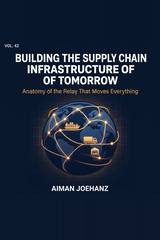
Building the Supply Chain Infrastructure of Tomorrow: The supply chain is the long relay by which raw materials become finished things and finished things become daily life: goods flowing forward, information flowing backward, money flowing everywhere at once, across distances no single worker will ever traverse. This volume holds the relay still and opens it organ by organ: the chain of hands and handoffs; the demand signal, a voice assembled from noise; the buffer, inventory as borrowed time; the whip, the amplification that turns a wiggle at the shelf into a storm at the factory; the supplier base with its hidden tiers; the factory's tempo and
DRM-free EPUB + PDF
The supply chain is the long relay by which raw materials become finished things and finished things become daily life: goods flowing forward, information flowing backward, money flowing everywhere at once, across distances no single worker will ever traverse. This volume holds the relay still and opens it organ by organ: the chain of hands and handoffs; the demand signal, a voice assembled from noise; the buffer, inventory as borrowed time; the whip, the amplification that turns a wiggle at the shelf into a storm at the factory; the supplier base with its hidden tiers; the factory's tempo and.
Ko-fiRead a free sampleListen on ElevenReader
Also on Payhip Ko-fi itch.io Fourthwall
Table of contents
- Introduction
- Chapter 1: The Chain — Hands, Flows, and the Long Relay
- Chapter 2: The Demand — Listening to a Signal Made of Noise
- Chapter 3: The Buffer — Inventory as Borrowed Time
- Chapter 4: The Whip — The Amplification Problem
- Chapter 5: The Base — Suppliers, Tiers, and the Hidden Chain
- Chapter 6: The Beat — The Factory's Tempo and the Pull of the Customer
- Chapter 7: The Box's Hotel — The Warehouse as a Working Machine
- Chapter 8: The Modes — Road, Rail, Air, Water, and the Handoffs Between
- Chapter 9: The Ledger — Planning, Master Data, and the Chain's Government
- Chapter 10: The Long Run — The Storm, the Decades, and the Chain That Survives
- A Last Word
- About this Series
- Connect